Analysis of lung diseases
Chronic obstructive pulmonary disease, lower respiratory infections, and lung cancer are among the leading causes of mortality worldwide. A drug delivery methodology called dry powder inhalation (DPI) is being explored as a promising treatment method against pulmonary diseases.
For DPI to be considered effective, it is crucial that the drug is precisely deposited at the desired location within the respiratory tract, which also helps to limit side effects. Although in vitro research has advanced significantly, a gap exists between particle-distribution simulations and the actual distribution of particles in vivo. Beyond this, there is also a need to fully understand the 3D architecture of lungs to ensure accurate particle distribution in situ.
Micro-optical sectioning tomography for 3D lung analysis
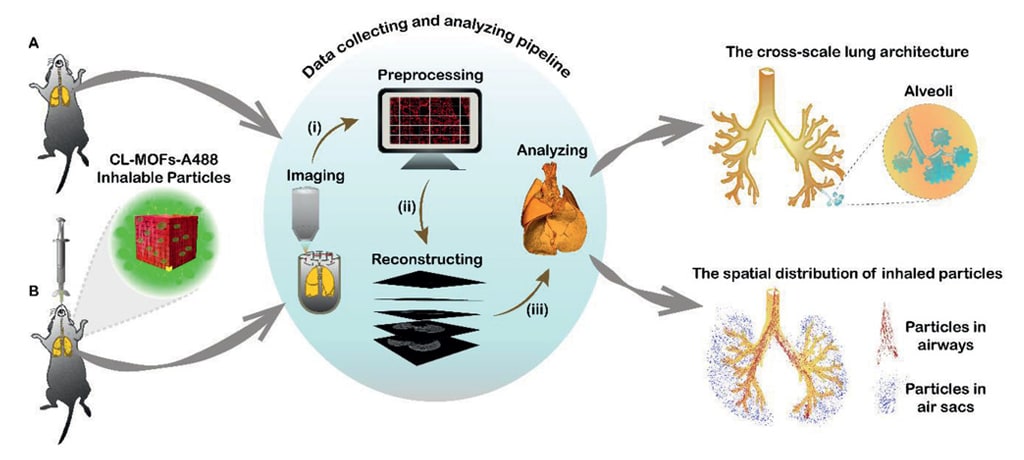
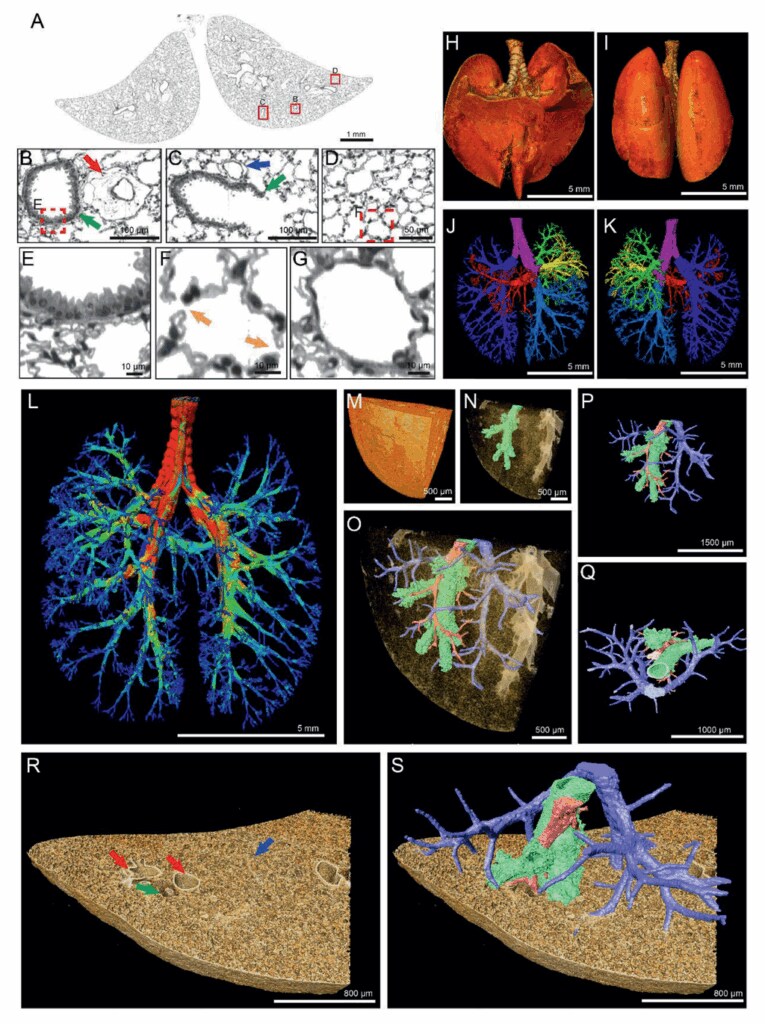
Researchers at the Chinese Academy of Sciences used advanced micro-optical sectioning tomography (MOST) coupled with whole-lung Nissl-staining to acquire entire mouse-lung structures.1 Fluorescence MOST (fMOST) was also used to track fluorescent model particles within the lung analysis datasets. Thermo Scientific™ Amira™ Software provided image segmentation and 3D reconstruction along with qualitative analysis of lung structure and quantitative analysis of particle deposition in different lung areas.
Whole lung analysis reveals particle distribution
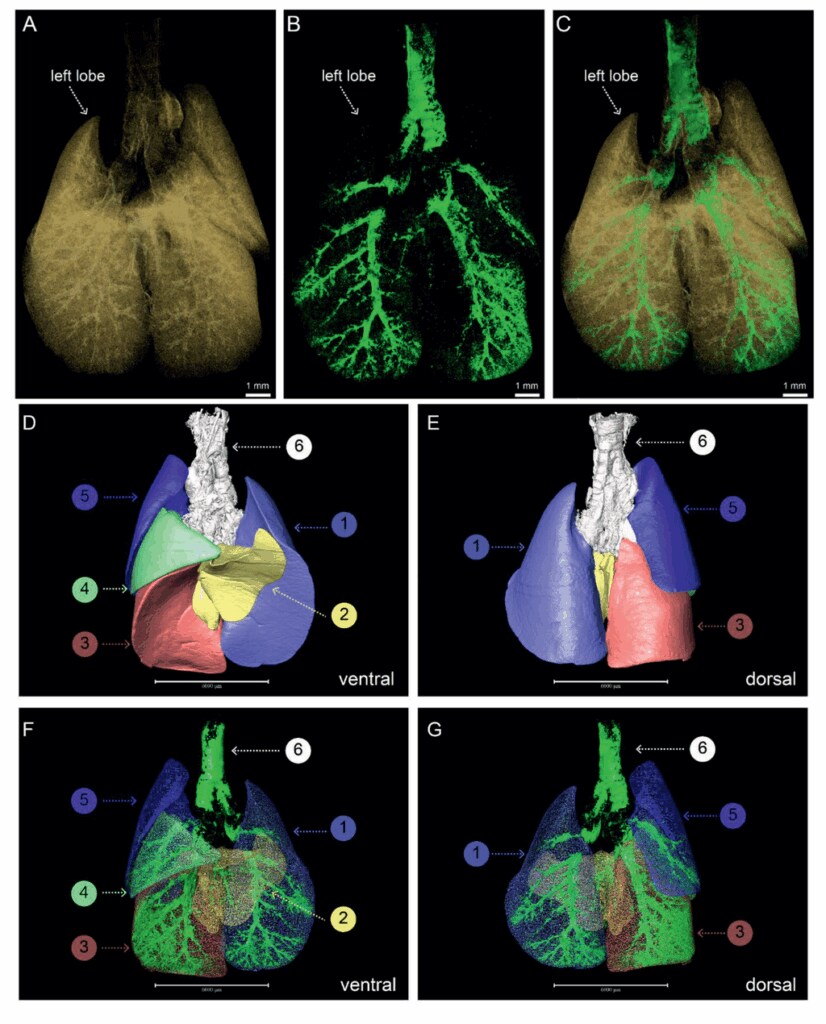
Volume rendering with Amira Software enabled easy visualization of the whole lung surface. Segmentation tools were used to differentiate various lung structures, including the bronchi, terminal bronchioles, alveoli, arteries, veins, and capillaries. The five lobes of the lung were identified and the number of particles in each lobe was calculated. The Animation Director in Amira Software was also used to edit the recorded frames into movies. The unique flexibility of Amira Software allowed for the visualization of particle distribution within the complex structure of the lungs.
This novel imaging approach could help to optimize DPI drug efficacy through a more complete understanding of particle distribution and how it relates to the architecture of the lung. Ultimately, characterization techniques such as this stand to revolutionize respiratory care and improve the lives of individuals with respiratory conditions.
References
Sun, X, et al.Multiscale Co-reconstruction of Lung Architectures and Inhalable Materials Spatial Distribution.Advanced Science 8:8 (2021). doi: 10.1002/advs.202003941
Learn more at thermofisher.com/amira
Interested in discussing your image analysis challenges? Our experts are here to help whenever you’re ready.
Leave a Reply