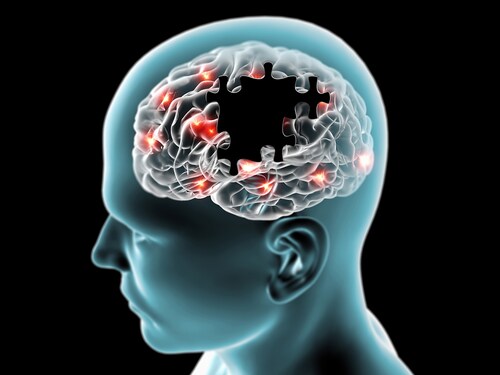
 Early diagnosis of Alzheimer’s disease (AD) and Parkinson’s disease (PD) aids clinicians in predicting disease progression in their patients. Presently, clinicians use Aβ42, tau proteins and α-synuclein; however, there is high variability in biomarker concentration measurements caused by differences in pre-analytical and analytical protocols for sample collection, sample handling and local assay handling.
Biomarkers for Alzheimer’s and Parkinson’s disease (BIOMARKAPD) is a European multi-center study funded by the EU Joint Programme–Neurodegenerative Disease Research. The study aims to standardize assay assessment and to validate novel fluid biomarkers for diagnosing and determining the prognosis of AD and PD. The study established a central biobank and a virtual biobank, which is a collection of other biobanking facilities, for neurodegenerative diseases. The samples stored in the central biobank are collected and handled according to standardized operating procedures (SOPS), while those contained by the virtual biobank are in the process of transitioning to BIOMARKAPD procedures. Reijs et al. (2015)1 describe sample collection in the central biobank and procedures for requesting samples.
Inclusion criteria for the BIOMARKAPD biobank were a diagnosis of normal cognition, mild cognitive impairment (≥55 years old), AD, PD, dementia with Lewy bodies, frontotemporal dementia, vascular dementia, progressive supra nuclear palsy, multiple system atrophy or another type of dementia. Additionally, patients needed to be at least 40 years old to be included. The biobank collected patient age, gender, education, clinical history, lifestyle risk factors, and physical and neuropsychological assessments. For each patient, researchers collected 2 mL cerebrospinal fluid, 2 mL serum, 2 mL plasma and 4 mL blood for DNA isolation, according to SOPs developed specifically for the BIOMARKAPD biobank, which include the following:
- 60 minute minimum clotting time for blood for serum samples
- DNA samples stored at a maximum of −20°C
- Plasma collected in 10 mL EDTA tubes, 4 mL EDTA for whole blood and 10mL clot activator tubes for serum
- Samples centrifuged at room temperature, except for blood for DNA, which was stored at −20°C without centrifugation
- Maximum of two hours between collection and freezing
The virtual biobank is an access point for looking up samples, clinical data and biomarker data. Satellite biobanks at other centers could participate by means of this virtual biobank. Other centers included retrospective samples, but as they transitioned to the standardized BIOMARKAPD procedures, they recorded the date on which this occurred.
Fourteen European centers participated and contributed samples to the central biobank between October 2013 and December 2015. Collectively, they have contributed samples from 419 patients. The virtual biobank provides access to cerebrospinal fluid samples from 7,550 subjects, EDTA plasma samples from 8,676 subjects and serum samples from 8,141 subjects, collected by 21 centers. Eleven centers have reported using the BIOMARKAPD SOPs for sample collection and processing.
Researchers can request samples from the central biobank or from the virtual biobank of BIOMARKAPD via a central Web site. Approval requires that the proposed research meets the aims of BIOMARKAPD to standardize the assessment of existing assays and to validate novel fluid biomarkers for AD and PD. The Analysis Advisory Board then reviews the request. Individual centers participating in the virtual biobank may use their own procedures to assess sample requests.
In summary, the BIOMARKAPD biobanks have developed a coordinated access point for larger numbers of samples for research in neurodegenerative disease.
Reference
1. Reijs, B.L.R., et al. (2015) “The central biobank and virtual biobank of BIOMARKAPD: A resource for studies on neurodegenerative diseases,” Frontiers in Neurology, 6(216), doi: 10.3389/fneur.2015.00216
Long-Term Biobanking Potential for Human Islet Cell Functionality
Manning Fox et al. (2015) present in vivo and in vitro human...
Read More
Next-Generation DNA Sequencing: Predictive Biomarkers for Cancer Treatment
As treatment options for cancer patients increase, oncologis...
Read More
A New Brain Imaging Cohort: The UK Biobank
The UK Biobank has created a brain imaging database to incre...
Read More
Leveraging Facebook Likes for Population-Based Biobanking Outreach
Michigan BioTrust for Health (BioTrust), a state-run, popula...
Read More
Leave a Reply