


For over a year and a half, the world has learned to adjust to living in a pandemic. Vaccines, variants and mandates have altered the course of COVID-19, but experts stress that ongoing safety measures, including testing and surveillance, remain critical to ending the public health crisis[1]. Yet a new online survey of more than 3,000 residents of the United States and the United Kingdom show misconceptions about COVID-19 testing may be hindering the pandemic response.
Antigen Tests vs PCR Tests
Since COVID-19 tests first came to market, widespread public education efforts have demonstrated that some tests are more accurate than others. Notably, studies have shown that antigen tests have lower sensitivity and increased risk of false-negative results than PCR tests, the gold standard for diagnostic testing[2]. Yet more than half of Americans (56%) and nearly half of Britons (48%) believe it doesn’t matter what kind of test they get, as they believe that they are all equally accurate.
Americans remain largely unaware of the differences between antigen and PCR tests; only 30% say they know the difference between the two. Interestingly, test awareness has actually dropped since earlier this year, as a survey this past February found 36% of Americans could differentiate between a COVID-19 PCR and antigen test. This trend is reversed in the U.K., where only 32% of adults knew the difference between antigen and PCR tests in February’s survey, but in the September survey, nearly half (47%) said they know the difference.
Notably, when asked to choose between a more accurate test with a longer turn-around time to results or a faster test that may be less accurate, the majority of people would choose accuracy (63% in the U.S. and 66% in the U.K.). The results indicate that if people were more aware of the differences between tests it could influence their testing choices.
Mask Mandates, Vaccinations, and Breakthrough Infections
Lack of awareness on available tests may be impacting testing behavior as far as what tests people are choosing. More concerning, misperceptions about testing may actually be preventing people from getting tested at all.
The number one reason for not testing is because of vaccination status. According to the survey, about a third of U.S. adults (34%) and one in four adults in the U.K. (25%) believe that they only need to be tested if they have not been vaccinated. However, 69% of U.S. adults and 63% of U.K. adults are concerned about the effectiveness of vaccines in protecting against breakthrough infections.
Another reason people aren’t getting tested: the misbelief that they only need to get tested when they are symptomatic. Almost half (45%) of people in the U.S. agree that you only need to get tested if you are sick, despite research showing that one out of every four COVID-19 cases may be asymptomatic[3].
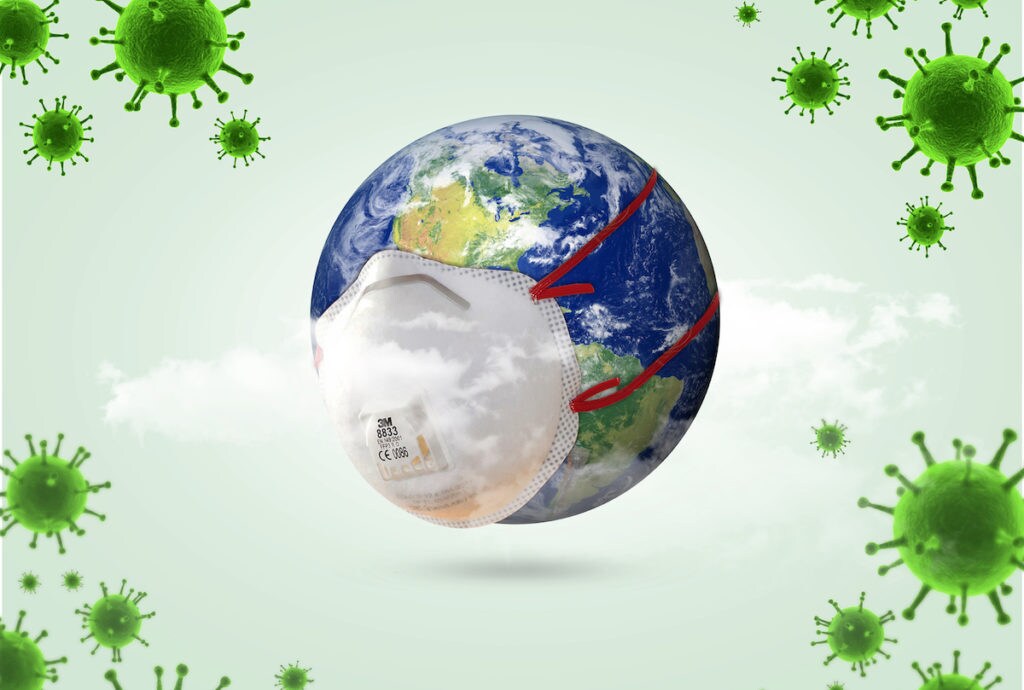
In addition, as states and countries adjust social distancing and mask mandates, many believe these precautions are enough to not get tested. Almost half of U.S. adults (48%) and a third of U.K. adults (34%) believe that if they take other measures, such as social distancing or wearing a mask, there is no need to get a COVID-19 test. Even though wearing a mask and social distancing can be effective methods to prevent the spread of COVID-19, those measures are most effective when everyone is correctly adhering to these guidelines and can’t stop infection 100% of the time [4].
Understanding the Misconceptions
While COVID-19 testing misperceptions persist, science tells us that testing remains a critical tool to track and monitor infection rates around the globe. One positive statistic from the survey: testing rates are slowly rising. In the U.S., nearly two-thirds (58%) of adults have been tested at least once, up from 40% in February. These numbers are even higher in the U.K., where 68% of adults have been tested at least once, up from 33% in February.
To learn about Thermo Fisher Scientific’s COVID-19 Testing Solutions, please visit thermofisher.com/covid19.
Methodology
The survey was conducted online by Regina Corso Consulting on behalf of Thermo Fisher Scientific between September 8 and 13, 2021 among 2,021 U.S. residents and 1,017 U.K. residents ages 18 and older. Samples were balanced by age, gender, region, education and income to be representative of both countries as a whole. Earlier surveys (also by Regina Corso Consulting on behalf of Thermo Fisher) were conducted between Nov. 23 and 25, 2020 in the U.S. and February 4 and 8, 2021 in the U.S. and the U.K.
[1] https://jamanetwork.com/journals/jama-health-forum/fullarticle/2781169
[2] https://www.ncbi.nlm.nih.gov/pmc/articles/PMC8444381/
[3] https://journals.plos.org/plosone/article?id=10.1371/journal.pone.0249090
[4] https://www.cdc.gov/coronavirus/2019-ncov/prevent-getting-sick/cloth-face-cover-guidance.html