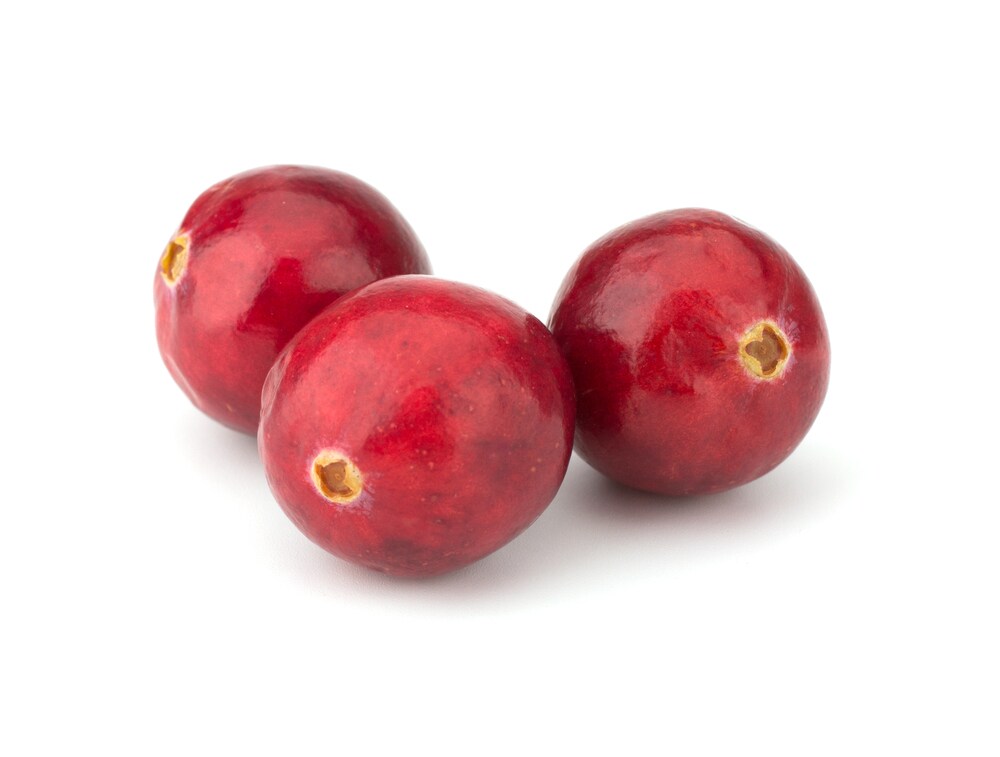
 Ever rising healthcare costs have caused some Americans to look to natural health remedies. Because of this, the use of dietary supplements is on the rise. In 2011, nearly 70% of U.S. adults reported taking dietary supplements, with just over 50% taking supplements on a daily basis.1 Super-fruits are among the popular list of supplements on the rise because of the abundance of antioxidants and other health benefits. For example, cranberry is known to prevent/treat urinary tract infections.2 The organic acids in cranberries are responsible for their unique flavors, and the specific ratios of organic acids can be used to detect adulteration. To this end, scientists from Thermo Fisher Scientific™ have recently demonstrated a method to determine the organic acids in cranberry extracts using ion chromatography (IC). To demonstrate their abilities, the scientists focused on determining the amount of trace sodium present in powdered cranberry.3 One challenge existing in this assay is the potential for contamination. Since sodium is a ubiquitous analyte, great care had to be taken to ensure the samples were clean and free of contaminants. The scientists recommend wearing disposable gloves at all times and soaking all autosampler vials overnight in deionized (DI) water and rinsing them several times before use. The team used a Thermo Scientific™ Dionex™ Reagent-Free IC (RFIC) with suppressed conductivity detection. They chose a Thermo Scientific Dionex ICS-5000 system containing a Dual Pump module, Eluent Generator module, Detector/Chromatography module and an Autosampler. Wearing the appropriate protective gear, the scientists prepared the cranberry powder in a fume hood. They weighed approximately 0.500 g of HNO3 sample in a 120 mL high-density polypropylene bottle. Next, they added 3 mL of DI water, mixed, and added 7 mL of concentrated HNO3. They then mixed the sample for ≥1 min and secured it in a water bath placed inside a fume hood. They digested the sample in the water bath at 100° C for 30 min, and then carefully removed the bottle from the water and allow the solution to cool to room temperature in the fume hood. They used a Thermo Scientifc Dionex OnGuard™ II A cartridge to neutralize the sample solution. The scientists also prepared a 1000 mg/L stock solution of sodium chloride. They then prepared five levels of sodium calibration standards with concentrations ranging from 100 to 1000 μg/L beginning with a 10 mg/L primary dilution solution. In all, the scientists performed three independent preparations of the cranberry powder, with samples analyzed in triplicate on the Thermo Scientific Dionex IonPac CG12A Guard. This analysis revealed that the calculated sodium concentration was consistent between preparations with overall concentrations only varying slightly from 210 to 215 μg/g. The peak area RSDs from the independent preparations ranged from 0.3 to 2.5%. The overall average sodium concentration was 214 μg/g with a peak area RSD of 1.6% (n = 9). The measured LOQ for sodium was ~1.2 μg/L (S/N = 10) with an LOD estimated at ~0.35 μg/L (S/N = 3). When the scientists surveyed samples spiked with the sodium chloride solution, they obtained an average recovery of 90%. After comparing their results with those reported by the National Institute of Standards and Technology (NIST), they found that they were in range and within 15% of the data reported by the NIST. As a result, the authors maintain that IC is a viable alternative to other analytical techniques. They also note that this method can be used to determine other important analytes in this matrix, such as organic acids. References 1. (2012) Council for Responsible Nutrition (CRN), 2011 Annual Consumer Survey on Dietary Supplements [Online] 2. (2011) “Nutritional Outlook Staff. Sixth Annual Practitioner’s Guide to Dietary Supplements. Nutritional Outlook” (Nov), 78 3. De Borba, B. and Rohrer, J. “Application Brief 112: Determination of Trace Sodium in Cranberry and Bilberry Extracts”; Thermo Fisher Scientific Inc., Sunnyvale, CA, USA

Natural Colorants: Unlocking the Future Through Fungal Innovation and Mass Spectrometry
As consumer demand continues to shift toward clean-label, pl... Daniel Merriman
Read More
What to Keep in Mind When Analyzing Chlorophyll Samples using UV-Vis Spectrometry
In some food industries, it can be important to determine th...
Read More
Can UV-Vis Spectrometry Be Used to Analyze Chlorophyll in Canola Oil?
Canola oil is a type of vegetable oil derived from the seeds...
Read More
Changing Texture and Taste of Plant-Based Meats with Added Oils
Consumers are increasingly choosing plant-based foods becaus...
Read More

Leave a Reply