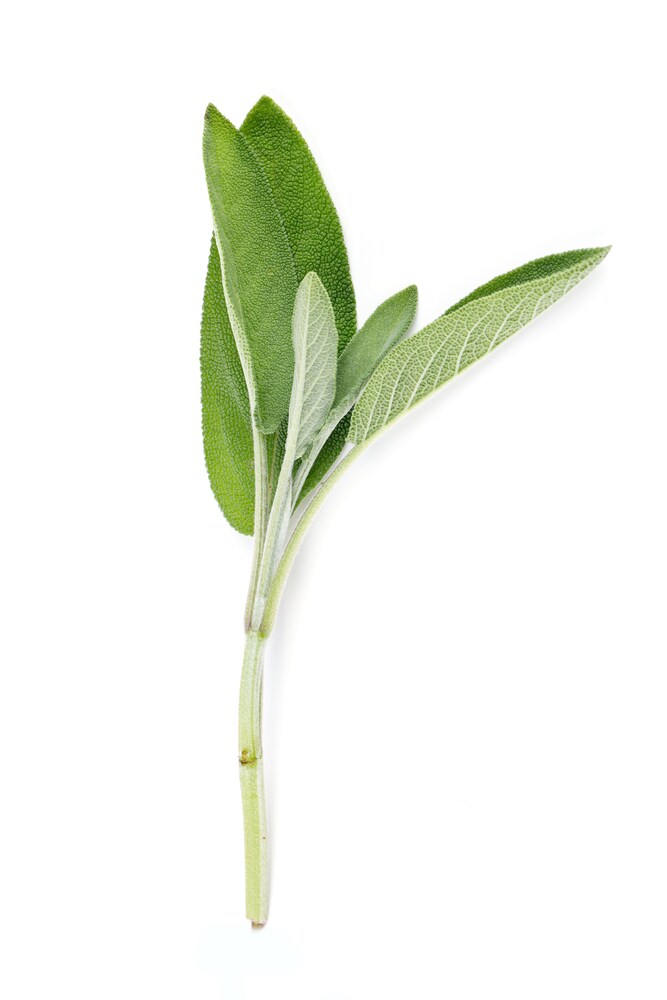
 Rosmarinic acid (RA) is one example of a naturally occurring phenolic compound in plants. RA is especially high in Salvia officinalis (garden sage). As an antioxidant, RA possesses both health benefits1, and is useful as a food additive to keep foods fresh.2 Recently, Bakota et al. successfully prepared an extract of Salvia officinalis at three times the levels from sage leaves alone.3
For their experiments, the team isolated RA from dried sages leaves by first grinding the leaves into a powder and then placing them into a stainless extraction cell for an extraction with supercritical carbon dioxide (SC-CO2) followed by a hot water extraction.
Using triplicate samples of sage extracts, they performed high-powered liquid-chromatography,(HPLC) followed by liquid-chromatography and electrospray ionization with mass spectrometry (LC-ESI-MS) to identify RA present in the samples. The researchers used an LTQ Orbitrap Discovery Mass Spectrometer—a linear ion trap (LTQ XL) MS, coupled to a high precision electrostatic ion trap (Orbitrap) MS with a high energy collision cell, an Ion Max electrospray ionization (ESI) source, and an ACCELA series HPLC system with Xcalibur 2.1.0.1140 LC-MS software (all from Thermo Scientific).
The team determined that the resulting extract contained 28.4 mg/g of RA, which was three times the amount of RA found in typical extracts. For applications as a food additive, the researchers incorporated their sage extracts into oil-in-water emulsions as a source of lipid antioxidant. They compared their extracts with emulsions containing pure rosmarinic acid in equal concentrations: 100 and 200 μmol/L RA. The team found that the extracts produced by the researchers were slightly more effective in suppressing lipid oxidation as the pure rosmarinic acid; however, they note that the difference was not statistically significant. They also point out that the antioxidant activity was equal at both concentrations.
Finally, the team used a trained sensory panel to evaluate the sage extract. The panel of participants evaluated the sage extracts alone, sage extracts combined with a commercial instant tea, and sage extracts made into an instant tea. As a whole, the panelists demonstrated high acceptability of the sage extract in a tea. Based on this work, Bakota et al. recommend their developed sage extract as an ideal “clean label” ingredient.
References
1. Scalbert, A., et al. 2013. “Phytochemical profile of rosmarinus officinalis and salvia officinalis extracts and correlation to their antioxidant and anti-proliferative activity.” Food Chemistry. 136(1):(pp. 120–29)
2. Shahidi, F., & Zhong, Y. ( 2011) “Revisiting the polar paradox theory: A critical overview.” Journal of Agricultural and Food Chemistry. 59(8) (pp. 3499–504)
3. Bakota, E.L. (2015) “Antioxidant Activity and Sensory Evaluation of a Rosmarinic Acid-Enriched Extract of Salvia officinalis.”, Journal of Food Science. 2015 Apr;80(4) (pp. C711-7) doi: 10.1111/1750-3841.12837. Epub 2015 Mar 21.

Natural Colorants: Unlocking the Future Through Fungal Innovation and Mass Spectrometry
As consumer demand continues to shift toward clean-label, pl... Daniel Merriman
Read More
What to Keep in Mind When Analyzing Chlorophyll Samples using UV-Vis Spectrometry
In some food industries, it can be important to determine th...
Read More
Can UV-Vis Spectrometry Be Used to Analyze Chlorophyll in Canola Oil?
Canola oil is a type of vegetable oil derived from the seeds...
Read More
Changing Texture and Taste of Plant-Based Meats with Added Oils
Consumers are increasingly choosing plant-based foods becaus...
Read More

Leave a Reply