According to Google, here are the Top 10 read articles this year from Advancing Mining. Some have been around for quite awhile, but are still as relevant as ever. If you missed any of the latest articles, just click here to see the most recently published articles. You can even filter by topic (on the right hand side Sub-Categories navigation) to focus on the mining and mineral subjects that interest you most, whether it’s cement, coal, oil and gas, exploration, mineral processing, rare earth elements, and more.
Happy Reading!
- The Cement Manufacturing Process. Learn how cement is made by transforming raw materials like limestone and clay into a fine powder, heating that mixture in a kiln at very high temperatures to form small nodules called clinker, and then grinding the clinker with additives such as gypsum to produce cement powder. It also notes that controlling the composition and quality of raw materials throughout crushing, blending, sintering, and grinding is key to producing consistent, high-quality cement used in concrete and other construction applications.
- Pyrite: The Real Story Behind “Fool’s Gold”. Pyrite is a common iron sulfide mineral with a brassy-yellow metallic luster that often fools untrained observers into thinking it’s gold, which is why it earned the nickname “fool’s gold.” The article discusses how pyrite’s brittle physical properties and characteristic streak help distinguish it from real gold and touches on its geological formation and historical uses (like striking sparks to make fire).
- Can You Name All 17 Rare Earth Elements? Discover the 17 rare earth elements—a group of chemically similar metals that include the 15 lanthanides plus scandium and yttrium—and how their growing demand in high-tech, clean energy, and defense applications is due to their unique magnetic and electronic properties. Despite being called “rare,” these elements are relatively abundant in the Earth’s crust, but economically viable concentrations are uncommon and extraction can be complex.
- Potash: A Look at the World’s Most Popular Fertilizer. Potash refers to potassium-containing minerals and salts—most commonly potassium chloride—that are essential nutrients in fertilizers because potassium is critical for plant water retention, disease resistance, and higher crop yields. The article describes major sources and forms of potash used in agriculture, the differences between common types like muriate of potash (MOP) and sulfate of potash (SOP), and how these materials are mined and processed for use in soils around the world.
- What are the Largest Diamonds and How Are they Found? The article highlights several of the largest diamonds ever discovered, including historic giants like the Cullinan diamond, a 3,106-carat rough stone found in South Africa that was later cut into some of the world’s most famous gemstones, and other massive finds such as a recently unearthed 2,492-carat crystal from Botswana. It also explains that these extraordinary gems are typically found in deep volcanic kimberlite pipes or eroded alluvial deposits and remain rare and highly prized due to their immense size and geological origins.
- Better Together: XRF and XRD. X-ray fluorescence (XRF) provides rapid, non-destructive elemental composition data for materials, while X-ray diffraction (XRD) reveals detailed information about the crystalline structure and phases present in a sample, offering complementary insights. Combining both methods—sometimes even in a single instrument—gives a more complete characterization of geological and industrial materials than using either technique alone, enhancing analysis efficiency and depth.
- Technology Focus: X-ray Fluorescence (XRF) in Mining. X-ray fluorescence (XRF) is a non-destructive method used to quickly determine the elemental composition of mining samples by measuring characteristic X-rays emitted from the material. Portable and handheld XRF devices provide rapid, on-site geochemical data that support exploration, ore grading, and decision-making without extensive lab work.
- What Is Ambient Air? Air quality is tightly regulated through standards such as MATS, MACT, and the EPA’s National Ambient Air Quality Standards, which aim to control harmful pollutants—including ozone—to protect public health and the environment. Learn about the technologies used in the mining industry to address air quality.
- Sintering: A Step Between Mining Iron Ore and Steelmaking. Sintering is an essential intermediate step in iron and steel production where fine iron ore and other raw materials (like coke breeze and limestone) are agglomerated and heated to form a porous, larger-sized material called sinter that can be efficiently fed into a blast furnace. This process improves furnace performance by enhancing permeability and consistency of the feedstock, allowing for more stable ironmaking and better utilization of fines and recycled metallurgical materials.
- How Syngas is Paving the Way to a Sustainable Future. Syngas—a mixture of hydrogen, carbon monoxide, and other gases—can be produced from renewable and waste feedstocks and is increasingly seen as a flexible, lower-carbon energy and chemical source that supports cleaner production and helps reduce reliance on traditional fossil fuels. It highlights how real-time monitoring and advanced processing are key to producing high-quality syngas, which is being explored for broader sustainable applications like fuels, chemicals, and low-carbon manufacturing in the transition to a more sustainable energy landscape.
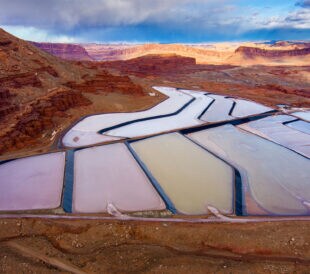
Potash: A Look at the World’s Most Popular Fertilizer
Uses, Types, Production, and USGS Data Potash, pronounced po... Marlene Gasdia-Cochrane, Editor
Read More
A Halloween Treat – Free Periodic Table
No tricks here. Download this handy periodic table and X-ray... Marlene Gasdia-Cochrane, Editor
Read More
INFOGRAPHIC: 9 Fast Facts About Antimony
It’s a silvery, lustrous grey and a semi-metallic toxic el... Marlene Gasdia-Cochrane, Editor
Read More
Did You Miss Our Most Popular Articles? Here are our Top 5 Mining Articles This Year.
Here are the ten most read articles on this mining blog duri... Marlene Gasdia-Cochrane, Editor
Read More

Leave a Reply