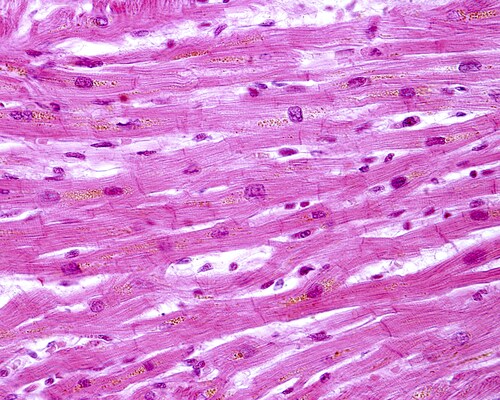
 During an acute myocardial infarction, also known as a heart attack, damage occurs within the musculature of the heart. This damaged tissue triggers surrounding cardiomyocytes (CMs) to signal growth factors and cytokines, leading to a paracrine-autocrine feedback loop between CMs and activation of small populations of human cardiac stem cells (hCSCs).1
Although its natural repair systems are limited, researchers are looking at new ways to maximize the body’s abilities by using stem cell- and protein-based therapies. Recently, Gomes-Alves et al. applied an integrated proteomics approach to investigate proteins expressed in hCSCs.2
Initially, the team used one-dimensional matrix-assisted laser desorption/ionization with tandem time-of-flight measurements (1D-MALDI-TOF/TOF) to analyze membrane receptors in enriched plasma membrane fractions. In doing so, they realized this method was not the best choice for less abundant proteins; past research has also indicated that contamination with proteins from other organelles is a common problem when studying plasma receptors.3
To improve the number of accessible receptors and thereby gain a more accurate understanding of plasma membrane receptors involved with hCSCs, the team investigated enriched plasma membranes using nano-liquid chromatography and mass spectrometry (nLC-MS). They used an LTQ Orbitrap XL hybrid ion trap-Orbitrap mass spectrometer for this, as well as an Orbitrap Elite hybrid ion trap-Orbitrap mass spectrometer (both Thermo Scientific) to further assess the hCSC receptome. Finally, they used Proteome Discoverer software (version 1.3, Thermo Scientific) for data analysis.
Out of three separate runs, the team identified 1,242 proteins, with 968 proteins present in two out of three runs. Of those proteins commonly identified, 531 were transmembrane domains, 250 were plasma proteins and 50 were membrane receptors.
Gomes-Alves et al. found that the prefractionation step using mixed-mode cationic exchange prior to LC-MS was critical to access proteins with more transmembrane domains and gain a more complete description of the receptors present in the hCSC membrane. Although contamination with other proteins was still an issue in this investigation, the team was yet able to achieve a greater coverage of hCSC receptome characterization. Future work from this research group will focus on identifying receptors found in other human cell types, including stem cells.
References
1. Torella, D., et al. (2007) “Growth-factor-mediated cardiac stem cell activation in myocardial regeneration,” National Clinical Practice: Cardiovascular Medicine, February 4 (pp. S46–51).
2. Gomes-Alves, P., et al. (2015, April) “Exploring analytical proteomics platforms toward the definition of human cardiac stem cells receptome,” Proteomics, 15(7) (pp. 1332–37), doi: 10.1002/pmic.201400318.
3. Gu, B., et al. (2010) “Global expression of cell surface proteins in embryonic stem cells,” PLOS ONE, 5 (p. e15795).
Post Author: Emily Humphreys. Emily has previous research experience in eye development, infectious diseases, and aging. While she enjoyed the thrill of research, She has since traded bench work for science journalism. Emily has been a regular contributor to Accelerating Science since 2012.
Mesenchymal Stem Cell Exosome Proteome under Ischemic Culture Conditions
Anderson et al. (2016) sought to characterize the mesenchyma...
Read More
A Role for Decorin Peptides in Atrial Fibrillation
Cardiac extracellular matrix (ECM) proteins account for...
Read More
Chewing the Fat: Apolipoprotein HDL Kinetics by HRAM-PRM
Lipid handling and apolipoprotein dynamics are complicated p...
Read More
Proteomics of Patent Foramen Ovale
Researchers have demonstrated the potential of albumin-bound...
Read More
Leave a Reply