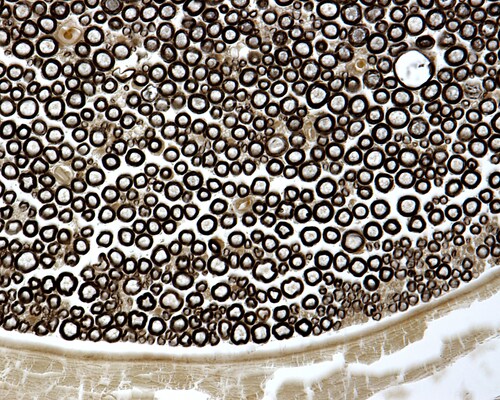
 Multiple sclerosis (MS) occurs when the immune system attacks the myelin that surrounds nerves within the central nervous system. While treatments for MS currently target the immune system, they overlook the neuronal degeneration through demyelination. One research team is taking a different approach to finding new treatments by looking for drugs that could be re-purposed as remyelinating therapeutics.1
Oligodendrocyte progenitor cells (OPCs) are in charge of myelinating oligodendrocytes. Although OPCs are abundant in demyelinated regions of patients with MS, they fail to prevent demyelination. Finding a way to enhance remyelination through drug therapies could dramatically improve life for patients with MS and other patients with neurodegenerative conditions
Najim et al. used a mouse model to develop an in vitro phenotypic screen to look for possible drug therapies. They selected the U.S. National Institutes of Health (NIH) Clinical Collection I and II libraries, which contain 727 drugs with a history of safe use in clinical trials, to test for maturation OPCs into myelinating oligodendrocytes.
Using two batches (>100 million cells each) of mouse epiblast stem cell (EpiSC), the team generated OPCs. The primary in vitro screen investigated the seeding density, endpoint assays and dimethyl sulfoxide (DMSO) (vehicle) tolerance. As part of this investigation, they used a quantitative global phosphorylation workflow on OPCs across two different time points (one hour and five hours after treatment) with miconazole, clobetasol or DMSO treatment using a label-free ultra-high-performance liquid chromatography–tandem mass spectrometry (LC-MS/MS) workflow without fractionation.
The researchers lysed 30 million cells per sample with 2% sodium dodecyl sulfate (SDS) solution with protease and phosphatase inhibitors (Thermo Scientific). Next, they cleaned the lysate and removed the detergent using the FASP cleaning procedure. Each sample was then digested by a two-step Lys-C/trypsin proteolytic cleavage and subjected to phospho-enrichment using commercially available TiO2 enrichment spin tips (Thermo Scientific). LC-MS/MS analysis used a UPLC system (NanoAcquity, Waters) that was interfaced to an Orbitrap Elite hybrid ion trap-Orbitrap mass spectrometer (Thermo Scientific).
From each peptide intensity, the team was able to determine fold-change calculations versus DMSO at each time point. From this, they identified 22 drugs that enhanced oligodendrocyte formation greater than five standard deviations above control samples treated with DMSO and thyroid hormone. They pointed out that one of the top 22 drugs was benztropine, a known muscarinic receptor antagonist recently shown to induce OPC differentiation and remyelination.2
Next, Najm and colleagues validated and prioritized the 22 drug hits by ranked drugs based on their dose-dependent ability to induce oligodendrocyte generation from OPCs. After additional studies, the team was able to conclude that two drugs, miconazole and clobetasol, were the most effective. When the team timed the delivery of the drugs to occur at the peak of an experimental autoimmune encephalomyelitis in a mouse model of chronic progressive MS, they saw a marked reversal in the severity of the disease. Not only did these drugs promote precocious myelination in organotypic cerebellar slice cultures, they also were effective in in vivo mouse models.
While this approach is still in the early stages of investigation, the hope is that these results will lead to further investigations of potential treatments for MS.
References
1. Najm, F.J. (2015) “Drug-based modulation of endogenous stem cells promotes functional remyelination in vivo,” Nature 522(7555) (pp. 216–220), doi: 10.1038/nature14335.
2. Deshmukh, V. A., et al. (2013) “A regenerative approach to the treatment of multiple sclerosis,” Nature 502(7471) (pp. 327–332), doi: 10.1038/nature12647.
Post Author: Emily Humphreys. Emily has previous research experience in eye development, infectious diseases, and aging. Emily has been a regular contributor to Accelerating Science since 2012.

Eye Spy: Direct Visualization of Neurotransmitters
Neurotransmitters (i.e., biogenic amines and amino acids) ar...
Read More
Novel Huntington’s Disease Biomarkers
Huntington’s disease (HD) is a genetic neurodegenerati...
Read More
Driving Technology: Peptide Blood–Brain Barrier Shuttles for Therapeutic Transport
Diseases involving the central nervous system impact approxi...
Read More
Post-Stroke Depression Likely Linked to Unresolved Inflammatory Response
The statistics associated with stroke are stark: of the 15 m...
Read More
Leave a Reply