Search

Invitrogen™
ezDNase™ Enzyme
Invitrogen™ ezDNase™ Enzyme is a recombinant double-strand-specific DNase for the fast removal of contaminating genomic DNA from RNA preparations. ItRead more
| Catalog Number | Quantity |
|---|---|
| 11766051 | 50 reactions |
Catalog number 11766051
Price (USD)
298.65
Online exclusive
321.00Save 22.35
Each
Quantity:
50 reactions
Price (USD)
298.65
Online exclusive
321.00Save 22.35
Each
Invitrogen™ ezDNase™ Enzyme is a recombinant double-strand-specific DNase for the fast removal of contaminating genomic DNA from RNA preparations. It cleaves phosphodiester bonds in double-stranded DNA to yield 2–8 bp oligonucleotides with 5’-phosphate and 3’-hydroxyl termini.
Features of ezDNase Enzyme include:
• Efficient and fast genomic DNA removal
• Highly specific—no impact on RNA, cDNA, or primers in RT reactions
ezDNase Enzyme's high specificity for double-stranded DNA enables efficient and fast genomic DNA removal without reduction in the quality or quantity of RNA or single-stranded DNA present in the reaction such as cDNA and primers. ezDNase Enzyme is heat-labile and so can be easily deactivated by heat treatment at moderate temperature (55°C). These features make ezDNase a superior choice for genomic DNA removal prior to reverse transcription reactions.
When used in combination with the SuperScript™ IV VILO™ Master Mix or other Invitrogen reverse transcription reagents, ezDNase Enzyme helps significantly reduce the possibility of cDNA synthesis being compromised by genomic DNA and reduce variation in RT-qPCR quantitation caused by RNA loss or damage during conventional DNase treatment.
Features of ezDNase Enzyme include:
• Efficient and fast genomic DNA removal
• Highly specific—no impact on RNA, cDNA, or primers in RT reactions
ezDNase Enzyme's high specificity for double-stranded DNA enables efficient and fast genomic DNA removal without reduction in the quality or quantity of RNA or single-stranded DNA present in the reaction such as cDNA and primers. ezDNase Enzyme is heat-labile and so can be easily deactivated by heat treatment at moderate temperature (55°C). These features make ezDNase a superior choice for genomic DNA removal prior to reverse transcription reactions.
When used in combination with the SuperScript™ IV VILO™ Master Mix or other Invitrogen reverse transcription reagents, ezDNase Enzyme helps significantly reduce the possibility of cDNA synthesis being compromised by genomic DNA and reduce variation in RT-qPCR quantitation caused by RNA loss or damage during conventional DNase treatment.
For Research Use Only. Not for use in diagnostic procedures.
Specifications
Compatible BufferReverse Transcription Reagents
For Use With (Application)RT-qPCR
Product TypeEnzyme
Quantity50 reactions
Sample TypeRNA
Shipping ConditionOn dry ice
Concentration10X
EnzymeDNase
FormLiquid
Product LineezDNase
Unit SizeEach
Contents & Storage
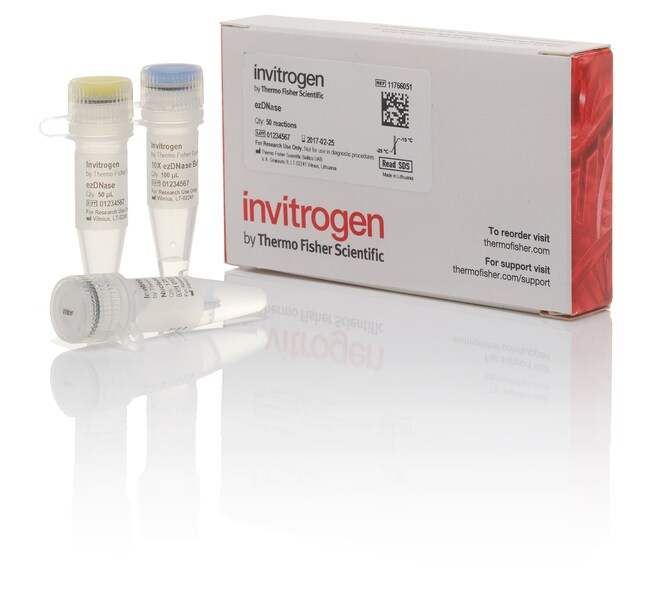
• ezDNase Enzyme, 50 μL
• ezDNase Buffer (10X), 100 μL
• Nuclease-free water, 1.25 mL
Store at -5 to -30°C.
• ezDNase Buffer (10X), 100 μL
• Nuclease-free water, 1.25 mL
Store at -5 to -30°C.