Search

Gibco™
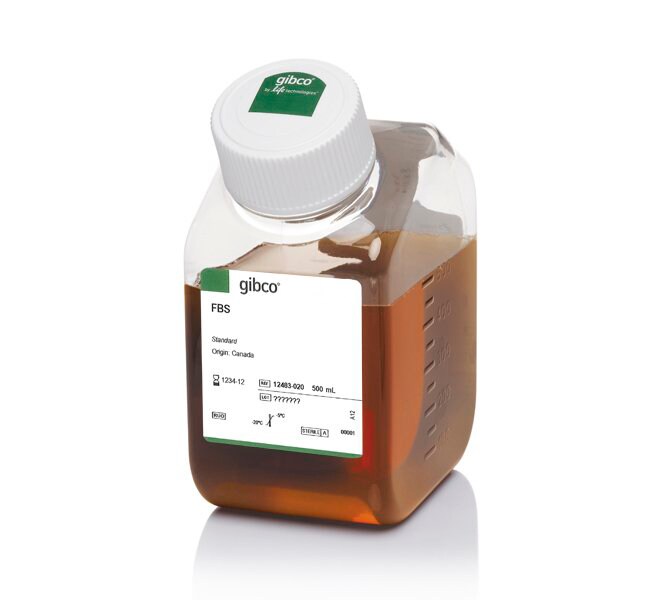
Fetal Bovine Serum, qualified, Canada
Introducing the new, aliquot-free Gibco™ One Shot™ FBS 50 mL bottle. Designed to eliminate the need to aliquot, and the risk of contamination and variability that comes with it. And that improves your chances for consistent results.
Have Questions?
Change view

| Catalog Number | Quantity | Format |
|---|---|---|
| 12483020 | 500 mL | Bottle |
| A3160701 | 50 mL | One Shot |
| A3160702 | 10 x 50 mL | One Shot |
Our improved Value Fetal Bovine Serum (FBS) features enhanced specifications with unchanged stability, manufacturing, storage, and transport processes.
Catalog number 12483020
Gibco™ fetal bovine sera offer excellent value for basic cell culture, specialty research, and specific assays, earning the trust of researchers with consistent quality and award-winning support that helps meet your research needs and budget requirements
- Sera category:Value (Standard)
- Origin: Canada
- Endotoxin level: ≤50 EU/mL (levels routinely ≤10 EU/mL)
- Hemoglobin level: ≤25 mg/dL
Aliquot-free 50 mL bottle
The Gibco™ One Shot 50 mL bottle is designed to eliminate the need to aliquot, and the risk of contamination and variability that comes with it, improving your chances for consistent results.
Features include:
- Wide mouth, chamfered edge, and curved shape for easy pouring and pipetting
- Engineered to freeze/thaw without splitting or breaking
- Fits in test tube racks and frees up freezer space
- No labeling mishaps with our easy-to-read package label containing all of the information you need
- 33% less waste generated than aliquoting from 500 mL bottles
All products may not be available in all regions due to importation regulations. Contact your local sales representative regarding product availability in your country.
For research use or further manufacturing use only. Serum and blood proteins are not for direct administration into humans or animals.
Specifications
Purity or Quality GradeResearch Grade, Qualified
Shipping ConditionFrozen
SpeciesCattle/Bovine
AgeFetal
Country of OriginCanada
FormatBottle
Product TypeFetal Bovine Serum
Quantity500 mL
Serum TreatmentStandard (Sterile-filtered)
SterilitySterile
Unit SizeEach
Contents & Storage
Storage conditions: ≤-10°C
Shipping conditions: Frozen
Shipping conditions: Frozen