Search




Citations & References (1)
Invitrogen™
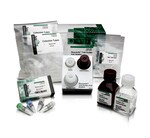
RecoverAll™ Total Nucleic Acid Isolation Kit for FFPE
The RecoverAll™ Total Nucleic Acid Isolation Kit for FFPE is for the extraction of total nucleic acid from formalin- orRead more
| Catalog Number | Quantity |
|---|---|
| AM1975 | 40 Preps |
Catalog number AM1975
Price (MXN)
-
Quantity:
40 Preps
The RecoverAll™ Total Nucleic Acid Isolation Kit for FFPE is for the extraction of total nucleic acid from formalin- or paraformalin-fixed, paraffin-embedded (FFPE) tissues. Sufficient reagents are included for 40 purifications from up to four 20 μm sections, or up to 35 mg of unsectioned, core samples each. Features of the RecoverAll™ Total Nucleic Acid Isolation Kit for FFPE:
• Optimized for isolation of total nucleic acids, including microRNAs, from FFPE tissue
• No overnight Proteinase K digestion required—deparaffinize in the morning and perform qRT-PCR in the afternoon
• Typical yields are >50% of those of unfixed tissue
• Recovered nucleic acids are suitable for next generation sequencing, real-time RT-PCR, PCR, mutation screening, and microarray analyses
Extraction of nucleic acids from difficult samples
Archived tissue samples contain valuable information of disease states, but it has traditionally been difficult to isolate nucleic acids from them of a quality suitable for molecular analysis. Standard preservation techniques use formalin that maintains tissue structure and prevents putrefaction, but which also traps nucleic acids and modifies them through protein-protein and protein-nucleic acid crosslinks. RNA (and to some extent DNA) is often so fragmented and chemically modified that it is incompatible with many molecular analysis techniques. RNA fragmentation in FFPE tissues cannot be reversed; however, the protease digestion conditions of the RecoverAll™ kit are designed to release a maximal amount (see figure) of trapped RNA fragments of all sizes, including microRNA, in a relatively short amount of time.
The RecoverAll™ Total Nucleic Acid Isolation Kit solution
The RecoverAll™ Total Nucleic Acid Isolation Kit procedure requires about 45 minutes of hands-on time and can be completed in typically less than 1 day for RNA. FFPE samples are deparaffinized using a series of xylene and ethanol washes. Next, they are subjected to an extensive protease digestion with an incubation time tailored for the recovery of either RNA or DNA. Nucleic acids are then purified using a rapid glass-filter method, and are eluted into either water or low-salt buffer.
Nucleic acids for almost any downstream application
As is the case with all FFPE tissue, sample fixation and storage typically cause nucleic acid fragmentation and modification. Therefore, downstream applications, such as microarray analysis, which require more pristine RNA than does qRT-PCR, may require modification for optimal results. Although DNA tends not to fragment as easily as RNA, it appears to be more reactive to the formalin and requires a longer (2-day) protease digestion time to release substantial amounts of DNA.
• Optimized for isolation of total nucleic acids, including microRNAs, from FFPE tissue
• No overnight Proteinase K digestion required—deparaffinize in the morning and perform qRT-PCR in the afternoon
• Typical yields are >50% of those of unfixed tissue
• Recovered nucleic acids are suitable for next generation sequencing, real-time RT-PCR, PCR, mutation screening, and microarray analyses
Extraction of nucleic acids from difficult samples
Archived tissue samples contain valuable information of disease states, but it has traditionally been difficult to isolate nucleic acids from them of a quality suitable for molecular analysis. Standard preservation techniques use formalin that maintains tissue structure and prevents putrefaction, but which also traps nucleic acids and modifies them through protein-protein and protein-nucleic acid crosslinks. RNA (and to some extent DNA) is often so fragmented and chemically modified that it is incompatible with many molecular analysis techniques. RNA fragmentation in FFPE tissues cannot be reversed; however, the protease digestion conditions of the RecoverAll™ kit are designed to release a maximal amount (see figure) of trapped RNA fragments of all sizes, including microRNA, in a relatively short amount of time.
The RecoverAll™ Total Nucleic Acid Isolation Kit solution
The RecoverAll™ Total Nucleic Acid Isolation Kit procedure requires about 45 minutes of hands-on time and can be completed in typically less than 1 day for RNA. FFPE samples are deparaffinized using a series of xylene and ethanol washes. Next, they are subjected to an extensive protease digestion with an incubation time tailored for the recovery of either RNA or DNA. Nucleic acids are then purified using a rapid glass-filter method, and are eluted into either water or low-salt buffer.
Nucleic acids for almost any downstream application
As is the case with all FFPE tissue, sample fixation and storage typically cause nucleic acid fragmentation and modification. Therefore, downstream applications, such as microarray analysis, which require more pristine RNA than does qRT-PCR, may require modification for optimal results. Although DNA tends not to fragment as easily as RNA, it appears to be more reactive to the formalin and requires a longer (2-day) protease digestion time to release substantial amounts of DNA.
For Research Use Only. Not for use in diagnostic procedures.
Specifications
Elution Volume60 μL
Final Product TypeTotal RNA and DNA
For Use With (Application)RT-PCR, qPCR, cDNA library construction, NGS, microarray analysis, blot hybridization, Northern/Southern blotting, in vitro translation, nuclease protection assays, nucleic acid labeling, hybridization
High-throughput CompatibilityNot High-throughput Compatible (Manual)
Purification Time45 min. (Hands-on)
Quantity40 Preps
Shipping ConditionBox 1: Room Temperature
Box 2: Dry Ice
Box 2: Dry Ice
Starting Material Amount≤80 μM tissue slices
35 mg unsectioned core
35 mg unsectioned core
YieldDNA: ≤3.5 μg per mg FFPE
RNA: varies
RNA: varies
Isolation TechnologySpin Column (Glass Fiber Filter)
Sample TypeFFPE Tissue, Paraffin-embedded (FFPE) Tissue
Unit SizeEach
Contents & Storage
Box 1
• 16 mL Digestion Buffer; room temperature
• 60 mL Wash 1 (concentrated); room temperature
• 60 mL Wash 2/3 (concentrated); room temperature
• 80 Collection Tubes; room temperature
• 40 Filter Cartridges; room temperature
• 19.2 mL Isolation Additive; room temperature
• 5 mL Elution Solution; room temperature
Box 2
• 160 μL Protease; -20°C
• 240 μL 10X DNase Buffer; -20°C
• 160 μL DNase; -20°C
• 400 μL RNase A; -20°C
Frequently asked questions (FAQs)
I want to isolate miRNA from formalin-fixed and unfixed laser capture microdissection (LCM) samples. Which kit will be best for this?
How can I increase my chances of successful extraction of FFPE samples in terms of DNA quality and yield?
What can I use to extract DNA from FFPE (formalin fixed paraffin embedded) samples?
I want to extract DNA, and if possible, RNA from formalin-fixed specimens in paraffin blocks. Which product would work for me?
What are the differences among RNase H, RNase A, RNase B, and RNase C? In your cDNA kits, RNase H is added in the second-strand reaction to produce more nicked RNA as primers for DNA synthesis. In this repect, would RNaseOUT RNase inhibitor influence the function of RNase H, if it was added even before first-strand synthesis?
Citations & References (1)
Citations & References
Abstract
Formamide as a denaturant for bisulfite conversion of genomic DNA: Bisulfite sequencing of the GSTPi and RARbeta2 genes of 43 formalin-fixed paraffin-embedded prostate cancer specimens.
Journal:Anal Biochem
PubMed ID:19505431
'Analysis of methylated DNA, which refers to 5-methycytosine (5mC) versus cytosine (C) at specific loci in genomic DNA (gDNA), has received increased attention in epigenomics, particularly in the area of cancer biomarkers. Many different methods for analysis of methylated DNA rely on initial reaction of gDNA with concentrated acidic sodium