Search


Citations & References (13)
Invitrogen™
Alpha-Bungarotoxin Conjugates
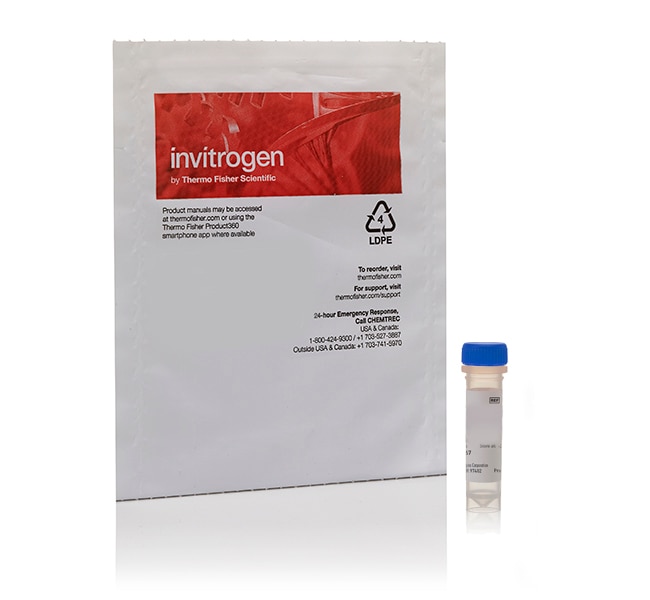
Thermo Fisher Scientific offers a broad selection of Invitrogen alpha-bungarotoxin conjugates, including Alexa Fluor and Alexa Fluor Plus conjugates.
Have Questions?
Change view

| Catalog Number | Label or Dye |
|---|---|
| B35451 | Alexa Fluor™ 555 |
| B56130 | Alexa Fluor™ Plus 405 |
| B13422 | Alexa Fluor™ 488 |
| B13423 | Alexa Fluor™ 594 |
| B35450 | Alexa Fluor™ 647 |
| B1196 | Biotin-XX |
| T1175 | Tetramethylrhodamine |
| B1601 | Unlabeled |
Catalog number B35451
Price (USD)
607.65
Online exclusive
646.00Save 38.35
Each
Label or Dye:
Alexa Fluor™ 555
Price (USD)
607.65
Online exclusive
646.00Save 38.35
Each
Thermo Fisher Scientific offers a broad selection of Invitrogen alpha-bungarotoxin conjugates, including Alexa Fluor and Alexa Fluor Plus conjugates. Alpha-bungarotoxin, a 74-amino acid peptide extracted from Bungarus multicinctus venom, binds with high affinity to the alpha subunit of the nicotinic acetylcholine receptor (AChR) of neuromuscular junctions.
Our bright and photostable Alexa Fluor 555 alpha-bungarotoxin is a superior choice of probe for visualizing this receptor. Fluorescent alpha-bungarotoxin conjugates can be used to facilitate identification of nicotinic AChRs and localization of neuromuscular junctions. Conjugated alpha-bungarotoxin has been used in variety of applications, including immunofluorescence (IF), immunohistochemistry (IHC), and flow cytometry (FC).
For Research Use Only. Not for use in diagnostic procedures.
Specifications
Label or DyeAlexa Fluor™ 555
Product TypeConjugate
Protein SubtypeOther Proteins
Quantity500 μg
Shipping ConditionRoom Temperature
Excitation/Emission555/565 nm
Product LineAlexa Fluor
Unit SizeEach
Contents & Storage
Store in freezer (–5° to –30°C) and protect from light.
Citations & References (13)
Citations & References
Abstract
Agrin elicits membrane lipid condensation at sites of acetylcholine receptor clusters in C2C12 myotubes.
Journal:J Lipid Res
PubMed ID:16816402
'The formation of the neuromuscular junction is characterized by the progressive accumulation of nicotinic acetylcholine receptors (AChRs) in the postsynaptic membrane facing the nerve terminal, induced predominantly through the agrin/muscle-specific kinase (MuSK) signaling cascade. However, the cellular mechanisms linking MuSK activation to AChR clustering are still poorly understood. Here, we
Impaired synaptic vesicle release and immaturity of neuromuscular junctions in spinal muscular atrophy mice.
Journal:J Neurosci
PubMed ID:19158308
'The motor neuron disease spinal muscular atrophy (SMA) causes profound muscle weakness that most often leads to early death. At autopsy, SMA is characterized by loss of motor neurons and muscle atrophy, but the initial cellular events that precipitate motor unit dysfunction and loss remain poorly characterized. Here, we examined
Neuromuscular junction integrity after chronic nerve compression injury.
Journal:J Orthop Res
PubMed ID:18655131
Chronic nerve compression injuries (CNC) are progressive demyelinating disorders characterized by a gradual decline of the nerve conduction velocity (NCV) in the affected nerve region. CNC injury induces a robust Schwann cell response with axonal sprouting, but without morphologic evidence of axonal injury. We hypothesize that early CNC injury occurs
CXCL12α/SDF-1 from perisynaptic Schwann cells promotes regeneration of injured motor axon terminals.
Journal:EMBO Mol Med
PubMed ID:28559442
Spinal subpial delivery of AAV9 enables widespread gene silencing and blocks motoneuron degeneration in ALS.
Journal:Nat Med
PubMed ID:31873312