Search

Invitrogen™
Tyramide Conjugates
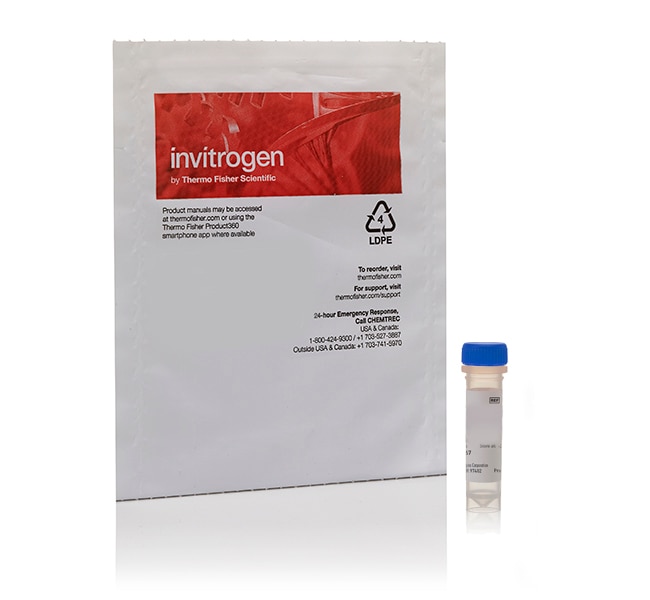
Thermo Fisher Scientific offers a wide variety of bright Alexa Fluor™, Alexa Fluor™ Plus or Biotin XX tyramide conjugates. These tyramide conjugates are used in tyramide signal amplification (TSA), also called catalyzed reporter deposition (CARD).
Have Questions?
Change view

| Catalog Number | Conjugate | Excitation/Emission |
|---|---|---|
| B40958 | Alexa Fluor™ 647 | 650/668 nm |
| B40952 | Alexa Fluor™ 350 | 347/442 nm |
| B40953 | Alexa Fluor™ 488 | 495/519 nm |
| B40954 | Alexa Fluor™ 546 | 556/573 nm |
| B40955 | Alexa Fluor™ 555 | 555/565 nm |
| B40956 | Alexa Fluor™ 568 | 579/604 nm |
| B40957 | Alexa Fluor™ 594 | 591/617 nm |
| B56131 | Alexa Fluor™ Plus 750 | 750/790 nm |
| B40951 | Biotin-XX |
Catalog number B40958
Price (USD)
597.65
Online exclusive
650.00Save 52.35
Each
Conjugate:
Alexa Fluor™ 647
Excitation/Emission:
650/668 nm
Price (USD)
597.65
Online exclusive
650.00Save 52.35
Each
Thermo Fisher Scientific offers a wide variety of bright Alexa Fluor™, Alexa Fluor™ Plus or Biotin XX tyramide conjugates. These tyramide conjugates are used in tyramide signal amplification (TSA), also called catalyzed reporter deposition (CARD). TSA is used to amplify signals up to 200 fold versus standard imaging methods. This reagent can be used with any antibody conjugated to HRP for tyramide signal amplification to detect low abundance targets. Up to seven-plex is possible in multiplexable fluorescent imaging.
These tyramide reagents are used in tyramide signal amplification (TSA), also called catalyzed reporter deposition (CARD). TSA is used to amplify signal up to 200-fold versus standard imaging methods. These reagents are provided stand-alone, but are also available as part of our SuperBoost™ tyramide signal amplification kits (available separately). They can be used with any antibody conjugated to HRP for tyramide signal amplification for detection of low abundance targets. Up to seven-plex is possible in multiplex fluorescent immunocytochemistry (ICC), immunohistochemistry (IHC), and in situ hybridization (ISH).
Features include:
• Superior sensitivity for detection of low-level or hard-to-detect targets by fluorescent imaging
• Simple protocol and detection using standard filters
• Suitable for high-resolution multiplex images—co-label with TO-PRO-3, secondary antibodies, and other SuperBoost kits
• Requires 10–100 times less primary antibody then standard ICC/IHC/ISH experiments
Tyramide reagents, when used as directed, can increase sensitivity up to 200 times over standard imaging methods. These reagents help sharpen your results for clear visibility into critical areas that standard imaging methods fail to reveal. They are simple to use and easily adapted to standard ICC, IHC, or FISH experimental protocols, using any cell or tissue type. Cells labeled using a tyramide reagent can be imaged using any type of microscope, producing high-resolution multiplex images.
Dissolve the Alexa Fluor™ or Biotin-XX tyramide reagent in 150 μL of DMSO to prepare 100X stock. Tyramide may coat the sides of the vial so invert the vial several times to ensure all reagent is dissolved in solution.
For Research Use Only. Not for use in diagnostic procedures.
Specifications
ConjugateAlexa Fluor™ 647
Detection MethodFluorescence
Excitation/Emission650/668 nm
Shipping ConditionApproved for shipment at Room Temperature or on Wet Ice
ClonalityNone
For Use With (Application)Immunohistochemistry (IHC), Immunofluorescence (IF), Immunocytochemistry (ICC), ISH
Product LineAlexa Fluor
Quantity1 vial, 150 slides
Unit SizeEach
Contents & Storage
• 1 vial Alexa Fluor Tyramide Reagent sufficient for 150 slides
Store at 2°C to 8°C. When stored as directed, the product is stable for 6 months after receiving.
Store at 2°C to 8°C. When stored as directed, the product is stable for 6 months after receiving.