Search


Citations & References (658)
Invitrogen™
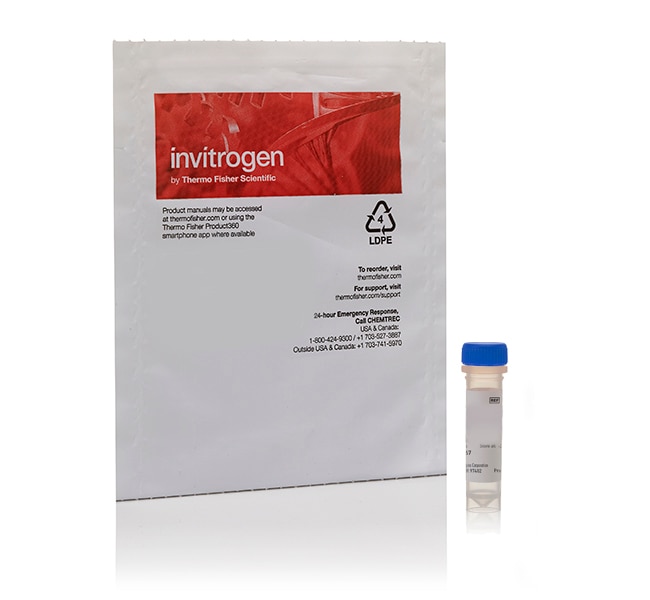
Calcein AM, Cell-permeant Green and Blue Dyes
Calcein AM is a cell-permeant dye that can be used to determine cell viability in most eukaryotic cells. In live cells, the non-fluorescent Calcein AM is converted to green or blue fluorescent Calcein, after acetoxymethyl ester hydrolysis by intracellular esterases.
Have Questions?
Change view

| Catalog Number | Product Type | Quantity | Color |
|---|---|---|---|
| C3099 | Calcein, AM | 1 mL | Green |
| C3100MP | Calcein, AM | 20 x 50 μg | Green |
| C1430 | Calcein, AM | 1 mg | Green |
| C1429 | Calcein Blue, AM | 1 mg | Blue |
| C34852 | Calcein Green, AM | 20 x 50 μg | Green |
| C481 | Calcein, high purity | 100 mg | Green |
Catalog number C3099
Price (USD)
403.65
Online exclusive
429.00Save 25.35
Each
Product Type:
Calcein, AM
Quantity:
1 mL
Color:
Green
Price (USD)
403.65
Online exclusive
429.00Save 25.35
Each
Calcein AM is a cell-permeant dye frequently used in cell biology research. It is derived from Calcein, a fluorescent dye that exhibits bright green fluorescence upon binding to intracellular free calcium ions. Calcein AM is a non-fluorescent compound that can permeate the cell membrane due to its lipophilic properties. Once inside the cell, it is cleaved by intracellular esterases, yielding the fluorescent Calcein molecule. This conversion allows the dye to be retained within the cytoplasm; apoptotic and dead cells with compromised membranes do not retain Calcein.
Cell vitality as measured by intracellular esterase activity is a recognized parameter of cell health. Live cells are distinguished by the presence of ubiquitous intracellular esterase activity, determined by the enzymatic conversion of the virtually non-fluorescent cell permeant Calcein AM to the intensely fluorescent Calcein Green (ex/em 494/517 nm) or Calcein Blue (ex/em 360/449 nm). Apoptotic and dead cells with compromised membranes do not retain Calcein.
The acetoxymethyl (AM) ester derivatives of fluorescent indicators make up one of the most useful groups of compounds for the study of live cells. Once inside the cell, the lipophilic blocking groups are cleaved by nonspecific esterases, resulting in a charged form that is retained in cells to a much greater extent than its parent compound.
In addition to cell viability assays, Calcein AM is also used to study cell migration, cell adhesion, and cellular uptake processes. Its fluorescence properties make it a versatile tool for various applications in cell biology research.
Application of the non-AM Calcein cell-impermeant dye:
Calcein, AM requires esterase cleavage of the acetoxymethyl (AM) ester to become fluorescent. Liposomes don't have esterases unless specifically constructed to include the enzyme. The water-soluble, non-AM form of Calcein (Cat. No. C481), does not require esterase cleavage to be fluorescent.
This versatile green fluorophore is cell impermeant and is commonly used for cell tracing and in studies of endocytosis and gap junctions.
Features of Calcein AM cell-permeant dye:
- Cell-permeant—Calcein AM is cell-permeant, meaning it can pass through the cell membrane and enter live cells. This property allows researchers to label and visualize intracellular structures and processes.
- Non-toxic—Calcein AM is non-toxic to cells and does not significantly affect cell function or metabolism.
- Esterase cleavage—Once inside the cell, the acetoxymethyl (AM) ester group of Calcein AM is cleaved by intracellular esterases, resulting in the formation of Calcein. This cleavage process activates the fluorescence of Calcein, allowing for easy detection and visualization.
- Uniform distribution—Upon entering live cells, Calcein AM distributes uniformly throughout the cytoplasm and nucleus. This even distribution allows for accurate assessment and visualization of cellular processes.
- Stability—Calcein AM is relatively stable within cells and can be used for long-term imaging experiments without significant photobleaching.
- Fluorogenic—Calcein AM is a non-fluorescent compound, but once inside the cell, it is cleaved by intracellular esterases, resulting in the formation of fluorescent Calcein.
- Bright and Stable Fluorescence—Calcein exhibits bright green or blue fluorescence when it binds to intracellular free calcium ions or other targets. The resulting fluorescence is stable, allowing for long-term imaging and analysis.
Application of the Calcein AM cell-permeant dye:
Calcein AM can be used in various applications, including cell viability assays, cell migration and invasion studies, intracellular calcium imaging, cell labeling and tracing, and fluorescence microscopy and flow cytometry.
- Cell viability—Calcein AM is frequently used to assess cell viability and cytotoxicity. Live cells with intact cell membranes can take up Calcein AM, which is then cleaved by intracellular esterases to produce fluorescent Calcein. The fluorescence intensity of Calcein can be measured to determine cell viability.
- Cell migration—Calcein AM can be used to track and visualize cell migration. By labeling cells with Calcein AM, their movement and migration can be monitored over time using fluorescence microscopy. This is particularly useful in studying processes such as wound healing, metastasis, and cell trafficking.
- Cell adhesion—Calcein AM can be used to study cell adhesion and cell-substrate interactions. By labeling cells with Calcein AM and culturing them on various substrates, the adhesion properties of cells can be assessed. Changes in fluorescence intensity can indicate differences in cell adhesion.
- Cellular uptake—Calcein AM can be used to investigate cellular uptake processes. By labeling molecules or nanoparticles with Calcein AM, their uptake by cells can be tracked and analyzed. This is valuable in studying drug delivery mechanisms and understanding cellular uptake pathways.
- Intracellular pH measurements—Calcein AM has been used as a pH-sensitive dye to measure changes in intracellular pH. The fluorescence properties of Calcein can be modulated by pH, allowing researchers to monitor pH changes within cells.
For Research Use Only. Not for use in diagnostic procedures.
Specifications
Cell PermeabilityCell-permeant
Concentration1 mg/mL
Dye TypeOther Label(s) or Dye(s)
Emission Wavelength517
Excitation Wavelength494 nm
FormSolution in DMSO
Quantity1 mL
Reagent TypeCell Tracker Compounds, Cell Labeling Reagents
Shipping ConditionRoom Temperature
Target EnzymeEsterase
ColorGreen
For Use With (Application)Cell Tracing, Cell Tracker
For Use With (Equipment)Fluorescence Microscope
Product TypeCalcein, AM
Unit SizeEach
Contents & Storage
Store in freezer (-5°C to -30°C) and protect from light.
Frequently asked questions (FAQs)
I would like a dye to load in live cells such that it will self-quench at a high concentration, but if the cell dies, the dye will be released and unquenched. Do you have anything like that?
I need to load liposomes with calcein. Should I use the AM form or the non-AM form?
I want to do a cell migration study for around 4 hours and need to fluorescently label the cells with a dye. What do you recommend?
I am doing a Live/Dead assay using Calcein, AM, for live cells and ethidium homodimer-1 for dead cells. Can I fix the cells after labeling and retain the staining?
I need a general cytoplasmic stain that does not overlap with the GFP in my cells. What do you recommend?
Citations & References (658)
Citations & References
Abstract
Nitric oxide mediates natural polyphenol-induced Bcl-2 down-regulation and activation of cell death in metastatic B16 melanoma.
Journal:The Journal of biological chemistry
PubMed ID:17135264
Cloning and expression of murine sister of P-glycoprotein reveals a more discriminating transporter than MDR1/P-glycoprotein.
Journal:Molecular pharmacology
PubMed ID:10617675
Deposition of laminin 5 by keratinocytes regulates integrin adhesion and signaling.
Journal:The Journal of biological chemistry
PubMed ID:10926936
Large-scale chemical dissection of mitochondrial function.
Journal:Nature biotechnology
PubMed ID:18297058
Mitochondrial oxidative phosphorylation (OXPHOS) is central to physiology and disease pathogenesis. To systematically investigate its activity and regulation, we performed a wide range of assays of OXPHOS physiology and nuclear and mitochondrial gene expression across 2490 chemical perturbations in muscle cells. Through mining of the resulting compendium, we discovered that:
Modification of the cytoplasmic domain of influenza virus hemagglutinin affects enlargement of the fusion pore.
Journal:Journal of virology
PubMed ID:10906206
The fusion activity of chimeras of influenza virus hemagglutinin (HA) (from A/fpv/Rostock/34; subtype H7) with the transmembrane domain (TM) and/or cytoplasmic tail (CT) either from the nonviral, nonfusogenic T-cell surface protein CD4 or from the fusogenic Sendai virus F-protein was studied. Wild-type or chimeric HA was expressed in CV-1 cells