Search


Citations & References (23)
Invitrogen™
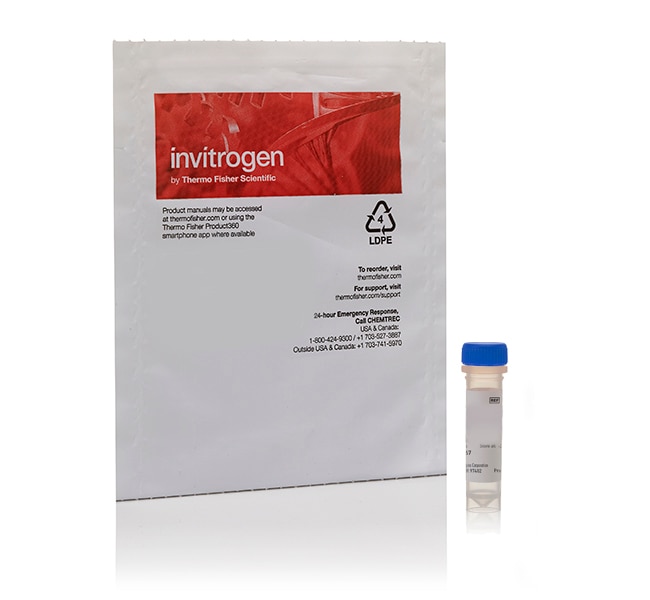
BODIPY™ 500/510 C1, C12 (4,4-Difluoro-5-Methyl-4-Bora-3a,4a-Diaza-s-Indacene-3-Dodecanoic Acid)
Our C1-BODIPY 500/510 C12 is a fluorescent fatty acid analog that has been used for lipid trafficking studies and asRead more
| Catalog Number | Quantity |
|---|---|
| D3823 | 1 mg |
Catalog number D3823
Price (MXN)
-
Quantity:
1 mg
Our C1-BODIPY 500/510 C12 is a fluorescent fatty acid analog that has been used for lipid trafficking studies and as a general membrane probe. It forms excimers and exhibits red-shifted fluorescence emission when incorporated into living cells.
For Research Use Only. Not for use in diagnostic procedures.
Specifications
Chemical Name or MaterialFatty Acids
Recommended StorageStore in freezer (-5 to -30°C) and protect from light.
Physical FormSolid
Product LineBODIPY
Quantity1 mg
Unit SizeEach
Citations & References (23)
Citations & References
Abstract
Triacylglycerol is synthesized in a specific subclass of caveolae in primary adipocytes.
Journal:J Biol Chem
PubMed ID:15537657
'A principal metabolic function of adipocytes is to synthesize triacylglycerol (TG) from exogenous fatty acids. The level of fatty acids has to be tightly controlled in the adipocyte, as they can act as detergents that rapidly dissolve the plasma membrane, causing cell lysis if allowed to accumulate. Fatty acids therefore
Flow cytometry-based binding assay for GPR40 (FFAR1; free fatty acid receptor 1).
Journal:Mol Pharmacol
PubMed ID:18927207
'GPR40 is a G protein-coupled receptor (GPCR) whose endogenous ligands have recently been identified as medium- and long-chain free fatty acids (FFAs), and it is thought to play an important role in insulin release. Despite recent research efforts, much still remains unclear in our understanding of its pharmacology, mainly because
A novel fluorescent fatty acid, 5-methyl-BDY-3-dodecanoic acid, is a potential probe in lipid transport studies by incorporating selectively to lipid classes of BHK cells.
Journal:Biochem Biophys Res Commun
PubMed ID:1417832
'The 5-methyl-BDY-3-dodecanoic acid (B12FA) labelling of BHK cell lipids was analyzed by thin layer and reverse phase column chromatography. Incorporation to phospholipids was selective: over 90% of B12FA label was enriched in phosphatidylcholine. The major molecular species of PC was that containing palmitate as the unlabelled fatty acid. Small amounts
Determination of the depth of BODIPY probes in model membranes by parallax analysis of fluorescence quenching.
Journal:Biochim Biophys Acta
PubMed ID:9767081
'The location of a series of lipophilic and lipid-attached BODIPY (4, 4-difluoro-4-bora-3a,4a-diaza-s-indacene) membrane probes was analyzed by the quenching of BODIPY fluorescence by a series of nitroxide-labeled lipids in which the depth of the nitroxide group is varied. When attached to the polar headgroup of PE the BODIPY remained near
Mode of action of an antiviral peptide from HIV-1. Inhibition at a post-lipid mixing stage.
Journal:J Biol Chem
PubMed ID:11027678
'DP178, a synthetic peptide corresponding to a segment of the transmembrane envelope glycoprotein (gp41) of human immunodeficiency virus, type 1 (HIV-1), is a potent inhibitor of viral infection and virus-mediated cell-cell fusion. Nevertheless, DP178 does not contain gp41 coiled-coil cavity binding residues postulated to be essential for inhibiting HIV-1 entry.