Search


Citations & References (28)
Invitrogen™
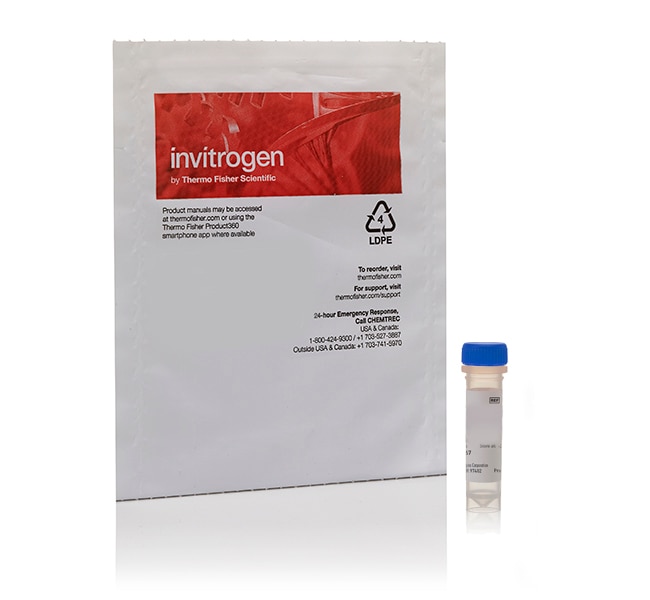
ER-Tracker™ Green (BODIPY™ FL Glibenclamide), for live-cell imaging
ER-Tracker Green dye is cell-permeant, live-cell stain that is highly selective for the endoplasmic reticulum (ER) that when stained usingRead more
| Catalog Number | Quantity |
|---|---|
| E34251 | 100 μg |
Catalog number E34251
Price (USD)
536.00
Each
Quantity:
100 μg
Price (USD)
536.00
Each
ER-Tracker Green dye is cell-permeant, live-cell stain that is highly selective for the endoplasmic reticulum (ER) that when stained using the protocol provided, the staining pattern is partially retained after fixation with formaldehyde. This stain consists of the green-fluorescent BODIPY FL dye and glibenclamide. Glibenclamide (glyburide) binds to the sulphonylurea receptors of ATP-sensitive K+ channels which are prominent on ER; the pharmacological activity of glibenclamide could potentially affect ER function. Variable expression of sulphonylurea receptors in some specialized cell types may result in non-ER labeling.
Visualize staining your cell without wasting your reagents, antibodies, or time with our new Stain-iT Cell Staining Simulator.
Visualize staining your cell without wasting your reagents, antibodies, or time with our new Stain-iT Cell Staining Simulator.
For Research Use Only. Not for use in diagnostic procedures.
Specifications
ColorGreen
Detection MethodFluorescence
For Use With (Equipment)Fluorescence Microscope
Product LineBODIPY, ER-Tracker
Quantity100 μg
Shipping ConditionRoom Temperature
Label TypeBODIPY Dyes
Product TypeDye
Sub Cellular LocalizationEndoplasmic Reticulum
Unit SizeEach
Contents & Storage
Store in freezer -5°C to -30°C and protect from light.
Frequently asked questions (FAQs)
Why don't I see a significant change in signal for my live-cell fluorescent indicator dye?
Citations & References (28)
Citations & References
Abstract
Morphological localisation of sulfonylurea receptor 1 in endocrine cells of human, mouse and rat pancreas.
Journal:Diabetologia
PubMed ID:17593344
'AIMS/HYPOTHESIS: Sulfonylurea receptor 1 (SUR1) is the regulatory subunit of ATP-sensitive K channels in beta cells. Morphological methods (immunohistochemistry and sulfonylurea binding) were used to establish the cellular and subcellular location of SUR1 in human and rodent islets. RESULTS: In the human, mouse and rat pancreas, all endocrine cells of
Live intracellular super-resolution imaging using site-specific stains.
Journal:
PubMed ID:24079385
'Point localization super-resolution imaging (SR) requires dyes that can cycle between fluorescent and dark states, in order for their molecular positions to be localized and create a reconstructed image. Dyes should also densely decorate biological features of interest to fully reveal structures being imaged. We tested site-specific dyes in several
Suicidal membrane repair regulates phosphatidylserine externalization during apoptosis.
Journal:J Biol Chem
PubMed ID:19561081
One of the hallmarks of apoptosis is the redistribution of phosphatidylserine (PS) from the inner-to-outer plasma membrane (PM) leaflet, where it functions as a ligand for phagocyte recognition and the suppression of inflammatory responses. The mechanism by which apoptotic cells externalize PS has been assumed to involve
Mitochondrial autophagy is an HIF-1-dependent adaptive metabolic response to hypoxia.
Journal:J Biol Chem
PubMed ID:18281291
Autophagy is a process by which cytoplasmic organelles can be catabolized either to remove defective structures or as a means of providing macromolecules for energy generation under conditions of nutrient starvation. In this study we demonstrate that mitochondrial autophagy is induced by hypoxia, that this process requires the hypoxia-dependent factor-1-dependent
Translocation of a phycoerythrin alpha subunit across five biological membranes.
Journal:J Biol Chem
PubMed ID:17702756
Cryptophytes, unicellular algae, evolved by secondary endosymbiosis and contain plastids surrounded by four membranes. In contrast to cyanobacteria and red algae, their phycobiliproteins do not assemble into phycobilisomes and are located within the thylakoid lumen instead of the stroma. We identified two gene families encoding phycoerythrin alpha and light-harvesting complex