Search


Citations & References (8)
Invitrogen™
ProcartaPlex™ Mouse Chemokine Panel 1, 9plex
The ProcartaPlex Mouse Chemokine Panel 1 9plex enables the study of the immune response by analyzing 9 protein targets inRead more
| Catalog Number | Quantity |
|---|---|
| EPX090-20821-901 | 96 Tests |
Catalog number EPX090-20821-901
Price (USD)
2,775.00
Each
Quantity:
96 Tests
Price (USD)
2,775.00
Each
The ProcartaPlex Mouse Chemokine Panel 1 9plex enables the study of the immune response by analyzing 9 protein targets in a single well using Luminex xMAP technology. This panel is a module of the Mouse Cytokine & Chemokine Panel 1A 36plex (Cat. No. EPX360-26092-901). This kit is fully combinable with the other modules or individual simplex assays corresponding to the targets in the 36-plex panel.
ProcartaPlex preconfigured panels are extensively tested for analyte combinability, interference, and cross-reactivity to provide the highest level of validation and precision. All ProcartaPlex panels are supplied with the necessary reagents to perform the assay.
ProcartaPlex multiplex panels are available in multiple formats across six species (human, mouse, rat, nonhuman primate, porcine, and canine). Visit our ProcartaPlex Immunoassays page for more information and available products.
Target list [bead region]: Eotaxin (CCL11) [62], GRO alpha (CXCL1) [43], IP-10 (CXCL10) [22], MCP-1 (CCL2) [51], MCP-3 (CCL7) [48], MIP-1 alpha (CCL3) [47], MIP-1 beta (CCL4) [72], MIP-2 [55], RANTES (CCL5) [44]
About ProcartaPlex assays for the Luminex platform
ProcartaPlex immunoassays are based on the principles of a sandwich ELISA, using two highly specific antibodies binding to different epitopes of one protein to quantitate all protein targets simultaneously using a Luminex instrument. ProcartaPlex multiplex assays require as little as 25 μL of plasma or serum, or 50 μL of cell culture supernatant, and just four hours to obtain analyzed results.
Features include:
• Reproducible, reliable results—validated as a panel to the highest industry standard, including protein target combinability and cross-reactivity testing
• More results per sample—measure multiple protein targets simultaneously in a single 25–50 μL sample
• Well-established Luminex technology highly referenced multiplexing platform for protein detection and quantitation
ProcartaPlex assays utilize Luminex xMAP (multianalyte profiling) technology for the simultaneous detection and quantitation of up to 80 protein targets in a single 25–50 μL sample—from plasma, serum, cell culture supernatants, and other bodily fluids.
The Luminex beads in the ProcartaPlex assay are internally dyed with precise proportions of red and infrared fluorophores to create spectrally unique signatures that can be identified by the Luminex xMAP detection systems (e.g., Luminex 200, FLEXMAP 3D, and MAGPIX). Similar to a sandwich ELISA, the ProcartaPlex assay uses matched antibody pairs to identify the protein of interest. In a multiplexed assay, each spectrally unique bead is labeled with antibodies specific for a single target protein, and bound proteins are identified with biotinylated antibodies and streptavidin–R-phycoerythrin (RPE). The conjugation of protein-specific antibodies to a distinct bead allows for analysis of multiple targets in a single well.
The most significant difference between a ProcartaPlex assay and ELISA is that the capture antibody in the ProcartaPlex assay is conjugated to a bead and not adsorbed to the microplate well, so the ProcartaPlex assay reagents are free-floating in the solution. For detection, the Luminex 200 instrument, for example, contains two lasers, one to distinguish the spectral signature of each bead and the second to quantify the amount of RPE fluorescence, which is proportional to the amount of protein present in the sample. ProcartaPlex multiplex assays can profile more target proteins using significantly less sample in the same time that it takes to perform a traditional sandwich ELISA.
ProcartaPlex multiplex panels are available in multiple formats across six species (human, mouse, rat, nonhuman primate, porcine, and canine). Visit thermofisher.com/procartaplex for more information and available products.
For Research Use Only. Not for use in diagnostic procedures.
Specifications
Assay RangeSee Certificate of Analysis
Assay SensitivitySee Certificate of Analysis
For Use With (Equipment)Luminex™ Instruments
FormatMultiplex Kit
Product LineProcartaPlex
Sample TypeSerum, Plasma, Cell Culture Supernatants
Sample VolumeSerum, Plasma: 25 μL; CCS: 50 μL
Shipping ConditionWet Ice
CombinabilityCombinable
Product TypeMultiplex Panel
Quantity96 Tests
Research AreaImmunology, Chemokines
SpeciesMouse
Unit SizeEach
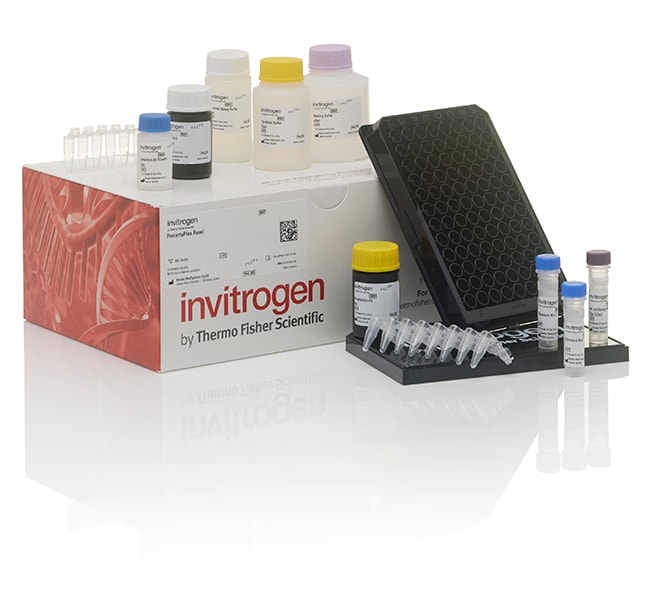
Contents & Storage
• 2 vials Mouse Standard Mix A (lyophilized)
• 1 vial Capture Bead Mix (1X)
• 1 vial Biotinylated Detection Antibody Mix (50X)
• 1 bottle Reading Buffer (1X)
• 1 bottle Wash Buffer (10X)
• 1 bottle Streptavidin-PE (1X)
• 1 bottle Universal Assay Buffer (1X)
• 1 bottle Detection Antibody Diluent (1X)
• 8-tube strip
• Adhesive film
• Flat-bottom 96-well plate, black
Store at 2°C to 8°C
Frequently asked questions (FAQs)
What is the size of the Luminex beads you currently use?
I am interested in performing Luminex assays using BioSource kits, and I have a Luminex xMAP system. Besides the kits and system, what other reagents and equipment will I need?
Do the Luminex beads require special care in handling?
Why would the Luminex acquisition software display "Sample Empty" messages during analysis?
What are the Luminex beads made of?
Citations & References (8)
Citations & References
Abstract
Tetanus toxoid and CCL3 improve dendritic cell vaccines in mice and glioblastoma patients.
Journal:
PubMed ID:25762141
'After stimulation, dendritic cells (DCs) mature and migrate to draining lymph nodes to induce immune responses. As such, autologous DCs generated ex vivo have been pulsed with tumour antigens and injected back into patients as immunotherapy. While DC vaccines have shown limited promise in the treatment of patients with advanced
New role of P2X7 receptor in an Alzheimer's disease mouse model.
Journal:Mol Psychiatry
PubMed ID:29934546
'Extracellular aggregates of amyloid ß (Aß) peptides, which are characteristic of Alzheimer''s disease (AD), act as an essential trigger for glial cell activation and the release of ATP, leading to the stimulation of purinergic receptors, especially the P2X7 receptor (P2X7R). However, the involvement of P2X7R in the development of AD
New in vitro model derived from brain-specific Mut-/- mice confirms cerebral ammonium accumulation in methylmalonic aciduria.
Journal:Mol Genet Metab
PubMed ID:29934063
'Methylmalonic aciduria (MMAuria) is an inborn error of metabolism leading to neurological deterioration. In this study, we used 3D organotypic brain cell cultures derived from embryos of a brain-specific Mut'
Aquaporin-3 potentiates allergic airway inflammation in ovalbumin-induced murine asthma.
Journal:Sci Rep
PubMed ID:27165276
Oxidative stress plays a pivotal role in the pathogenesis of asthma. Aquaporin-3 (AQP3) is a small transmembrane water/glycerol channel that may facilitate the membrane uptake of hydrogen peroxide (H2O2). Here we report that AQP3 potentiates ovalbumin (OVA)-induced murine asthma by mediating both chemokine production from alveolar macrophages and T cell
IL-4/5 signalling plays an important role during Litomosoides sigmodontis infection, influencing both immune system regulation and tissue pathology in the thoracic cavity.
Journal:Int J Parasitol
PubMed ID:28859850
Approximately 100 million people suffer from filarial diseases including lymphatic filariasis (elephantiasis), onchocerciasis (river blindness) and loiasis. These diseases are amongst the most devastating of the neglected tropical diseases in terms of social and economic impact. Moreover, many infection-induced immune mechanisms in the host, their relationship to disease-related symptoms and