Search


Citations & References (4)
Invitrogen™
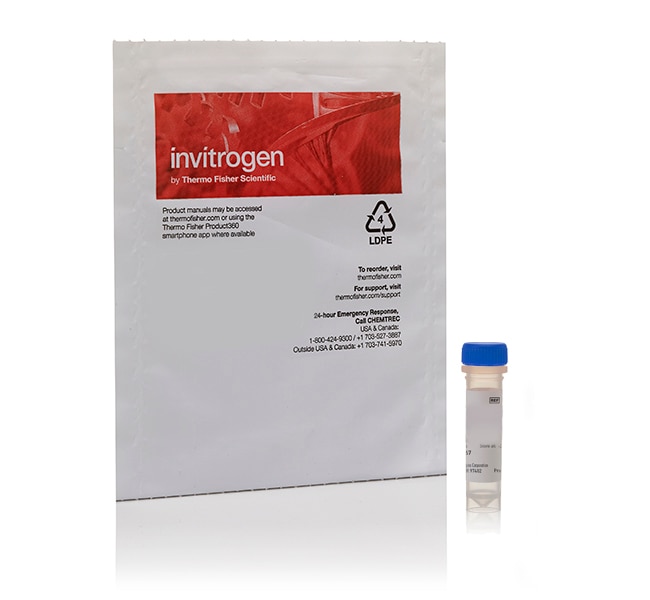
FilmTracer™ FM™ 1-43 Green Biofilm Cell Stain
FM dyes are lipophilic styryl compounds used in a wide variety of studies involving plasma membrane and vesiculation. The water-solubleRead more
| Catalog Number | Quantity |
|---|---|
| F10317 | 1 mg |
Catalog number F10317
Price (USD)
546.00
Each
Quantity:
1 mg
Price (USD)
546.00
Each
FM dyes are lipophilic styryl compounds used in a wide variety of studies involving plasma membrane and vesiculation. The water-soluble FM® dyes are virtually nonfluorescent in aqueous media and are believed to insert into the surface membrane where they become intensely fluorescent. FM® 1-43 stain has been used successfully to stain the cell bodies specifically in a complex biofilm mileu, including Pseudomonas aeruginosa, Escherichia coli, Staphylococcus sp., Acidothiobacillus caldus, and Vibrio cholerae.
For Research Use Only. Not for use in diagnostic procedures.
Specifications
ColorGreen
Detection MethodFluorescence
Dye TypeFM 1-43⁄lipid
EmissionVisible
Excitation Wavelength Range472⁄580
For Use With (Equipment)Confocal Microscope, Fluorescence Microscope, Flow Cytometer, Microplate Reader, Fluorescent Imager
FormSolid
Product LineFilmTracer, Molecular Probes
Quantity1 mg
Shipping ConditionRoom Temperature
Label TypeOther Labels or Dyes
Product TypeDye
Sub Cellular LocalizationCell Membranes, Lipids
Unit SizeEach
Contents & Storage
Store at room temperature; Dessicate; Protect from light
Frequently asked questions (FAQs)
The product sheet for FM 1-43 Dye states that the maximum for excitation is 510 nm and emissions is 626 nm, but the spectrum on the product page shows a peak at 470 nm and 580 nm. Can you clarify what the excitation and emission maxima is for this dye?
Citations & References (4)
Citations & References
Abstract
A novel role for enzyme I of the Vibrio cholerae phosphoenolpyruvate phosphotransferase system in regulation of growth in a biofilm.
Journal:J Bacteriol
PubMed ID:17981973
Glucose is a universal energy source and a potent inducer of surface colonization for many microbial species. Highly efficient sugar assimilation pathways ensure successful competition for this preferred carbon source. One such pathway is the phosphoenolpyruvate phosphotransferase system (PTS), a multicomponent sugar transport system that phosphorylates the sugar as it
Fluorescence staining of live cyanobacterial cells suggest non-stringent chromosome segregation and absence of a connection between cytoplasmic and thylakoid membranes.
Journal:BMC Cell Biol
PubMed ID:17767716
BACKGROUND: In spite of their abundance and importance, little is known about cyanobacterial cell biology and their cell cycle. During each cell cycle, chromosomes must be separated into future daughter cells, i.e. into both cell halves, which in many bacteria is achieved by an active machinery that operates during DNA
Genome Sequence and Composition of a Tolyporphin-Producing Cyanobacterium-Microbial Community.
Journal:Appl Environ Microbiol
PubMed ID:28754701
Beta-Defensin 2 and 3 Promote Bacterial Clearance of Pseudomonas aeruginosa by Inhibiting Macrophage Autophagy through Downregulation of Early Growth Response Gene-1 and c-FOS.
Journal:Front Immunol
PubMed ID:29487594