Search


Citations & References (15)
Invitrogen™
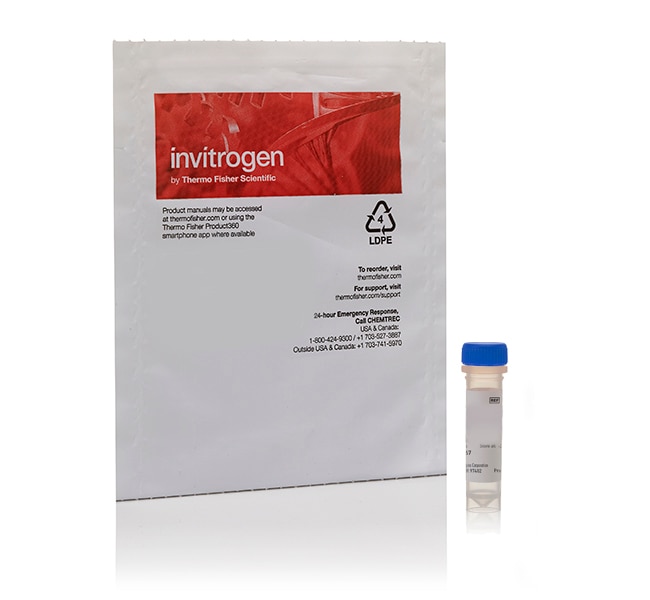
Streptavidin, Alexa Fluor™ 546 conjugate
Streptavidin, Alexa Fluor™ 546 conjugate
| Catalog Number | Quantity |
|---|---|
| S11225 | 1 mg |
Catalog number S11225
Price (USD)
270.65
Online exclusive
361.00Save 90.35
Each
Quantity:
1 mg
Price (USD)
270.65
Online exclusive
361.00Save 90.35
Each
Alexa Fluor™ 546 streptavidin comprises a biotin-binding protein (streptavidin) covalently attached to a fluorescent label (Alexa Fluor™ dye). Streptavidin has a very high binding affinity for biotin, and a conjugate of streptavidin is commonly used together with a conjugate of biotin for specific detection of a variety of proteins, protein motifs, nucleic acids, and other molecules (for example, a biotinylated primary antibody bound to a protein target can be detected with a fluorescently labeled streptavidin). Strategies similar to this are used in many detection protocols including western blots, flow cytometry, imaging and microscopy, and microplate assays. Alexa Fluor™ dye streptavidin conjugates are supplied as 1 mg lyophilized product or in 0.5 mL volumes of a 2 mg/mL solution.
Important Features of Alexa Fluor™ 546 Streptavidin Conjugates:
- Alexa Fluor™ 546 streptavidin conjugate has Ex/Em maxima of ∼ (556/573)
- Bright, photostable fluorescence
- High solubility in aqueous solutions
- Available in multiple colors
- Ideal for western blots, flow cytometry, imaging and microscopy, microplate assays and more
Properties of Alexa Fluor™ Dyes
Alexa Fluor™ dyes are organic fluorescent dyes developed for better performance in imaging and other labeling protocols and exhibit improved photostability and brightness and improved solubility in aqueous solutions. Available in a broad range of colors, these dyes are a good choice for most imaging applications.
Blocking Endogenous Biotin
Naturally occurring biotins can interfere with biotin-streptavidin detection schemes. For experiments involving fixed and permeabilized cells, try our Endogenous Biotin-Blocking Kit to minimize this interference.
Related Links:
For Research Use Only. Not for use in diagnostic procedures.
Specifications
Label or DyeAlexa Fluor Dyes
Product TypeStreptavidin Conjugate (fluorescent)
Quantity1 mg
Shipping ConditionRoom Temperature
ConjugateAlexa Fluor 546
FormSolid
Product LineAlexa Fluor
Unit SizeEach
Contents & Storage
Store in freezer (-5 to -30°C) and protect from light.
Frequently asked questions (FAQs)
I am planning to use a fluorescent streptavidin labeled conjugate. What are the storage conditions and shelf life for the lyophilized powder and reconstituted solution?
I am planning to use a fluorescent streptavidin labeled conjugate. How should I prepare the working solution of the conjugate?
Citations & References (15)
Citations & References
Abstract
Features of medullary thymic epithelium implicate postnatal development in maintaining epithelial heterogeneity and tissue-restricted antigen expression.
Journal:J Immunol
PubMed ID:16670287
'Although putative thymic epithelial progenitor cells have been identified, the developmental potential of these cells, the extent of medullary thymic epithelium (mTEC) heterogeneity, and the mechanisms that mediate the expression of a wide range of peripheral tissue-restricted Ags (TRAs) by mTECs remain poorly defined. Here we have defined several basic
Overexpression of the Wiskott-Aldrich syndrome protein N-terminal domain in transgenic mice inhibits T cell proliferative responses via TCR signaling without affecting cytoskeletal rearrangements.
Journal:J Immunol
PubMed ID:11591801
'Wiskott-Aldrich syndrome (WAS) is an X-linked recessive disorder characterized by thrombocytopenia with small platelets, severe eczema, and recurrent infections due to defects in the immune system. The disease arises from mutations in the gene encoding the WAS protein (WASP), which plays a role as an adaptor molecule in signal transduction
Reversible MHC multimer staining for functional isolation of T-cell populations and effective adoptive transfer.
Journal:Nat Med
PubMed ID:12042816
'Recently developed major histocompatibility complex (MHC) multimer technologies allow visualization and isolation of antigen-specific T cells. However, functional analysis and in vivo transfer of MHC multimer-stained cells is hampered by the persistence of T-cell receptor (TCR) MHC interactions and subsequently induced signaling events. As MHC monomers do not stably bind
Detection of allergen-specific IgE on microarrays by use of signal amplification techniques.
Journal:Clin Chem
PubMed ID:12142398
Combined tyramide signal amplification and quantum dots for sensitive and photostable immunofluorescence detection.
Journal:J Histochem Cytochem
PubMed ID:12871979
Conventional immunofluorescence detection of biologically relevant proteins and antigens in tissue sections is often limited by relatively weak signals that fade rapidly on illumination. We have developed an immunohistochemical protocol that combines the sensitivity of tyramide signal amplification with the photostability of quantum dots to overcome these limitations. This simple