Search


Citations & References (41)
Invitrogen™
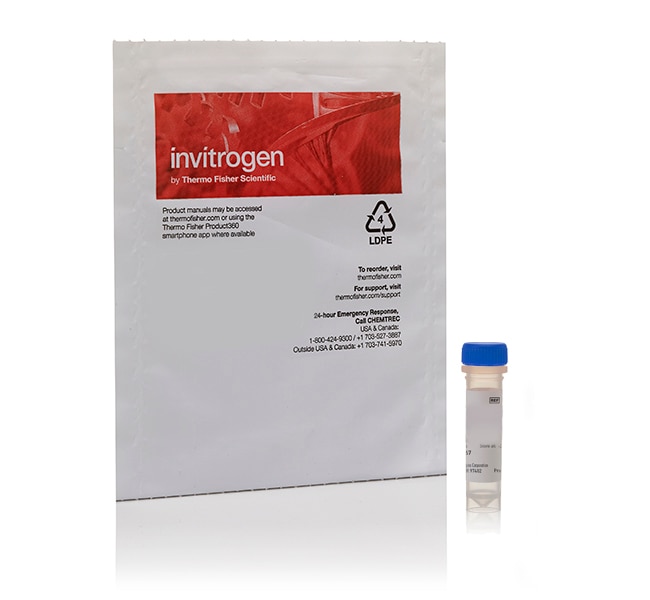
SYTOX™ Orange Nucleic Acid Stain - 5 mM Solution in DMSO
SYTOX Orange dye stains nucleic acids in cells with compromised membranes. This stain is useful as an indicator of cellRead more
| Catalog Number | Quantity |
|---|---|
| S11368 | 250 μL |
Catalog number S11368
Price (USD)
402.00
Each
Quantity:
250 μL
Price (USD)
402.00
Each
SYTOX Orange dye stains nucleic acids in cells with compromised membranes. This stain is useful as an indicator of cell death and is much brighter than propidium iodide (P-1304).
Visualize staining your cell without wasting your reagents, antibodies, or time with our new Stain-iT Cell Staining Simulator.
Visualize staining your cell without wasting your reagents, antibodies, or time with our new Stain-iT Cell Staining Simulator.
For Research Use Only. Not for use in diagnostic procedures.
Specifications
ColorOrange
Detection MethodFluorescence
Dye TypeCell-Permeant
Emission570 nm
Excitation Wavelength Range547 nm
For Use With (Equipment)Fluorescence Microscope
FormSolution
FormatTube(s)
Product LineSYTOX
Quantity250 μL
Shipping ConditionRoom Temperature
Volume (Metric)250 μL
Label TypeFluorescent Dye
Product TypeNucleic Acid Stain
Sub Cellular LocalizationNucleic Acids
Unit SizeEach
Contents & Storage
Store in freezer at -5°C to -30°C and protect from light.
Frequently asked questions (FAQs)
How do SYTO dyes bind to DNA?
Citations & References (41)
Citations & References
Abstract
Nucleosomes are exposed at the cell surface in apoptosis.
Journal:J Immunol
PubMed ID:15153485
'Apoptotic cells are considered the source of DNA, histones, and nucleoprotein complexes that drive the production of autoantibodies in systemic lupus erythematosus. However, the role of apoptotic cells in the activation of the immune system is not clear. To explore interactions that may initiate or sustain the production of anti-nuclear
Peroxisome proliferator-activated receptor gamma-mediated regulation of neural stem cell proliferation and differentiation.
Journal:J Biol Chem
PubMed ID:16524877
'Peroxisome proliferator-activated receptor gamma (PPARgamma) plays an important role in insulin sensitivity, tissue homeostasis, and regulating cellular functions. We found high-level expression of PPARgamma in embryo mouse brain and neural stem cells (NSCs), in contrast to extremely low levels in adult mouse brain. Here, we show that PPARgamma mediates the
Diverse microglial motility behaviors during clearance of dead cells in hippocampal slices.
Journal:Glia
PubMed ID:15042586
'We used two-channel three-dimensional time-lapse fluorescence confocal imaging in live rat hippocampal slice cultures (1-7 days in vitro) to determine the motility behaviors of activated microglia as they engage dead and dying cells following traumatic brain tissue injury. Live microglia were labeled with a fluorescently conjugated lectin (IB(4)), and dead
Probing the kinetics of SYTOX Orange stain binding to double-stranded DNA with implications for DNA analysis.
Journal:Anal Chem
PubMed ID:15924389
'Rapid binding kinetics of SYTOX Orange stain with double-stranded DNA (dsDNA) was revealed on the DNA fragment sizing flow cytometer. We demonstrated for the first time that the dye molecules could be adsorbed onto the capillary surface and native DNA fragments can be dynamically stained while passing through the capillary.
Droplet microfluidic technology for single-cell high-throughput screening.
Journal:Proc Natl Acad Sci U S A
PubMed ID:19617544
'We present a droplet-based microfluidic technology that enables high-throughput screening of single mammalian cells. This integrated platform allows for the encapsulation of single cells and reagents in independent aqueous microdroplets (1 pL to 10 nL volumes) dispersed in an immiscible carrier oil and enables the digital manipulation of these reactors