Search


Citations & References (101)
Invitrogen™
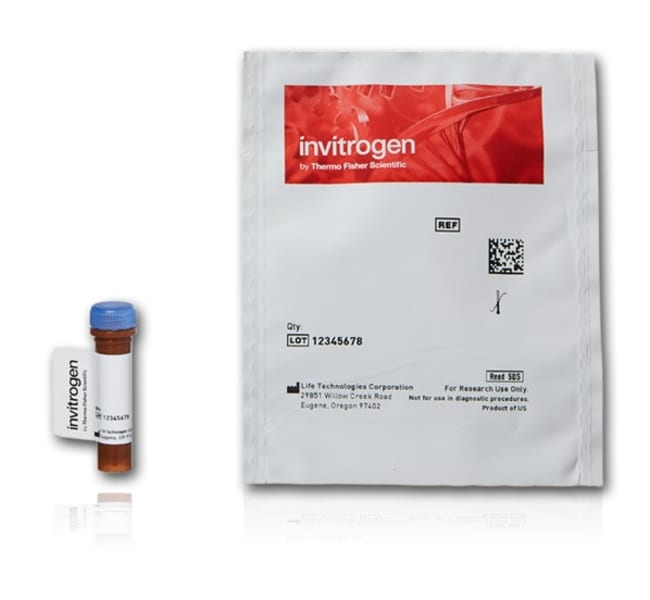
Texas Red™ Sulfonyl Chloride, mixed isomers
The amine-reactive Texas Red™ sulfonyl chloride can be used to can be used to create bright red-fluorescent bioconjugates with excitation/emissionRead more
Have Questions?
Change view

| Catalog Number | Quantity |
|---|---|
| T1905 | 10 x 1 mg |
| T353 | 10 mg |
Catalog number T1905
Price (MXN)
-
Quantity:
10 x 1 mg
The amine-reactive Texas Red™ sulfonyl chloride can be used to can be used to create bright red-fluorescent bioconjugates with excitation/emission maxima ∼595/615 nm. A special packaging is also available (T1905).
For Research Use Only. Not for use in diagnostic procedures.
Specifications
Chemical ReactivityAmine
Emission615
Excitation595
Label or DyeTexas Red™
Product TypeSulfonyl Chloride
Quantity10 x 1 mg
Reactive MoietySulfonyl Chloride
Shipping ConditionRoom Temperature
Label TypeClassic Dyes
Product LineTexas Red
Unit Size10 x 1 mg
Contents & Storage
Store in freezer (-5 to -30°C) and protect from light.
Citations & References (101)
Citations & References
Abstract
Sensitive fluorescence-based thermodynamic and kinetic measurements of DNA hybridization in solution.
Journal:Biochemistry
PubMed ID:8457571
Kinetic and thermodynamic constants associated with DNA hybridization were determined in solution using fluorescence measurements and complementary fluorophore-labeled oligomers. One oligomer was labeled with a 5'-terminal fluorescein, and the other was labeled with a 3'-terminal rhodamine. The juxtaposition of the two labels in double-stranded complexes results in a strong quenching
SH2-B is required for growth hormone-induced actin reorganization.
Journal:J Biol Chem
PubMed ID:10777618
'The Src homology-2 (SH2) domain-containing protein SH2-Bbeta is a substrate of the growth hormone (GH) receptor-associated tyrosine kinase JAK2. Here we tested whether SH2-Bbeta is involved in GH regulation of the actin cytoskeleton. Based on cell fractionation and confocal microscopy, we find SH2-Bbeta present at the plasma membrane and in
Alexa dyes, a series of new fluorescent dyes that yield exceptionally bright, photostable conjugates.
Journal:J Histochem Cytochem
PubMed ID:10449539
'Alexa 350, Alexa 430, Alexa 488, Alexa 532, Alexa 546, Alexa 568, and Alexa 594 dyes are a new series of fluorescent dyes with emission/excitation spectra similar to those of AMCA, Lucifer Yellow, fluorescein, rhodamine 6G, tetramethylrhodamine or Cy3, lissamine rhodamine B, and Texas Red, respectively (the numbers in the
Kinetics of antigenic peptide binding to the class II major histocompatibility molecule I-Ad.
Journal:Proc Natl Acad Sci U S A
PubMed ID:2052549
'Using high-performance size-exclusion chromatography and fluorescence spectroscopy, we investigated the kinetics of fluorescent peptide reactions with detergent-solubilized I-Ad, a class II molecule of the mouse major histocompatibility complex. At pH 7.0 and 37 degrees C the half-time for the binding of a fluorescein-labeled synthetic peptide representing ovalbumin amino acids 323-339
Co-expression of chemotactic ligand receptors on human peripheral blood monocytes.
Journal:J Immunol
PubMed ID:2435802
'Directed migration of monocytes is dependent upon interaction of cell surface receptors and specific chemotactic ligands. To determine whether circulating human monocytes express multiple chemotactic ligand receptors or whether subpopulations of monocytes exist with a single receptor specificity, nonoverlapping fluorescent probes for two chemotactic ligands, N-formyl methionyl leucyl phenylalanine (FMLP)