Search


Citas y referencias (2)
Invitrogen™
Tyramide Conjugates
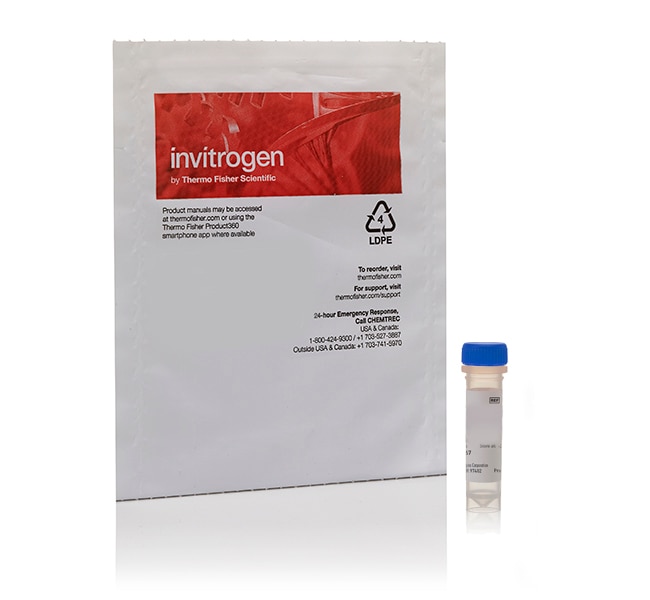
Thermo Fisher Scientific ofrece una amplia variedad de conjugados brillantes de tiramida Alexa Fluor™, Alexa Fluor™ Plus o biotina XX. Estos conjugados de tiramida se utilizan en la amplificación de señales de tiramida (TSA), también denominada depósito de indicador catalizado (CARD).
Have Questions?
Cambiar vista

| Número de catálogo | Conjugado | Excitación/emisión |
|---|---|---|
| B40953 | Alexa Fluor™ 488 | 495/519 nm |
| B40952 | Alexa Fluor™ 350 | 347/442 nm |
| B40954 | Alexa Fluor™ 546 | 556/573 nm |
| B40955 | Alexa Fluor™ 555 | 555/565 nm |
| B40956 | Alexa Fluor™ 568 | 579/604 nm |
| B40957 | Alexa Fluor™ 594 | 591/617 nm |
| B40958 | Alexa Fluor™ 647 | 650/668 nm |
| B56131 | Alexa Fluor™ Plus 750 | 750/790 nm |
| B40951 | Biotin-XX |
Número de catálogo B40953
Precio (USD)
1.001,48
Each
Conjugado:
Alexa Fluor™ 488
Excitación/emisión:
495/519 nm
Precio (USD)
1.001,48
Each
Thermo Fisher Scientific ofrece una amplia variedad de conjugados brillantes de tiramida Alexa Fluor™, Alexa Fluor™ Plus o biotina XX. Estos conjugados de tiramida se utilizan en la amplificación de señales de tiramida (TSA), también denominada depósito de indicador catalizado (CARD). TSA se utiliza para amplificar las señales hasta 200 veces en comparación con los métodos de imagen estándar. Este reactivo se puede utilizar con cualquier anticuerpo conjugado con HRP para la amplificación de la señal de tiramida para detectar objetivos de baja abundancia. Es posible hasta siete plex en imágenes fluorescentes multiplexables.
These tyramide reagents are used in tyramide signal amplification (TSA), also called catalyzed reporter deposition (CARD). TSA is used to amplify signal up to 200-fold versus standard imaging methods. These reagents are provided stand-alone, but are also available as part of our SuperBoost™ tyramide signal amplification kits (available separately). They can be used with any antibody conjugated to HRP for tyramide signal amplification for detection of low abundance targets. Up to seven-plex is possible in multiplex fluorescent immunocytochemistry (ICC), immunohistochemistry (IHC), and in situ hybridization (ISH).
Features include:
• Superior sensitivity for detection of low-level or hard-to-detect targets by fluorescent imaging
• Simple protocol and detection using standard filters
• Suitable for high-resolution multiplex images—co-label with TO-PRO-3, secondary antibodies, and other SuperBoost kits
• Requires 10–100 times less primary antibody then standard ICC/IHC/ISH experiments
Tyramide reagents, when used as directed, can increase sensitivity up to 200 times over standard imaging methods. These reagents help sharpen your results for clear visibility into critical areas that standard imaging methods fail to reveal. They are simple to use and easily adapted to standard ICC, IHC, or FISH experimental protocols, using any cell or tissue type. Cells labeled using a tyramide reagent can be imaged using any type of microscope, producing high-resolution multiplex images.
Dissolve the Alexa Fluor™ or Biotin-XX tyramide reagent in 150 μL of DMSO to prepare 100X stock. Tyramide may coat the sides of the vial so invert the vial several times to ensure all reagent is dissolved in solution.
For Research Use Only. Not for use in diagnostic procedures.
Especificaciones
ConjugadoAlexa Fluor™ 488
Método de detecciónFluorescencia
Excitación/emisión495/519 nm
Condiciones de envíoAprobado para su envío a temperatura ambiente o en hielo húmedo
ClonalityNinguno
Para utilizar con (aplicación)Inmunohistoquímica (IHQ), IF, ICQ, ISH
Línea de productosAlexa Fluor
Cantidad1 vial
Unit SizeEach
Contenido y almacenamiento
Un vial de reactivo de tiramida Alexa Fluor suficiente para 150 portaobjetos
Almacenar a una temperatura de entre 2 °C y 8 °C. Cuando se almacena como se indica, el producto es estable durante 6 meses después de su recepción.
Almacenar a una temperatura de entre 2 °C y 8 °C. Cuando se almacena como se indica, el producto es estable durante 6 meses después de su recepción.
Citations & References (2)
Citations & References
Abstract
Sensitive immunofluorescent staining of cells via generation of fluorescent nanoscale polymer films in response to biorecognition.
Journal:J Histochem Cytochem
PubMed ID:21339175
Immunofluorescent staining is central to nearly all cell-based research, yet only a few fluorescent signal amplification approaches for cell staining exist, each with distinct limitations. Here, the authors present a novel, fluorescent polymerization-based amplification (FPBA) method that is shown to enable similar signal intensities as the highly sensitive, enzyme-based tyramide
Immunohistochemical Identification of Human Skeletal Muscle Macrophages.
Journal:Bio Protoc
PubMed ID:30148186
Macrophages have well-characterized roles in skeletal muscle repair and regeneration. Relatively little is known regarding the role of resident macrophages in skeletal muscle homeostasis, extracellular matrix remodeling, growth, metabolism and adaptation to various stimuli including exercise and training. Despite speculation into macrophage contributions during these processes, studies characterizing macrophages in