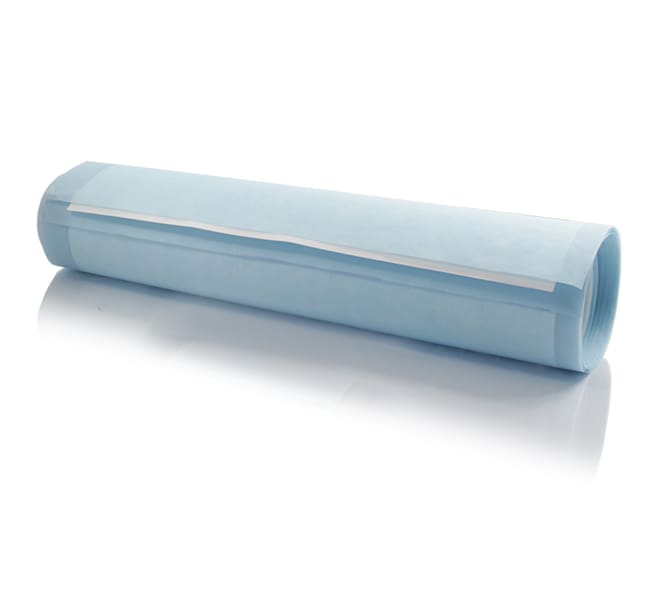
PVDF Transfer Membranes, 0.2 μm, 1 Roll
Thermo Scientific™

PVDF Transfer Membranes, 0.2 μm, 1 Roll

Las membranas de transferencia de fluoruro de polivinilideno (PVDF) Pierce de 0,2 µm se fabrican con difluoruro de polivinilideno deMás información
Have Questions?
Número de catálogoCantidad
885201 rollo
Número de catálogo 88520
Precio (CLP)
518.812
Each
Añadir al carro de la compra
Cantidad:
1 rollo
Pedido a granel o personalizado
Precio (CLP)
518.812
Each
Añadir al carro de la compra
Las membranas de transferencia de fluoruro de polivinilideno (PVDF) Pierce de 0,2 µm se fabrican con difluoruro de polivinilideno de alta calidad y proporcionan altas capacidades de unión para proteínas y ácidos nucleicos para métodos Western, Southern y Northern blotting. El tamaño de poro de 0,2 µm hace que estas membranas sean ideales para el análisis de pequeñas cantidades de proteínas (tan solo 10 pmoles), análisis de aminoácidos y transferencia de proteínas y péptidos de poco peso molecular.

Ver todas las membranas ›

Características:
Membrana: difluoruro de polivinilideno (PVDF)
Capacidad de unión: IgG de cabra: 448 µg/cm2; BSA: 340 µg/cm2; insulina: 262 µg/cm2
Volver a sondear características:
Preactivación: necesaria con alcohol al 100 % (metanol)
Compatibilidad: son compatibles con las condiciones de transferencia y los métodos de detección más utilizados, como la tinción, la quimioluminiscencia y el radiomarcado
Durabilidad: compatible con la mayoría de disolventes orgánicos, ácidos y bases suaves

Para uso exclusivo en investigación. No apto para uso en procedimientos diagnósticos.

Especificaciones
Capacidad de uniónGoat IgG: 448 μg/cm2, BSA: 340 μg/cm2, Insulin: 262 μg/cm2
Tipo de productoPVDF Transfer Membrane
Cantidad1 rollo
Condiciones de envíoTemperatura ambiente
Dimensions (LxW)26,5 cm x 3,75 m
FormatoRollo
Longitud (métrico)3,75 m
MaterialPVDF
Tamaño de poro0,2 μm
Suficiente para≥100 Mini-gel Blots (When cut to 8.8 x 10 cm); ≥80 Midi-gel Blots (When cut to 8.5 x 13.25 cm)
Anchura (métrico)26,5 cm
Unit SizeEach
Contenido y almacenamiento
Almacene las membranas a temperatura ambiente y lejos de vapores químicos. Algunos vapores de disolventes pueden disolver de manera parcial las membranas, lo que interrumpirá la estructura de los poros.

Preguntas frecuentes

How can I store, strip, and reuse my western blot?

For nitrocellulose or PVDF membrane following Western blot detection using a chemiluminescent or fluorescent substrate system: Following transfer, air dry the membrane and place in an envelope, preferably on top of a supported surface to keep the membrane flat. The blot can be stored indefinitely at -80 degrees C. When ready to reprobe, prewet the PVDF blot with alcohol for a few seconds, followed by a few rinses with pure water to reduce the alcohol concentration. Then proceed as normal with blocking step.

FOR STRIPPING/REPROBING OF MEMBRANES: Harsh protocol (see NOTE below for modifications)

1) Submerge the membrane in stripping buffer (100 mM BME, 2% SDS, 62.5 mM Tris-HCl, pH 6.7) and incubate at 50 degrees C for 30 min with occasional agitation. If more stringent conditions necessary, incubate at 70 degrees C.

2) Wash 2 x 10 min in TBS-T/PBS-T at room temperature.

3) Block the membrane by immersing in 5% blocking reagent TBS-T or PBS-T for 1 hr at room temperature.

4) Immunodetection

NOTE: Often you don't need such harsh conditions to remove antibodies from their proteins. The stringency of one or several of the variables can be decreased: lower the temperature, decrease the time, less BME, less SDS, etc. An especially mild but still often effective stripping protocol is lower pH incubation. Example: pH 2.0 Tris 50-100 mM, 30-60 min incubation (you may do two incubations if you wish). Then rinse and block as usual. If you do not wish to re-use the membrane immediately after stripping, you can store the membrane in plastic wrap (wet, you do not want it to dry out). Another simple, mild stripping buffer is 0.1 M glycine•HCl (pH 2.5-3.0), incubation 30 min to 2 hrs room temperature or 37 degrees C, depending on the antibody.

Find additional tips, troubleshooting help, and resources within our Protein Assays and Analysis Support Center.

I performed a western transfer onto a PVDF membrane and the transfer efficiency was very poor. Can you offer some tips?

Here are possible causes and solutions:

- The membrane may not be properly treated prior to transfer: Make sure that the membrane is pre-wetted with a polar organic solvent such as methanol or ethanol.
- There may be poor gel to membrane contact: Ensure that the filter paper and blotting pads are well saturated with transfer buffer, taking care to remove any bubbles during the assembly of the membrane sandwich. The gel/membrane sandwich must fit securely in the two halves of the blot module. Try adding another pad or replace any pads that have lost their resiliency with fresh ones.
- Over-compression of the gel: A good indication of over-compression is if the gel has been excessively flattened. In the event that the sandwich is over-compressed, remove enough pads so that the blotter can be closed without exerting excess pressure on the gel and the membrane.

Find additional tips, troubleshooting help, and resources within our Protein Electrophoresis and Western Blotting Support Center.

Are your PVDF and nitrocellulose membranes compatible with the Li-COR instrument?

Yes, both our PVDF and nitrocellulose membranes are compatible with the Li-COR instrument.

Find additional tips, troubleshooting help, and resources within our Protein Assays and Analysis Support Center.

I am planning on doing a dot blot and my sample contains acetonitrile. Can your PVDF or nitrocellulose membrane withstand acetonitrile?

Our PVDF can tolerate acetonitrile but our nitrocellulose cannot.

Find additional tips, troubleshooting help, and resources within our Protein Assays and Analysis Support Center.

How can I reduce background on my PVDF western blots?

PVDF membranes require more stringent blocking steps. This can be achieved by increasing the concentration of the blocking agent 2-5 fold, increasing the blocking time, and performing the procedure at 37 degrees C. Blocking agents bind to unoccupied sites to prevent background staining and also to membrane-bound proteins, reducing non-specific interactions with the primary antibody. Examples of blocking agents are nonfat dry milk, BSA, and Casein.

Find additional tips, troubleshooting help, and resources within our Protein Assays and Analysis Support Center.