Search


Citas y referencias (16)
Invitrogen™
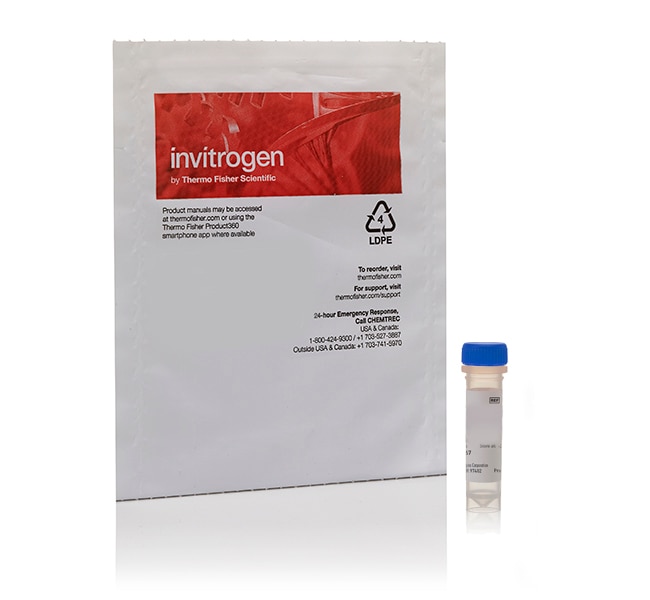
Tinción de lípidos neutros HCS LipidTOX™ Red, para adquisición de imágenes celulares
La acumulación intracelular de lípidos neutros, esteatosis, se desencadena a menudo por medicamentos que afectan al metabolismo de los ácidosMás información
| Número de catálogo | Cantidad |
|---|---|
| H34476 | 1 unidad |
Número de catálogo H34476
Precio (CLP)
658.622
Each
Cantidad:
1 unidad
Precio (CLP)
658.622
Each
La acumulación intracelular de lípidos neutros, esteatosis, se desencadena a menudo por medicamentos que afectan al metabolismo de los ácidos grasos o lípidos neutros. El tinte de lípidos neutros HCS LipidTOX™ Red se desarrolló para caracterizar los efectos potencialmente tóxicos de compuestos sobre el metabolismo lipídico en líneas celulares de mamíferos. El tinte de lípidos neutros LipidTOX™ tiene una afinidad extraordinariamente alta para las microgotas de lípidos neutros y se puede detectar por microscopía de fluorescencia o un lector de HCS. Esta sonda es compatible con los reactivos de detección de fosfolípidos (H34350, H34351) LipidTOX™ HCS. Los tintes de lípidos neutros LipidTOX™ HCS también pueden utilizarse para supervisar la formación y la diferenciación de los adipocitos, un proceso llamado adipogénesis.
Para uso exclusivo en investigación. No apto para uso en procedimientos diagnósticos.
Especificaciones
Método de detecciónFluorescente
Para utilizar con (equipo)Instrumentos de alto contenido
Línea de productosLipidTOX
Cantidad1 unidad
Condiciones de envíoTemperatura ambiente
Tipo de etiquetaOtras etiquetas o colorantes
Tipo de productoTinción lipídica
Sub Cellular LocalizationCell Membranes and Lipids , Lipids
Unit SizeEach
Contenido y almacenamiento
Almacenar en el congelador de -5 °C a -30 °C y proteger de la luz.
Preguntas frecuentes
What kind of filter sets can I use with HCS LipidTOX neutral lipid stains?
I want to label the plasma membrane of my cells, but there are several dyes to choose from. Which one should I use?
Citations & References (16)
Citations & References
Abstract
Vascular lipid accumulation, lipoprotein oxidation, and macrophage lipid uptake in hypercholesterolemic zebrafish.
Journal:Circ Res
PubMed ID:19265037
'Lipid accumulation in arteries induces vascular inflammation and atherosclerosis, the major cause of heart attack and stroke in humans. Extreme hyperlipidemia induced in mice and rabbits enables modeling many aspects of human atherosclerosis, but microscopic examination of plaques is possible only postmortem. Here we report that feeding adult zebrafish (Danio
Enhancement of BODIPY505/515 lipid fluorescence method for applications in biofuel-directed microalgae production.
Journal:J Microbiol Methods
PubMed ID:22521923
'This paper describes a microalgal cell lipid fluorescence enhancement method using BODIPY(505/515), which can be used to screen for lipids in wild-type microalgae and to monitor lipid content within microalgae production processes to determine optimal harvesting time. The study was based on four microalgae species (Dunaliella teteriolecta, Tetraselmis suecica, Nannochloropsis
Increased lipid accumulation in the Chlamydomonas reinhardtii sta7-10 starchless isoamylase mutant and increased carbohydrate synthesis in complemented strains.
Journal:Eukaryot Cell
PubMed ID:20562225
'The accumulation of bioenergy carriers was assessed in two starchless mutants of Chlamydomonas reinhardtii (the sta6 [ADP-glucose pyrophosphorylase] and sta7-10 [isoamylase] mutants), a control strain (CC124), and two complemented strains of the sta7-10 mutant. The results indicate that the genetic blockage of starch synthesis in the sta6 and sta7-10 mutants
Knockdown of ACAT-1 reduces amyloidogenic processing of APP.
Journal:FEBS Lett
PubMed ID:17412327
'Previous studies have shown that acyl-coenzyme A:cholesterol acyl transferase (ACAT), an enzyme that controls cellular equilibrium between free cholesterol and cholesteryl esters, modulates proteolytic processing of APP in cell-based and animal models of Alzheimer''s disease. Here we report that ACAT-1 RNAi reduced cellular ACAT-1 protein by approximately 50% and cholesteryl
Microplate-based high throughput screening procedure for the isolation of lipid-rich marine microalgae.
Journal:Biotechnol Biofuels
PubMed ID:22192119
We describe a new selection method based on BODIPY (4,4-difluoro-1,3,5,7-tetramethyl-4-bora-3a,4a-diaza-s-indacene) staining, fluorescence activated cell sorting (FACS) and microplate-based isolation of lipid-rich microalgae from an environmental sample. Our results show that direct sorting onto solid medium upon FACS can save about 3 weeks during the scale-up process as compared with the