Search


Citas y referencias (5)
Invitrogen™
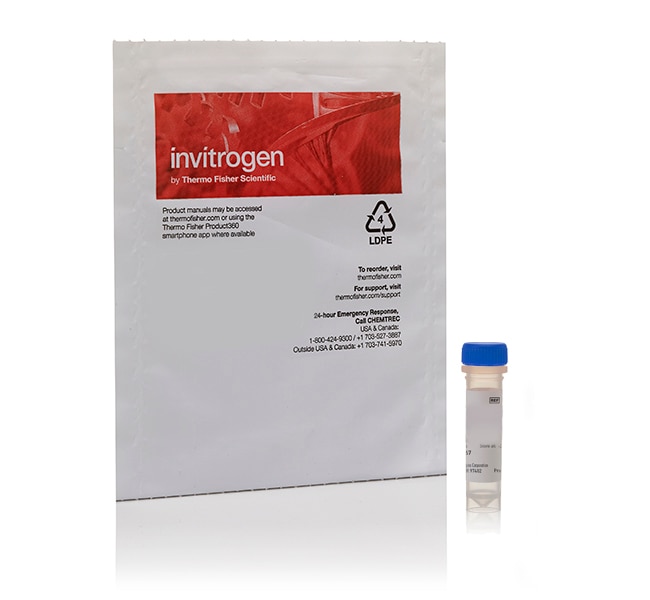
R-Phycoerythrin, Pyridyldisulfide Derivative
El derivado piridididisulfuro de la R-ficoeritrina (R-PE) puede reaccionar directamente con anticuerpos tiolados, enzimas y otras biomoléculas para formar unMás información
| Número de catálogo | Cantidad |
|---|---|
| P806 también denominado P-806 | 1 mL |
Número de catálogo P806
también denominado P-806
Precio (CLP)
-
Cantidad:
1 mL
El derivado piridididisulfuro de la R-ficoeritrina (R-PE) puede reaccionar directamente con anticuerpos tiolados, enzimas y otras biomoléculas para formar un enlace disulfuro.
Para uso exclusivo en investigación. No apto para uso en procedimientos diagnósticos.
Especificaciones
Concentración2 mg/mL
Tipo de productoDerivado de piridildisulfuro de R-ficoeritrina
Cantidad1 mL
Condiciones de envíoHielo húmedo
Unit SizeEach
Contenido y almacenamiento
Almacenar en el refrigerador (2–8°C) y proteger de la luz.
Citations & References (5)
Citations & References
Abstract
Detection of dimers of dimers of human leukocyte antigen (HLA)-DR on the surface of living cells by single-particle fluorescence imaging.
Journal:J Cell Biol
PubMed ID:9425155
The technique of single-particle fluorescence imaging was used to investigate the oligomeric state of MHC class II molecules on the surface of living cells. Cells transfected with human leukocyte antigen (HLA)-DR A and B genes were labeled at saturation with a univalent probe consisting of Fab coupled to R-phycoerythrin. Analysis
Anomalous diffusion of major histocompatibility complex class I molecules on HeLa cells determined by single particle tracking.
Journal:Biophys J
PubMed ID:10354459
Single-particle tracking (SPT) was used to determine the mobility characteristics of MHC (major histocompatibility complex) class I molecules at the surface of HeLa cells at 22 degrees C and on different time scales. MHC class I was labeled using the Fab fragment of a monoclonal antibody (W6/32), covalently bound to
Fluorescent phycobiliprotein conjugates for analyses of cells and molecules.
Journal:J Cell Biol
PubMed ID:6749865
The synthesis of a novel class of reagents for fluorescence analyses of molecules and cells is reported. These compounds consist of a highly fluorescent phycobiliprotein conjugated to a molecule having biological specificity. Phycoerythrin-immunoglobulin, phycoerythrin-protein A, and phycoerythrin-avidin conjugates were prepared. These conjugates bind specifically to beads containing a covalently attached
Detection of triple antibody-binding lymphocytes in standard single laser flow cytometry using colloidal gold, fluorescein and phycoerythrin as labels.
Journal:J Immunol Methods
PubMed ID:2956330
Goat anti-mouse antibodies conjugated with colloidal 40 nm gold particles (G40) were used as secondary layers to stain human T lymphocytes in an attempt to extend the polarized light epi-illumination microscopic technique to flow cytometric multiparameter analysis. G40-labelled T cells were further stained with phycoerythrin (PE, red)- and fluorescein (FITC,
Alteration in plasma antioxidant capacities in chronic renal failure and hemodialysis patients: a possible explanation for the increased cardiovascular risk in these patients.
Journal:Cardiovasc Res
PubMed ID:10963735
OBJECTIVE: The high incidence of cardiovascular diseases in chronic renal failure (CRF) and hemodialyzed (HD) patients is now well established and the involvement of oxidative stress has been hypothesized in these phenomena. The aim of our study was to evaluate the level of oxidative stress in healthy controls (CTL) compared