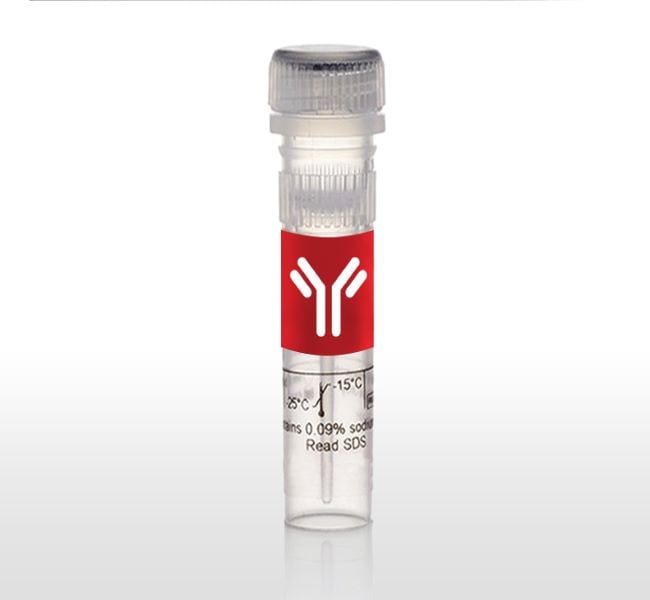
IL20 Recombinant Human Protein
Gibco™

IL20 Recombinant Human Protein

Recombinant IL20 is a bioactive protein intended for use in cell culture applications. There are two heterodimeric receptor complexes forMás información
Have Questions?
Cambiar vistabuttonViewtableView
Número de catálogoCantidad
PHC0201100 μg
PHC020525 μg
Número de catálogo PHC0201
Precio (CLP)
-
Solicite un presupuesto
Cantidad:
100 μg
Recombinant IL20 is a bioactive protein intended for use in cell culture applications. There are two heterodimeric receptor complexes for IL20. The first is composed of IL20 Ra and IL20 Rb. The second is composed of IL-22 R and IL20b. IL20 induces the proliferation of multipotential hematopoietic progenitor cells, directs the differentiation and expansion of keratinocytes, and promotes the release of proinflammatory mediators in keratinocytes and other cells expressing the IL20 receptor.
For Research Use Only. Not for use in diagnostic procedures.
Especificaciones
ClasificaciónCarrier-Free
Nivel de endotoxinas< 0.1 ng/μg
Sistema de expresiónE. coli
Alias de genIL-20
Masa100 μg
Peso molecular∼18 kDa
Línea de productosGibco
Familia de proteínasCytokines & Receptors
Forma de proteínaRecombinant, Ligand
Subtipo de proteínaInterleukins
Método de purificaciónSequential Chromatography
Grado de pureza o calidad95 %
Cantidad100 μg
Categoría de investigaciónImmunology, Angiogenesis, Oncology, Signal Transduction
Condiciones de envíoApproved for shipment on Wet or Dry Ice
FuenteHuman
Para utilizar con (aplicación)Cell Culture
FormularioLyophilized
RecombinanteRecombinant
EspecieHuman
Unit Size100 µg
Contenido y almacenamiento
Store in refrigerator (2–8°C).

Preguntas frecuentes

It looks like the recombinant protein vial I received from you is empty. Is this normal?

Gibco recombinant proteins are frequently formulated without carrier proteins or additives (e.g., BSA, HSA, sucrose, etc.) and no Gibco PeproTech recombinant protein contains a carrier protein. As a result, during lyophilization, the protein product may be deposited on the vial as a thin, and sometimes invisible, film instead of a pellet. The size of the pellet, if any, is not directly related to the quantity of the recombinant protein in the vial. Our quality control procedures assure that each vial contains the correct amount of product.

To ensure complete recovery of protein product, before opening a vial of lyophilized recombinant protein, we recommend centrifuging it in a microcentrifuge for 20-30 seconds to drive any protein that may be lodged in the cap or on the side to the bottom of the vial. After reconstitution, you can confirm the presence of product protein by running a small amount on SDS-PAGE. In general, a protein band with expected size should be visible with as little as 10 ng of protein loaded on an acrylamide gel.

Find additional tips, troubleshooting help, and resources within our Cell Culture Support Center.

Why does my recombinant protein not show activity in my own experiment?

Assay time is critical. Each assay needs to beoptimized and performed at the peak response time. Different cells may respond differently to a growth factor or cytokine. We suggest repeating our QC assay using same indicator cells as suggested in the manual to see if you can obtain a similar response. In addition, serum may be masking the response. Serum starvation might be needed for certain types of assays.

How should I store the reconstituted recombinant proteins?

Protein solutions are generally not very stable when frozen at low concentration. Upon freeze and thaw, some proteins in the solution may stick to the wall of the container, which results in significant reduction of protein concentration if the starting concentration was low. Therefore, carrier proteins are used to reduce such loss. The most commonly used carrier proteins include bovine serum albumin (BSA), human serum albumin (HSA), or fetal bovine serum (FBS). These carrier proteins are generally used at 0.1% concentration. As a rule of thumb, if the concentration of the recombinant protein is less than 0.5 mg/mL, it is a good idea to add some carrier protein

How do I store my lyophilized recombinant protein?

Lyophilized proteins can typically be stored at 2 to 8 degrees C for several weeks, or stored dessicated at -20 degrees C for long-term storage.