Search


Citas y referencias (1)
Invitrogen™
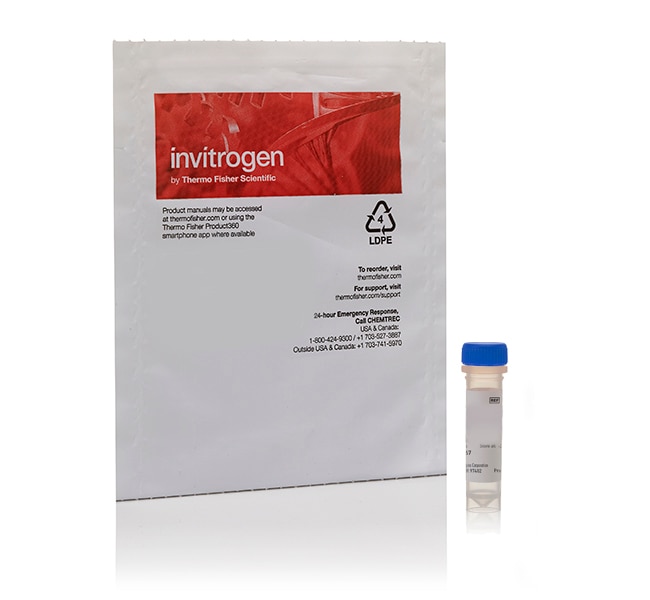
Qdot™ 800 Streptavidin Conjugate
El conjugado de estreptavidina Qdot™ 800 se compone de una proteína de unión de biotina (estreptavidina) unida por enlace covalenteMás información
Have Questions?
Cambiar vista

| Número de catálogo | Cantidad |
|---|---|
| Q10173MP | 50 μl |
| Q10171MP | 200 μl |
Número de catálogo Q10173MP
Precio (CLP)
-
Cantidad:
50 μl
El conjugado de estreptavidina Qdot™ 800 se compone de una proteína de unión de biotina (estreptavidina) unida por enlace covalente a una etiqueta fluorescente (nanocristal Qdot™). La estreptavidina tiene una afinidad muy alta por la biotina, y el conjugado de estreptavidina suele utilizarse junto con el conjugado de biotina para la detección específica de una serie de proteínas, motivos de proteínas, ácidos nucleicos y otras moléculas (p. ej., un anticuerpo primario biotinilado unido a una proteína diana se puede detectar con una estreptavidina marcada con fluorescencia). Este tipo de estrategias se emplean en muchos protocolos de detección, entre los que se encuentran las inmunotransferencias (Western blots), la citometría de flujo, la adquisición de imágenes y la microscopía, los ensayos de microplacas, y también en flujos de trabajo de purificación para lograr el fraccionamiento deseado. Los conjugados de nanocristales Qdot™ se suministran como soluciones de 1 µM.
Características importantes de los conjugados de estreptavidina Qdot™:
• El conjugado de estreptavidina Qdot™ 800 tiene un máximo de emisión de ∼800 nm aprox.
• Cada nanocristal Qdot™ contiene aproximadamente de 5 a 10 estreptavidinas
• Fluorescencia muy fotoestable e intensa
• Se excitan de forma eficaz con fuentes de excitación de una sola línea
• Emisión estrecha, gran corrimiento de Stokes
• Disponibles en varios colores
• Ideal para inmunotransferencias (Western blot), citometría de flujo, adquisición de imágenes y microscopía, ensayos en microplacas y mucho más
Propiedades de los nanocristales Qdot™
El conjugado de estreptavidina Qdot™ tiene el tamaño de una macromolécula o proteína grande (∼15–20 nm aprox.) y representa la clase más brillante de reactivos de detección de estreptavidina. Los conjugados de estreptadivina Qdot™ están hechos de un cristal de tamaño nanométrico de un material semiconductor (CdSe) recubierto con una cáscara semiconductora adicional (ZnS) para mejorar las propiedades ópticas del material. Los conjugados de estreptavidina Qdot™ 705 y Qdot™ 800, que incluyen CdSeTe, están hechos de forma similar. A su vez, el material del «núcleo-cáscara» está recubierto con una capa de polímeros que permite que los materiales se conjuguen con moléculas biológicas y conserven sus propiedades ópticas.
Otros conjugados fluorescentes de estreptavidina disponibles
Puede elegir entre diversos colores Qdot™ o probar el kit de muestreo de estreptavidina Qdot™, que contiene conjugados de estreptavidina Qdot™ en seis colores (525, 565, 585, 605, 655 y 705). Además de conjugados de nanocristales, ofrecemos una amplia gama de estreptavidinas conjugadas con colorantes Alexa Fluor™, colorante Oregon Green™, conjugados de enzimas y fluoróforos tradicionales como el colorante Texas Red™ o la fluoresceína (FITC), entre otros.
Busque conjugados biotinilados
También ofrecemos una amplia gama de conjugados biotinilados para utilizar con los sistemas de detección de biotina-estreptavidina.
• Utilice la herramienta de búsqueda de anticuerpos primarios para encontrar anticuerpos primarios biotinilados
• Utilice la herramienta de selección de anticuerpos secundarios para encontrar anticuerpos secundarios biotinilados y anticuerpos antihaptenos y anticolorantes biotinilados
Bloqueo de la biotina endógena
Las biotinas naturales pueden interferir con los sistemas de detección de biotina-estreptavidina. Para los experimentos con células fijadas y permeabilizadas, pruebe nuestro kit de bloqueo de biotina endógena para minimizar esta interferencia.
Para uso exclusivo en investigación. No diseñado para uso terapéutico o de diagnóstico en animales o humanos.
Enlaces relacionados:
Más información sobre la detección de avidina-biotina
Más información sobre los nanocristales Qdot™
Características importantes de los conjugados de estreptavidina Qdot™:
• El conjugado de estreptavidina Qdot™ 800 tiene un máximo de emisión de ∼800 nm aprox.
• Cada nanocristal Qdot™ contiene aproximadamente de 5 a 10 estreptavidinas
• Fluorescencia muy fotoestable e intensa
• Se excitan de forma eficaz con fuentes de excitación de una sola línea
• Emisión estrecha, gran corrimiento de Stokes
• Disponibles en varios colores
• Ideal para inmunotransferencias (Western blot), citometría de flujo, adquisición de imágenes y microscopía, ensayos en microplacas y mucho más
Propiedades de los nanocristales Qdot™
El conjugado de estreptavidina Qdot™ tiene el tamaño de una macromolécula o proteína grande (∼15–20 nm aprox.) y representa la clase más brillante de reactivos de detección de estreptavidina. Los conjugados de estreptadivina Qdot™ están hechos de un cristal de tamaño nanométrico de un material semiconductor (CdSe) recubierto con una cáscara semiconductora adicional (ZnS) para mejorar las propiedades ópticas del material. Los conjugados de estreptavidina Qdot™ 705 y Qdot™ 800, que incluyen CdSeTe, están hechos de forma similar. A su vez, el material del «núcleo-cáscara» está recubierto con una capa de polímeros que permite que los materiales se conjuguen con moléculas biológicas y conserven sus propiedades ópticas.
Otros conjugados fluorescentes de estreptavidina disponibles
Puede elegir entre diversos colores Qdot™ o probar el kit de muestreo de estreptavidina Qdot™, que contiene conjugados de estreptavidina Qdot™ en seis colores (525, 565, 585, 605, 655 y 705). Además de conjugados de nanocristales, ofrecemos una amplia gama de estreptavidinas conjugadas con colorantes Alexa Fluor™, colorante Oregon Green™, conjugados de enzimas y fluoróforos tradicionales como el colorante Texas Red™ o la fluoresceína (FITC), entre otros.
Busque conjugados biotinilados
También ofrecemos una amplia gama de conjugados biotinilados para utilizar con los sistemas de detección de biotina-estreptavidina.
• Utilice la herramienta de búsqueda de anticuerpos primarios para encontrar anticuerpos primarios biotinilados
• Utilice la herramienta de selección de anticuerpos secundarios para encontrar anticuerpos secundarios biotinilados y anticuerpos antihaptenos y anticolorantes biotinilados
Bloqueo de la biotina endógena
Las biotinas naturales pueden interferir con los sistemas de detección de biotina-estreptavidina. Para los experimentos con células fijadas y permeabilizadas, pruebe nuestro kit de bloqueo de biotina endógena para minimizar esta interferencia.
Para uso exclusivo en investigación. No diseñado para uso terapéutico o de diagnóstico en animales o humanos.
Enlaces relacionados:
Más información sobre la detección de avidina-biotina
Más información sobre los nanocristales Qdot™
Para uso exclusivo en investigación. No apto para uso en procedimientos diagnósticos.
Especificaciones
Concentración1 μM
Tipo de productoConjugado de estreptavidina (fluorescente)
Cantidad50 μl
Condiciones de envíoTemperatura ambiente
ConjugadoQdot 800
FormularioLíquido
Línea de productosQdot
Unit SizeEach
Contenido y almacenamiento
1 tubo: almacenar a entre 2 °C y 6 °C; NO CONGELAR
Preguntas frecuentes
I am getting very high background with my Qdot streptavidin conjugate. Do you have any suggestions?
I am getting no signal with my Qdot streptavidin conjugate. What should I do?
What is the best way to remove white precipitate from my ITK Qdot nanocrystals?
I see a white precipitate in my ITK Qdot nanocrystals; should I be concerned?
Why do my Qdot nanocrystals appear to be blinking?
Citations & References (1)
Citations & References
Abstract
The Thai phase III trial (RV144) vaccine regimen induces T cell responses that preferentially target epitopes within the V2 region of HIV-1 envelope.
Journal:J Immunol
PubMed ID:22529301
The Thai HIV phase III prime/boost vaccine trial (RV144) using ALVAC-HIV (vCP1521) and AIDSVAX B/E was, to our knowledge, the first to demonstrate acquisition efficacy. Vaccine-induced, cell-mediated immune responses were assessed. T cell epitope mapping studies using IFN-? ELISPOT was performed on PBMCs from HIV-1-uninfected vaccine (n = 61) and