Search

Invitrogen™
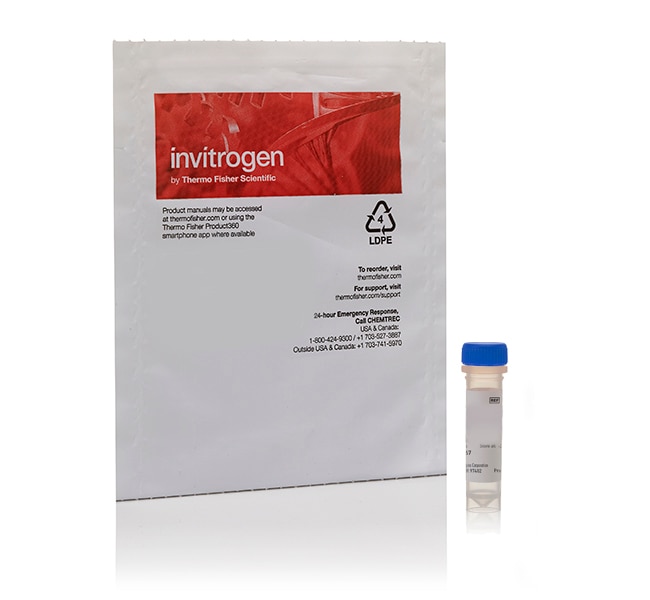
TransFluoSpheres™ Carboxylate-Modified Microspheres, 0.04 μm (633/720), 2% solids
Las microesferas (también llamadas gránulos o partículas de látex) son partículas esféricas en el rango de tamaño coloidal que seMás información
| Número de catálogo | Cantidad |
|---|---|
| T8870 también denominado T-8870 | 0.5 mL |
Número de catálogo T8870
también denominado T-8870
Precio (CLP)
-
Cantidad:
0.5 mL
Las microesferas (también llamadas gránulos o partículas de látex) son partículas esféricas en el rango de tamaño coloidal que se forman a partir de un polímero amorfo como el poliestireno. Nuestros gránulos Molecular Probes™ TransFluoSpheres™ se fabrican utilizando poliestireno ultralimpio de alta calidad y se cargan con dos (o más) colorantes fluorescentes para crear unas microesferas que pueden ser excitadas por una fuente de excitación comúnmente utilizada (por ejemplo, la línea espectral 633 nm del láser Red He-Ne), pero emiten a longitudes de onda mucho más largas, facilitando los experimentos multicolores y permitiendo el uso de filtros de excitación y emisión de banda ancha. Las microesferas TransFluoSpheres™ suelen mostrar poco o ningún fotoblanqueo, incluso cuando son excitadas por la intensa iluminación necesaria para la microscopia de fluorescencia.
™ Especificaciones de la microesfera TransFluoSpheres:
• Etiqueta (Ex/Em): Fluorescente rojo (633/720)
• Diámetro nominal del gránulo: 0,04 µm
• Superficie de acoplamiento: Carboxilato
• Sólidos: 2%
Características de la superficie de acoplamiento de carboxilato
Los gránulos de FluoSpheres™ modificados con carboxilato tienen una alta densidad de ácidos carboxílicos colgantes en su superficie, lo que los hace adecuados para el acoplamiento covalente de proteínas y otras biomoléculas que contienen amina utilizando reactivos de carbodiimida solubles en agua como EDAC.
Aplicaciones principales de las microesferas:
• Calibración de instrumentos (citometría de flujo, microscopia, HTS, HCS)
• Pruebas de flujo (microfluídica, flujo sanguíneo, flujo de agua y flujo de aire)
• Trazadores de biología celular (diferenciación celular y rastreo celular)
• Inmunoensayos (pruebas de aglutinación, ELISA, captura de partículas y reactivos de contraste)
Opciones para microesferas fluorescentes
Entre nuestra completa oferta de productos de microesferas fluorescentes, encontrará gránulos con estas variaciones:
• Diez colores fluorescentes
• Diez diámetros nominales de gránulos: 0,02 µm, 0,04 µm, 0,1 µm, 0,2 µm, 0,5 µm, 1,0 µm, 2,0 µm, 4,0 µm, 10,0 µm y 15,0 µm
• Cuatro modificaciones superficiales para el acoplamiento de proteínas: carboxilato, sulfato, aldehído-sulfato, amina
• Microesferas que además están preacopladas con estreptavidina, neutravidina, biotina, europio y platino
Opciones de microesferas sin teñir
También ofrecemos cientos de opciones de microesferas sin surfactantes UltraClean™ para aplicaciones de investigación y comerciales.
Le prepararemos un producto de microesferas personalizado
Preparamos pedidos personalizados a petición del cliente. Nuestro servicio de conjugación personalizada es eficiente y confidencial, y garantizamos la calidad de nuestro trabajo. Contamos con la certificación ISO 9001:2000.
Solo para uso en investigación. No apto para uso diagnóstico o terapéutico en animales o humanos.
™ Especificaciones de la microesfera TransFluoSpheres:
• Etiqueta (Ex/Em): Fluorescente rojo (633/720)
• Diámetro nominal del gránulo: 0,04 µm
• Superficie de acoplamiento: Carboxilato
• Sólidos: 2%
Características de la superficie de acoplamiento de carboxilato
Los gránulos de FluoSpheres™ modificados con carboxilato tienen una alta densidad de ácidos carboxílicos colgantes en su superficie, lo que los hace adecuados para el acoplamiento covalente de proteínas y otras biomoléculas que contienen amina utilizando reactivos de carbodiimida solubles en agua como EDAC.
Aplicaciones principales de las microesferas:
• Calibración de instrumentos (citometría de flujo, microscopia, HTS, HCS)
• Pruebas de flujo (microfluídica, flujo sanguíneo, flujo de agua y flujo de aire)
• Trazadores de biología celular (diferenciación celular y rastreo celular)
• Inmunoensayos (pruebas de aglutinación, ELISA, captura de partículas y reactivos de contraste)
Opciones para microesferas fluorescentes
Entre nuestra completa oferta de productos de microesferas fluorescentes, encontrará gránulos con estas variaciones:
• Diez colores fluorescentes
• Diez diámetros nominales de gránulos: 0,02 µm, 0,04 µm, 0,1 µm, 0,2 µm, 0,5 µm, 1,0 µm, 2,0 µm, 4,0 µm, 10,0 µm y 15,0 µm
• Cuatro modificaciones superficiales para el acoplamiento de proteínas: carboxilato, sulfato, aldehído-sulfato, amina
• Microesferas que además están preacopladas con estreptavidina, neutravidina, biotina, europio y platino
Opciones de microesferas sin teñir
También ofrecemos cientos de opciones de microesferas sin surfactantes UltraClean™ para aplicaciones de investigación y comerciales.
Le prepararemos un producto de microesferas personalizado
Preparamos pedidos personalizados a petición del cliente. Nuestro servicio de conjugación personalizada es eficiente y confidencial, y garantizamos la calidad de nuestro trabajo. Contamos con la certificación ISO 9001:2000.
Solo para uso en investigación. No apto para uso diagnóstico o terapéutico en animales o humanos.
Para uso exclusivo en investigación. No apto para uso en procedimientos diagnósticos.
Especificaciones
Línea de productosTransFluoSpheres
Cantidad0.5 mL
Condiciones de envíoTemperatura ambiente
Modificación de la superficieCarboxilato
ColorRojo lejano
Diámetro (métrico)0,04 μm
MaterialPoliestireno
Tipo de productoMicroesfera modificada con carboxilatos
Unit Size0.5 mL
Contenido y almacenamiento
Almacenar en el refrigerador (2–8 °C) y proteger de la luz.