Search




Citations & References (16)
Invitrogen™
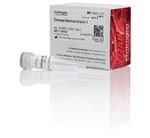
DNase I
DNase I (Deoxyribonuclease I) digests single- and double-stranded DNA to oligodeoxyribonucleotides containing a 5' phosphate. Ribonuclease has been reduced toRead more
| Catalog Number | Quantity |
|---|---|
| 18047019 | 20,000 U |
Catalog number 18047019
Price (EUR)
300,65
Online exclusive
327,00Save 26,35 (8%)
Each
Quantity:
20,000 U
Price (EUR)
300,65
Online exclusive
327,00Save 26,35 (8%)
Each
DNase I (Deoxyribonuclease I) digests single- and double-stranded DNA to oligodeoxyribonucleotides containing a 5' phosphate. Ribonuclease has been reduced to non-detectable levels.
Applications
DNase I is suitable for removing DNA from protein preparations, nick translating DNA, and generating random fragments for dideoxy sequencing.
NOTE: for removing DNA from RNA preparations, use Amplification Grade DNase I (Cat. No. 18068-015).
Source
DNase I is purified from bovine pancreas.
Specific activity
The specific activity of DNase I is typically in the range of 10,000–25,000 units/mg.
Applications
DNase I is suitable for removing DNA from protein preparations, nick translating DNA, and generating random fragments for dideoxy sequencing.
NOTE: for removing DNA from RNA preparations, use Amplification Grade DNase I (Cat. No. 18068-015).
Source
DNase I is purified from bovine pancreas.
Specific activity
The specific activity of DNase I is typically in the range of 10,000–25,000 units/mg.
For Research Use Only. Not for use in diagnostic procedures.
Specifications
Product TypeDNase I
Quantity20,000 U
Shipping ConditionWet Ice
Concentration50 to 375 U/μL
EnzymeDNase
Unit SizeEach
Contents & Storage
DNase I is supplied as 1 vial containing 20,000 units at a concentration of 50-375 U/μl. Store in freezer (-5°C to -30°C).
Frequently asked questions (FAQs)
Does Thermo Fisher Scientific offer a protease-free DNase?
What is the difference between DNase I and Amplification Grade DNase I?
How can I inactivate DNase I?
What is the specific activity of your DNase I?
Are your DNase I products RNase-free?
Citations & References (16)
Citations & References
Abstract
Isolation and characterization of the human cytochrome P450 CYP1B1 gene.
Journal:J Biol Chem
PubMed ID:8910454
'Previously, we identified a novel human cytochrome P450 cDNA that is inducible by 2,3,7,8-tetrachlorodibenzo-p-dioxin (TCDD) and represents the first member of a new subfamily designated cytochrome P4501B1 (CYP1B1; Sutter, T. R., Tang, Y. M., Hayes, C. L., Wo, Y. P., Jabs, E. W., Li, X., Yin, H., Cody, C. W.,
An imprinted PEG1/MEST antisense expressed predominantly in human testis and in mature spermatozoa.
Journal:J Biol Chem
PubMed ID:11821432
'PEG1 (or MEST) is an imprinted gene located on human chromosome 7q32 that is expressed predominantly from the paternal allele. In the mouse, Peg1/Mest is associated with embryonic growth and maternal behavior. Human PEG1 is transcribed from two promoters; the transcript from promoter P1 is derived from both parental alleles,
Global Expression Profiling of Acetate-grown Escherichia coli.
Journal:J Biol Chem
PubMed ID:11815613
'This study characterized the transcript profile of Escherichia coli in acetate cultures using DNA microarray on glass slides. Glucose-grown cultures were used as a reference. At the 95% confidence level, 354 genes were up-regulated in acetate, while 370 genes were down-regulated compared with the glucose-grown culture. Generally, more metabolic genes
Tumor necrosis factor alpha increases the expression of glycosyltransferases and sulfotransferases responsible for the biosynthesis of sialylated and/or sulfated Lewis x epitopes in the human bronchial mucosa.
Journal:J Biol Chem
PubMed ID:11679593
'There is increasing evidence that inflammation may affect glycosylation and sulfation of various glycoproteins. The present study reports the effect of tumor necrosis factor alpha (TNF-alpha), a proinflammatory cytokine, on the glycosyl- and sulfotransferases of the human bronchial mucosa responsible for the biosynthesis of Lewis x epitope and of its
Methylation-mediated silencing of TMS1/ASC is accompanied by histone hypoacetylation and CpG island-localized changes in chromatin architecture.
Journal:J Biol Chem
PubMed ID:11733524
'Aberrant methylation of CpG-dense islands in the promoter regions of genes is an acquired epigenetic alteration associated with the silencing of tumor suppressor genes in human cancers. In a screen for endogenous targets of methylation-mediated gene silencing, we identified a novel CpG island-associated gene, TMS1, which is aberrantly methylated and