Search




Thermo Scientific™
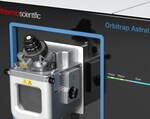
Orbitrap Astral Mass Spectrometer
Rethink what is possible for discovery and translational research. Faster throughput, deeper coverage, and higher sensitivity with accurate and precise quantitation empower you to accomplish your aspirations.
Have Questions?
Change view

| Catalog Number | Mass Range | Type |
|---|---|---|
| BRE725600 | 40 to 6000 m/z | Orbitrap Astral LC-MS |
| BRE725660 | 40 to 8000 m/z | Orbitrap Astral LC-MS |
Catalog number BRE725600
Price (EUR)
-
Mass Range:
40 to 6000 m/z
Type:
Orbitrap Astral LC-MS
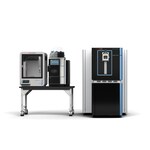
Realize the promise of proteomics at scale to better understand biology and disease mechanisms with the novel technology of the Thermo Scientific™ Orbitrap™ Astral™ mass spectrometer. Expect whole proteome coverage at a depth of 12,000 proteins in an hour, the sensitivity to accurately and precisely quantify over 3,000 proteins from 80 single cells in a day, and the throughput to analyze over a million protein groups across 180 samples in a day. These groundbreaking capabilities empower you to comprehend the dynamic, temporal, and spatial complexity of biology.
Rethink what is possible.
Faster throughput
Identify over 8,000 proteins with an 8-minute injection-to-injection cycle
Deeper coverage
Unlock near whole-proteome depth of coverage with the identification of 12,000 proteins in 1 hour from a single-shot experiment
Higher sensitivity
Increase throughput and depth of coverage with higher sensitivity by identifying over 5,000 proteins from 250 pg of HeLa at a rate of 80 samples per day
Accurate and precise quantitation
Achieve accurate and precise quantitation with a large dynamic range for Label-Free Quantitation (LFQ) using Data-Independent Acquisition (DIA) and achieve faster throughput and deeper coverage with multiplexed quantitation using Tandem Mass Tags (TMT)
Specifications
Dimensions (D x W x H)185 x 96 x 140 cm
Dynamic Range>5000 within a single scan
Mass Accuracy
< 3 ppm RMS with external calibration, < 1 ppm RMS with internal calibration
Mass Resolution
Up to 480,000 at m/z 200
Scan RatesUp to 200 Hz
Weight (Metric)680 kg
Mass Range40 to 6000 m/z
TypeOrbitrap Astral LC-MS
Unit SizeEach