Search


Citations & References (2)
Invitrogen™
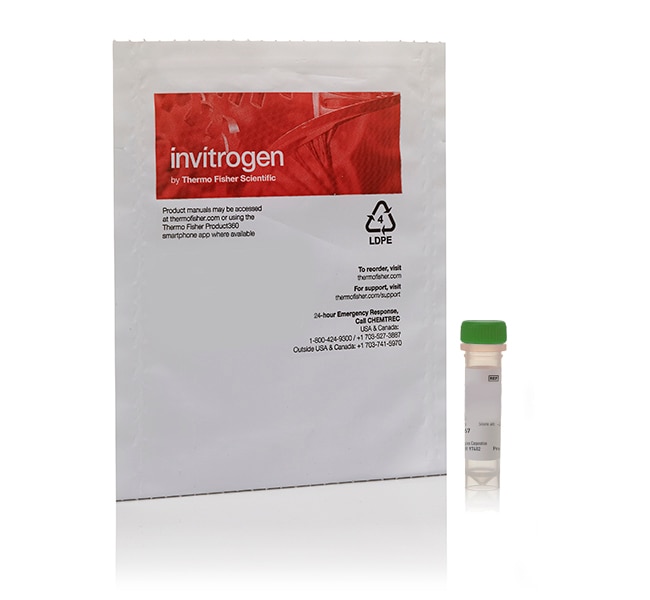
CellEvent™ Caspase-3/7 Detection Reagents
CellEvent Caspase-3/7 detection reagents are fluorogenic no-wash substrates for apoptosis detection. These substrates detect activated caspase-3/7 in live cells that can be fixed and multiplexed with reporters, dyes, or antibodies.
Have Questions?
Change view

| Catalog Number | Quantity | Color | Excitation/Emission | dimFormat |
|---|---|---|---|---|
| C10723 | 1 x 25 μL Vial | Green | ∼502/530 | |
| C10430 | 1 Vial | Red | ∼590/610 | |
| C10431 | 5 Vials | Red | ∼590/610 | |
| C10432 | 1 Vial | Green | ∼502/530 | |
| C10433 | 5 Vials | Green | ∼502/530 | |
| C10434 | 2 Vials (1 Green, 1 Red) | Red, Green | ∼590/610, ∼502/530 | |
| C10423 | 1 x 100 μL Vial | Green | ∼502/530 |
Catalog number C10723
Price (EUR)
254,00
Each
Quantity:
1 x 25 μL Vial
Color:
Green
Excitation/Emission:
∼502/530
Price (EUR)
254,00
Each
CellEvent Caspase-3/7 Green and CellEvent Caspase-3/7 Red detection reagents are novel fluorogenic substrates for activated caspase-3/7 in live cells that can be fixed and multiplexed with imaging dyes or antibodies. Activation of caspase-3 is a critical event during apoptosis, making these optimized reagents for analysis of apoptotic cells. CellEvent Caspase-3/7 Red Detection Reagent can also be used to detect apoptosis in GFP expressing cells.
Features of these indicators include:
- Optimized caspase-3/7 substrate for apoptosis analysis
- Easy to use—add and read; no cell wash or lysis required
- Use for time course measurements; easily select the time point of interest up to and beyond 72 hours
- Compatible with both live cell fluorescence-imaging and formaldehyde-based fixation methods
- Multiplex enabled—combine with other fluorescent reagents to confirm apoptosis in the same cell or cell population
CellEvent™ Caspase-3/7 Green Detection Reagent: Absorption/emission maxima of ∼502/530 nm. Detectable with FITC/GFP traditional filter set.
CellEvent™ Caspase-3/7 Red Detection Reagent: Absorption/emission maxima of ∼590/610 nm. Detectable with traditional Texas red filter set.
CellEvent™ Caspase-3/7 Red Detection Reagent and CellEvent™ Caspase-3/7 Green is provided as Dry down powder. Just add 100 μL of PBS to dry down powder to generate 100X Stock solution. Dilute this 100X stock solution 1:100 in complete media and stain cells for 30 to 60 minutes and analyze with fluorescence microscope.
CellEvent™ Caspase-3/7 Green Detection Reagent is also provided as an already prepared DMSO solution. DMSO solution is 400X stock solution, which is ready to use. Just dilute in growth media 1:400 and stain the cells for 30 to 60 minutes.
To prevent the apoptotic cells from washing away, no wash is needed at the end of staining. Stained cells can be analyzed live or can be fixed with 4% Paraformaldehyde solution such as Image-IT™ Paraformaldehyde 4% in 0.1M Phosphate Buffer pH 7.4, Cat. No. I28800. These fixed cells can be further processed using fixed cell compatible dyes or ICC workflows.
Substrate specifics
CellEvent Caspase-3/7 Detection Reagents are a four-amino acid peptide (DEVD) conjugated to a nucleic acid-binding dye. The DEVD peptide sequence is a cleavage site for caspase-3/7, and the conjugated dye is non-fluorescent until cleaved from the peptide and bound to DNA.
Principles of action
CellEvent Caspase-3/7 Green Detection Reagent is intrinsically non-fluorescent as the DEVD peptide inhibits the ability of the dye to bind to DNA. However, after activation of caspase-3/7 in apoptotic cells, the DEVD peptide is cleaved, enabling the dye to bind to DNA and produce a bright, fluorogenic response.
Simple three-step protocol
To use CellEvent Caspase 3/7 Detection Reagent, simply add it to cells, incubate 30 to 60 minutes, and visualize over time. Apoptotic cells with activated caspase-3/7 will have bright green or red nuclei, while cells without activated caspase 3/7 will have minimal fluorescent signal.
Assay versatility allows for live cell detection and fixation
This robust assay enables the examination of caspase-3/7 activation in live cells. Furthermore, since wash steps are not necessary for detection, fragile apoptotic cells typically lost during wash steps are preserved. Importantly, the fluorescent signal from CellEvent Caspase 3/7 Detection Reagent can survive fixation and permeabilization. This allows for the flexibility to perform end-point assays and probe for other proteins of interest using reporters, dyes, or immunocytochemistry.
For Research Use Only. Not for use in diagnostic procedures.
Specifications
ColorGreen
Excitation/Emission∼502/530
For Use With (Equipment)Fluorescence Microscope, High Content Instrument
Form2 mM in DMSO
Label TypeOther Label(s) or Dye(s)
Label or DyeCellEvent™ Caspase 3/7 Green
Product LineCellEvent
Product TypeCaspase 3/7 Reagent
Quantity1 x 25 μL Vial
Shipping ConditionRoom Temperature
Detection MethodFluorescence
Unit SizeEach
Contents & Storage
1 x 25 μL 2 mM reagent in DMSO. Store at ≤-20°C, desiccate, and protect from light.
Frequently asked questions (FAQs)
How many tests can I perform with each Invitrogen CellEvent Caspase-3/7 Green product?
How should Invitrogen CellEvent Caspase-3/7 Green Detection Reagent be stored, and what formats are supplied?
Can cleaved Invitrogen CellEvent Caspase-3/7 Detection Reagents stain cytoplasmic RNA?
How long can Invitrogen CellEvent Caspase Detection Reagents remain in continuous culture?
Can I use a nuclear counterstain with Invitrogen CellEvent Caspase Detection Reagents?
Citations & References (2)
Citations & References
Abstract
Inhibition of Protein arginine methyltransferase 6 reduces reactive oxygen species production and attenuates aminoglycoside- and cisplatin-induced hair cell death.
Journal:Theranostics
PubMed ID:31903111
'Hair cells in the inner ear have been shown to be susceptible to ototoxicity from some beneficial pharmaceutical drugs, such as aminoglycosides and cisplatin. Thus, there is great interest in discovering new targets or compounds that protect hair cells from these ototoxic drugs. Epigenetic regulation is closely related to inner
In vivo imaging of early signs of dopaminergic neuronal death in an animal model of Parkinson's disease.
Journal:Neurobiol Dis
PubMed ID:29486298
The Parkinson's disease (PD) evolves over an extended period of time with the onset occurring long before clinical signs begin to manifest. Characterization of the molecular events underlying the PD onset is instrumental for the development of diagnostic markers and preventive treatments, progress in this field is hindered by technical