Search


Citations & References (26)
Invitrogen™
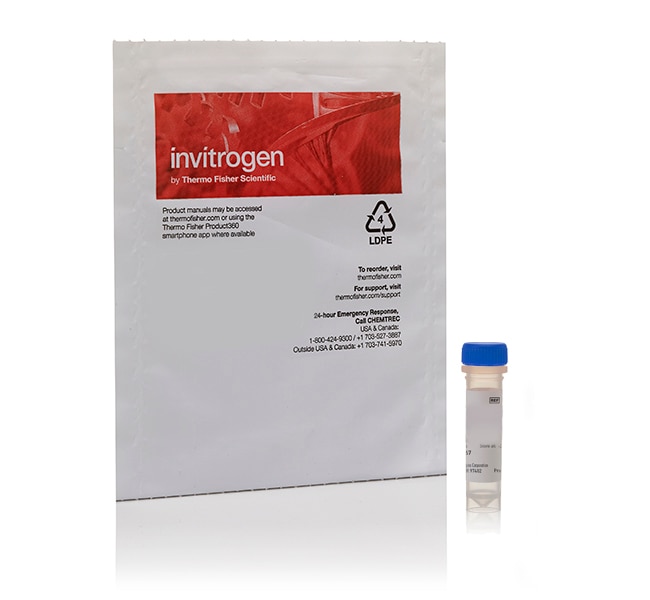
HCS LipidTOX™ Green Neutral Lipid Stain, for cellular imaging
The intracellular accumulation of neutral lipids, steatosis, is often triggered by drugs that affect the metabolism of fatty acids and/orRead more
| Catalog Number | Quantity |
|---|---|
| H34475 | 1 each |
Catalog number H34475
Price (EUR)
507,65
Online exclusive
540,00Save 32,35 (6%)
Each
Quantity:
1 each
Price (EUR)
507,65
Online exclusive
540,00Save 32,35 (6%)
Each
The intracellular accumulation of neutral lipids, steatosis, is often triggered by drugs that affect the metabolism of fatty acids and/or neutral lipids. HCS LipidTOX™ Green neutral lipid stain was developed to characterize the potentially toxic effects of compounds on lipid metabolism in mammalian cell lines. The LipidTOX™ neutral lipid stain has an extremely high affinity for neutral lipid droplets and can be detected by fluorescence microscopy or an HCS reader. This probe is compatible with the HCS LipidTOX™ phospholipidosis detection reagents (H34350, H34351). HCS LipidTOX™ neutral lipid stains can also be used to monitor the formation and differentiation of adipocytes, a process called adipogenesis.
For Research Use Only. Not for use in diagnostic procedures.
Specifications
ColorGreen
Detection MethodFluorescence
For Use With (Equipment)High Content Instrument
Product LineLipidTOX
Quantity1 each
Shipping ConditionRoom Temperature
Label TypeFluorescent Dye
Product TypeLipid Stain
Sub Cellular LocalizationCell Membranes, Lipids
Unit SizeEach
Contents & Storage
Store in freezer -5°C to -30°C and protect from light.
Frequently asked questions (FAQs)
What kind of filter sets can I use with HCS LipidTOX neutral lipid stains?
I want to label the plasma membrane of my cells, but there are several dyes to choose from. Which one should I use?
Citations & References (26)
Citations & References
Abstract
Fluorescent high-content imaging allows the discrimination and quantitation of E-LDL-induced lipid droplets and Ox-LDL-generated phospholipidosis in human macrophages.
Journal:Cytometry A
PubMed ID:20014301
'Macrophage foam cells formed during uptake of atherogenic lipoproteins are a hallmark of atherosclerotic lesion development. In this study, human macrophages were incubated with two prototypic atherogenic LDL modifications enzymatically degraded LDL (E-LDL) and oxidized LDL (Ox-LDL) prepared from the same donor LDL. To detect differences in macrophage lipid storage,
Effect of growth factors on the proliferation and gene expression of human meibomian gland epithelial cells.
Journal:Invest Ophthalmol Vis Sci
PubMed ID:23493293
'We hypothesize that growth factors, including epidermal growth factor (EGF) and bovine pituitary extract (BPE), induce proliferation, but not differentiation (e.g., lipid accumulation), of human meibomian gland epithelial cells. We also hypothesize that these actions involve a significant upregulation of genes linked to cell cycle processes, and a significant downregulation
Enhancement of BODIPY505/515 lipid fluorescence method for applications in biofuel-directed microalgae production.
Journal:J Microbiol Methods
PubMed ID:22521923
'This paper describes a microalgal cell lipid fluorescence enhancement method using BODIPY(505/515), which can be used to screen for lipids in wild-type microalgae and to monitor lipid content within microalgae production processes to determine optimal harvesting time. The study was based on four microalgae species (Dunaliella teteriolecta, Tetraselmis suecica, Nannochloropsis
Increased lipid accumulation in the Chlamydomonas reinhardtii sta7-10 starchless isoamylase mutant and increased carbohydrate synthesis in complemented strains.
Journal:Eukaryot Cell
PubMed ID:20562225
'The accumulation of bioenergy carriers was assessed in two starchless mutants of Chlamydomonas reinhardtii (the sta6 [ADP-glucose pyrophosphorylase] and sta7-10 [isoamylase] mutants), a control strain (CC124), and two complemented strains of the sta7-10 mutant. The results indicate that the genetic blockage of starch synthesis in the sta6 and sta7-10 mutants
SIRT1 regulates differentiation of mesenchymal stem cells by deacetylating ß-catenin.
Journal:EMBO Mol Med
PubMed ID:23364955
'Mesenchymal stem cells (MSCs) are multi-potent cells that can differentiate into osteoblasts, adipocytes, chondrocytes and myocytes. This potential declines with aging. We investigated whether the sirtuin SIRT1 had a function in MSCs by creating MSC specific SIRT1 knock-out (MSCKO) mice. Aged MSCKO mice (2.2 years old) showed defects in tissues