Search


Citations & References (8)
Invitrogen™
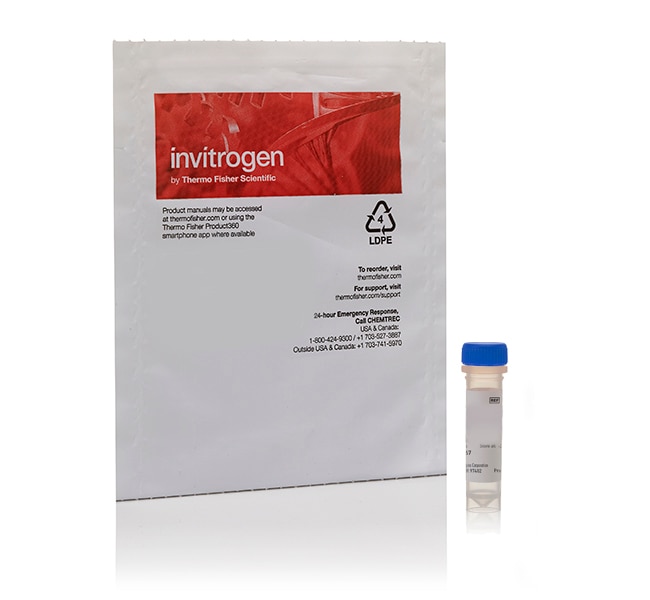
Histone H1 From Calf Thymus, Alexa Fluor™ 488 Conjugate
The Alexa Fluor™ 488 histone H1 conjugate is labeled with the bright and photostable Alexa Fluor™ 488 dye and exhibitsRead more
| Catalog Number | Quantity |
|---|---|
| H13188 | 1 mg |
Catalog number H13188
Price (EUR)
373,00
Each
Quantity:
1 mg
Price (EUR)
373,00
Each
The Alexa Fluor™ 488 histone H1 conjugate is labeled with the bright and photostable Alexa Fluor™ 488 dye and exhibits fluorescence with excitation/emission maxima ∼495/520 nm and can be visualized by fluorescence microscopy or flow cytometry.
For Research Use Only. Not for use in diagnostic procedures.
Specifications
Detection MethodFluorescence
Dye TypeAlexa Fluor Dyes
Protein FamilyHistone H1
Quantity1 mg
Reagent TypePhosphate Buffered Saline
Shipping ConditionRoom Temperature
Product LineAlexa Fluor
Product TypeLipopolysaccharide Conjugate
Unit SizeEach
Contents & Storage
Store in freezer (-5 to -30°C) and protect from light.
Citations & References (8)
Citations & References
Abstract
Morphogenetic domains in the yolk syncytial layer of axiating zebrafish embryos.
Journal:Dev Dyn
PubMed ID:11748830
'The yolk syncytial layer (YSL) of the teleostean yolk cell is known to play important roles in the induction of cellular mesendoderm, as well as the patterning of dorsal tissues. To determine how this extraembryonic endodermal compartment is subdivided and morphologically transformed during early development, we have examined collective movements
A cell-free system for light-dependent nuclear import of phytochrome.
Journal:Plant J
PubMed ID:18980642
Translocation from the cytosol to the nucleus is an essential step in phytochrome (phy) signal transduction. In the case of phytochrome A (phyA), this step occurs with the help of FHY1 (far-red-elongated hypocotyl 1), a specific transport protein. To investigate the components involved in phyA transport, we used a cell-free
Coordinated cell-shape changes control epithelial movement in zebrafish and Drosophila.
Journal:Development
PubMed ID:16794032
Epithelial morphogenesis depends on coordinated changes in cell shape, a process that is still poorly understood. During zebrafish epiboly and Drosophila dorsal closure, cell-shape changes at the epithelial margin are of critical importance. Here evidence is provided for a conserved mechanism of local actin and myosin 2 recruitment during theses
Vertical silicon nanowires as a universal platform for delivering biomolecules into living cells.
Journal:Proc Natl Acad Sci U S A
PubMed ID:20080678
A generalized platform for introducing a diverse range of biomolecules into living cells in high-throughput could transform how complex cellular processes are probed and analyzed. Here, we demonstrate spatially localized, efficient, and universal delivery of biomolecules into immortalized and primary mammalian cells using surface-modified vertical silicon nanowires. The method relies
Control of directed cell migration in vivo by membrane-to-cortex attachment.
Journal:PLoS Biol
PubMed ID:21151339