Search

Applied Biosystems™
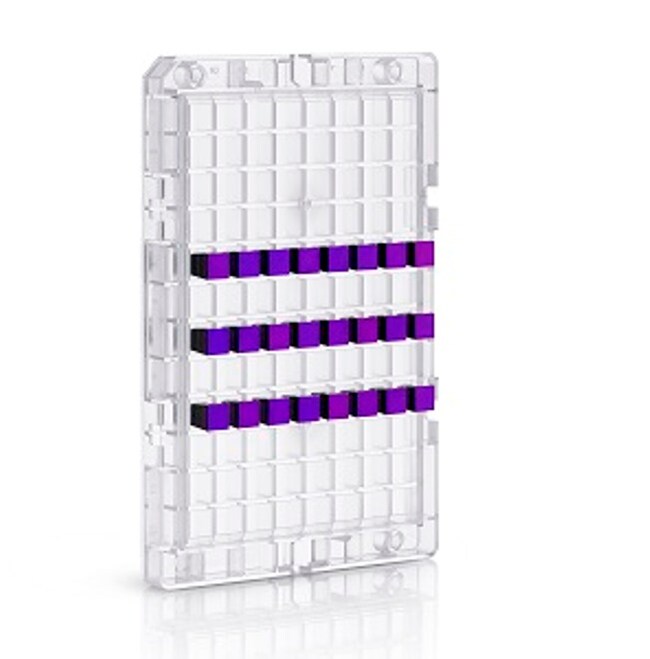
GeneChip™ Human Gene 2.1 ST Array Plate
The Human Gene 2.1 ST 16-Array Plate and Trays provide the most accurate, sensitive, and comprehensive measurement of protein codingMás información
Have Questions?
Cambiar vista

| Número de catálogo | Número de arrays |
|---|---|
| 902137 | 24 matrices |
| 902136 | 16 matrices |
| 902138 | 96 matrices |
Número de catálogo 902137
Precio (EUR)
-
Número de arrays:
24 matrices
The Human Gene 2.1 ST 16-Array Plate and Trays provide the most accurate, sensitive, and comprehensive measurement of protein coding and long intergenic non-coding RNA transcripts.
Comprehensive design
Keeping pace with the research community's understanding of the transcriptome, we have designed whole-transcript arrays that include probes to measure both messenger (mRNA) and long intergenic non-coding RNA transcripts (lincRNA). These whole-transcript array designs provide a complete expression profile of mRNA as well as the intermediary lincRNA transcripts that impact the mRNA expression profile.
Research over the past 20 years has predominantly focused on protein-coding messenger RNA transcripts and their role in cellular processes, such as disease and development. Recently researchers have identified more that 10,000 transcripts (>200 bases) with little or no protein coding potential. Only a small fraction of these non-coding RNAs has functional annotations to date. However, there is ample evidence that differential expression of lincRNAs plays an important role in the genesis and progression of disease and that aberrant expression of these molecules have also been linked to cancer. Recent advancements in transcriptome profiling provided evidence of the association of lincRNAs in diverse range of cellular functions:• Regulation of mRNA transcription
• Regulation of mRNA post-transcriptional modifications
• Occlusion/recruitment of transcription factor binding
• Activation and transportation of transcription factors
• Interaction with accessory proteins
• Guide protein complexes to locations in the genome
Key benefits
• Comprehensive coverage provides the best opportunity to discover interesting biology
- >30,000 coding transcripts
- 11,000 long intergenic non-coding transcripts
• Reproducible: Intra-lot correlation coefficient = 0.99
Content profile
Since the design of the Human Gene 1.1 ST Array Plates, there have been a massive number of new lincRNA that have been identified by the research community. In order to provide the research community with a tool that can measure the differential expression of this exciting class of RNA transcripts, the Human Gene 2.1 ST Array Plates was designed. To supplement the lincRNA data contained in RefSeq, we used sequences and transcripts from lncRNA db (www.lncrnadb.com) and Broad Institute, Human Body Map lincRNAs and TUCP (transcripts of uncertain coding potential) catalog (http://www.broadinstitute.org/genome_bio/human_lincrnas/).
Comprehensive design
Keeping pace with the research community's understanding of the transcriptome, we have designed whole-transcript arrays that include probes to measure both messenger (mRNA) and long intergenic non-coding RNA transcripts (lincRNA). These whole-transcript array designs provide a complete expression profile of mRNA as well as the intermediary lincRNA transcripts that impact the mRNA expression profile.
Research over the past 20 years has predominantly focused on protein-coding messenger RNA transcripts and their role in cellular processes, such as disease and development. Recently researchers have identified more that 10,000 transcripts (>200 bases) with little or no protein coding potential. Only a small fraction of these non-coding RNAs has functional annotations to date. However, there is ample evidence that differential expression of lincRNAs plays an important role in the genesis and progression of disease and that aberrant expression of these molecules have also been linked to cancer. Recent advancements in transcriptome profiling provided evidence of the association of lincRNAs in diverse range of cellular functions:• Regulation of mRNA transcription
• Regulation of mRNA post-transcriptional modifications
• Occlusion/recruitment of transcription factor binding
• Activation and transportation of transcription factors
• Interaction with accessory proteins
• Guide protein complexes to locations in the genome
Key benefits
• Comprehensive coverage provides the best opportunity to discover interesting biology
- >30,000 coding transcripts
- 11,000 long intergenic non-coding transcripts
• Reproducible: Intra-lot correlation coefficient = 0.99
Content profile
Since the design of the Human Gene 1.1 ST Array Plates, there have been a massive number of new lincRNA that have been identified by the research community. In order to provide the research community with a tool that can measure the differential expression of this exciting class of RNA transcripts, the Human Gene 2.1 ST Array Plates was designed. To supplement the lincRNA data contained in RefSeq, we used sequences and transcripts from lncRNA db (www.lncrnadb.com) and Broad Institute, Human Body Map lincRNAs and TUCP (transcripts of uncertain coding potential) catalog (http://www.broadinstitute.org/genome_bio/human_lincrnas/).
For Research Use Only. Not for use in diagnostic procedures.
Especificaciones
IncluyeProbe
Línea de productosGeneChip
Cantidad1 x 24 array plate
TipoHuman Gene 2.1 ST Array Plate
matriz, red, conjuntoTranscriptome Profiling
FormatoArray Plate and Trays
Número de arrays24 matrices
EspecieHumano
Unit SizeEach