Search


Citations & References (5)
Invitrogen™
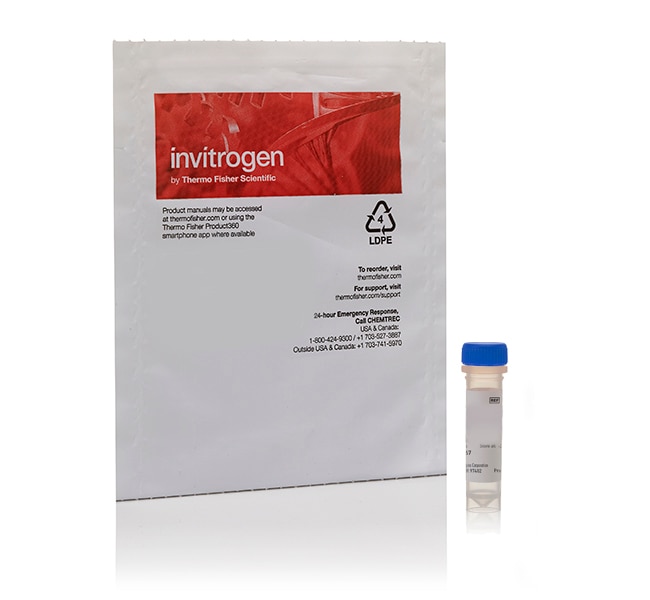
Protein A, Alexa Fluor™ 488 conjugate
Protein A, Alexa Fluor™ 488 conjugate
| Catalog Number | Quantity |
|---|---|
| P11047 | 1 mg |
Catalog number P11047
Price (EUR)
309,00
Each
Quantity:
1 mg
Price (EUR)
309,00
Each
Our Alexa Fluor 488 protein A conjugate binds to the Fc portion of various immunoglobulins from several different species. This exceptionally bright, green-fluorescent probe (absorption/emission maxima ∼495/519 nm) can be used to visualize antibodies in a manner analogous to a labeled species-specific secondary antibody.
For Research Use Only. Not for use in diagnostic procedures.
Specifications
FormLyophilized Powder
Protein SubtypeProtein A
Shipping ConditionRoom Temperature
ConjugateAlexa Fluor 488
Product LineAlexa Fluor
Quantity1 mg
Unit SizeEach
Contents & Storage
Store in freezer (-5 to -30°C) and protect from light.
Citations & References (5)
Citations & References
Abstract
Phenotypic and functional effects of heat shock protein 90 inhibition on dendritic cell.
Journal:Journal of immunology (Baltimore, Md. : 1950)
PubMed ID:17548610
Extensive diversity of Ig-superfamily proteins in the immune system of insects.
Journal:Science
PubMed ID:16109846
'The extensive somatic diversification of immune receptors is a hallmark of higher vertebrates. However, whether molecular diversity contributes to immune protection in invertebrates is unknown. We present evidence that Drosophila immune-competent cells have the potential to express more than 18,000 isoforms of the immunoglobulin (Ig)-superfamily receptor Down syndrome cell adhesion
Staphylococcus aureus protein A induces airway epithelial inflammatory responses by activating TNFR1.
Journal:Nat Med
PubMed ID:15247912
Staphylococcus aureus is a major human pathogen that is associated with diverse types of local and systemic infection characterized by inflammation dominated by polymorphonuclear leukocytes. Staphylococci frequently cause pneumonia, and these clinical isolates often have increased expression of protein A, suggesting that this protein may have a role in virulence.
CD4 promotes breadth in the TCR repertoire.
Journal:J Immunol
PubMed ID:11591754
A diverse population of MHC class II-restricted CD4 lineage T cells develops in mice that lack expression of the CD4 molecule. In this study, we show that the TCR repertoire selected in the absence of CD4 is distinct, but still overlapping in its properties with that selected in the presence
Non-natural cell surface receptors: synthetic peptides capped with N-cholesterylglycine efficiently deliver proteins into Mammalian cells.
Journal:Bioconjug Chem
PubMed ID:12526694
Protein toxins such as shiga toxin and cholera toxin penetrate into cells by binding small molecule-based cell surface receptors localized to cholesterol and sphingolipid-rich lipid raft subdomains of cellular plasma membranes. Molecular recognition between these toxins and their receptors triggers endocytic protein uptake through endogenous membrane trafficking pathways. We report