Search


Citations & References (46)
Invitrogen™
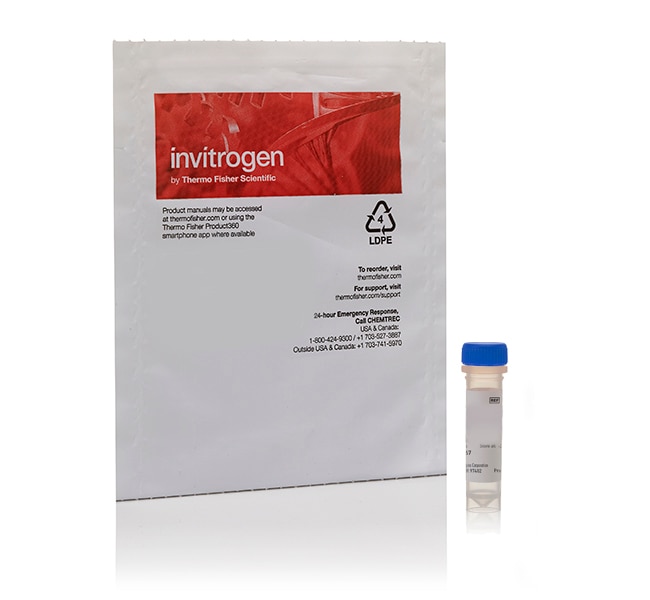
Oregon Green™ 488 BAPTA-5N, Hexapotassium Salt, cell impermeant
Visible light-excitable, low affinity Ca2+ indicator
| Catalog Number | Quantity |
|---|---|
| O6812 | 500 μg |
Catalog number O6812
Price (HKD)
2,471.00
Online exclusive
Ends: 31-Dec-2026
3,295.00Save 824.00 (25%)
Each
Quantity:
500 μg
Price (HKD)
2,471.00
Online exclusive
Ends: 31-Dec-2026
3,295.00Save 824.00 (25%)
Each
The cell-impermeant visible light—excitable, low affinity Ca2+ indicator, Oregon Green™ 488 BAPTA-5N, hexapotassium salt has a Kd for Ca2+ ∼20 μM and absorption/emission maxima ∼492/517 nm.
For Research Use Only. Not for use in diagnostic procedures.
Specifications
Detection MethodFluorescence
Dye TypeOregon Green
Emission Wavelength521 nm
Excitation Wavelength494 nm
Quantity500 μg
Shipping ConditionRoom Temperature
For Use With (Application)Calcium Indicator
For Use With (Equipment)Fluorescence Microscope, Flow Cytometer, Microplate Reader
Product LineOregon Green
Product TypeCalcium Indicator
Unit SizeEach
Contents & Storage
Store in freezer -5°C to -30°C and protect from light.
Citations & References (46)
Citations & References
Abstract
Presynaptic Ca(2+) influx at the inhibitor of the crayfish neuromuscular junction: a photometric study at a high time resolution.
Journal:J Neurophysiol
PubMed ID:10634895
'Presynaptic calcium influx at the inhibitor of the crayfish neuromuscular junction was investigated by measuring fluorescence transients generated by calcium-sensitive dyes. This approach allowed us to correlate presynaptic calcium influx with transmitter release at a high time resolution. Systematic testing of the calcium indicators showed that only low-affinity dyes, with
Light dependence of calcium and membrane potential measured in blowfly photoreceptors in vivo.
Journal:J Gen Physiol
PubMed ID:9689022
'Light adaptation in insect photoreceptors is caused by an increase in the cytosolic Ca2+ concentration. To better understand this process, we measured the cytosolic Ca2+ concentration in vivo as a function of adapting light intensity in the white-eyed blowfly mutant chalky. We developed a technique to measure the cytosolic Ca2+
Stimulation-evoked increases in cytosolic [Ca(2+)] in mouse motor nerve terminals are limited by mitochondrial uptake and are temperature-dependent.
Journal:J Neurosci
PubMed ID:11007886
'Increases in cytosolic [Ca(2+)] evoked by trains of action potentials (20-100 Hz) were recorded from mouse and lizard motor nerve terminals filled with a low-affinity fluorescent indicator, Oregon Green BAPTA 5N. In mouse terminals at near-physiological temperatures (30-38 degrees C), trains of action potentials at 25-100 Hz elicited increases in
Direct measurement of SR release flux by tracking 'Ca2+ spikes' in rat cardiac myocytes.
Journal:J Physiol
PubMed ID:9769413
'1. Ca2+ release flux across the sarcoplasmic reticulum (SR) during cardiac excitation-contraction coupling was investigated using a novel fluorescence method. Under whole-cell voltage-clamp conditions, rat ventricular myocytes were dialysed with a high concentration of EGTA (4.0 mM, 150 nM free Ca2+), to minimize the residence time of released Ca2+ in
Activation of trypsinogen in large endocytic vacuoles of pancreatic acinar cells.
Journal:Proc Natl Acad Sci U S A
PubMed ID:17363470
'The intracellular activation of trypsinogen, which is both pH- and calcium-dependent, is an important early step in the development of acute pancreatitis. The cellular compartment in which trypsinogen activation occurs currently is unknown. We therefore investigated the site of intracellular trypsinogen activation by using an established cellular model of acute