Search


Citations & References (122)
Invitrogen™
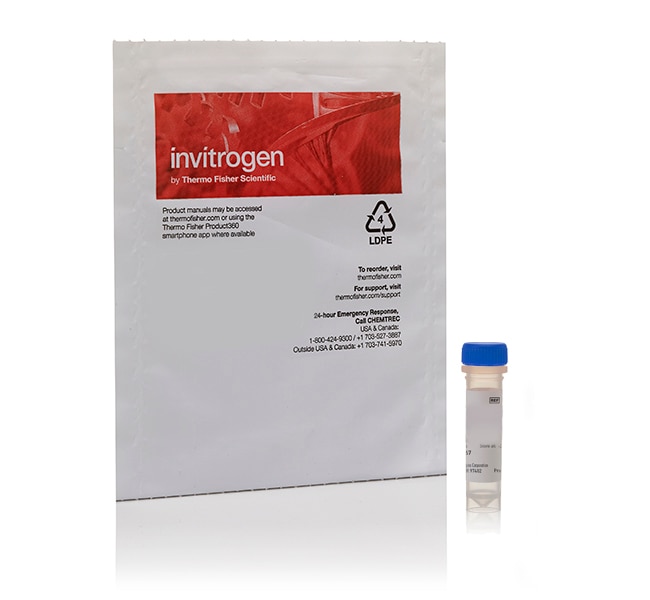
Streptavidin, fluorescein conjugate
Searching for superior alternatives to fluorescein? Our Alexa Fluor Dye Series offers everything you're looking for and more.Read more
| Catalog Number | Quantity |
|---|---|
| S869 also known as S-869 | 1 mg |
Catalog number S869
also known as S-869
Price (HKD)
2,493.00
Each
Quantity:
1 mg
Price (HKD)
2,493.00
Each
Searching for superior alternatives to fluorescein? Our Alexa Fluor Dye Series offers everything you're looking for and more.
For Research Use Only. Not for use in diagnostic procedures.
Specifications
Product TypeStreptavidin Conjugate (fluorescent)
Quantity1 mg
Shipping ConditionRoom Temperature
ConjugateFITC (Fluorescein)
FormSolid
Unit SizeEach
Contents & Storage
Store in freezer (-5 to -30°C) and protect from light.
Frequently asked questions (FAQs)
I am planning to use a fluorescent streptavidin labeled conjugate. What are the storage conditions and shelf life for the lyophilized powder and reconstituted solution?
I am planning to use a fluorescent streptavidin labeled conjugate. How should I prepare the working solution of the conjugate?
Citations & References (122)
Citations & References
Abstract
Testosterone signaling through internalizable surface receptors in androgen receptor-free macrophages.
Journal:Molecular biology of the cell
PubMed ID:10512854
Testosterone acts on cells through intracellular transcription-regulating androgen receptors (ARs). Here, we show that mouse IC-21 macrophages lack the classical AR yet exhibit specific nongenomic responses to testosterone. These manifest themselves as testosterone-induced rapid increase in intracellular free [Ca(2+)], which is due to release of Ca(2+) from intracellular Ca(2+) stores.
Abnormal regulation of retinoic acid receptor beta2 expression and compromised allograft rejection in transgenic mice expressing antisense sequences to retinoic acid receptor beta1 and beta3.
Journal:J Immunol
PubMed ID:9300677
Transgenic mice carrying antisense sequences common to the retinoic acid receptors (RAR) beta1 and beta3 were produced to examine roles of RARbeta1 and beta3 in the immune system. There were no significant changes of endogenous RARbeta1/beta3 expression at the mRNA level in T cells, B cells, and macrophages of the
Integration of NPY, AGRP, and melanocortin signals in the hypothalamic paraventricular nucleus: evidence of a cellular basis for the adipostat.
Journal:Neuron
PubMed ID:10677034
'Energy stores are held relatively constant in many mammals. The circuitry necessary for maintaining energy homeostasis should (1) sense the amount of energy stored in adipose tissue, (2) sense and integrate the multiple opposing signals regarding nutritional state, and (3) provide output regulating energy intake and expenditure to maintain energy
Detection of low copy numbers of HPV DNA by fluorescent in situ hybridization combined with confocal microscopy as an alternative to in situ polymerase chain reaction.
Journal:J Virol Methods
PubMed ID:9672129
'In genital lesions infected by human papillomavirus (HPV), histological criteria and HPV DNA typing are of prognostic value. Therefore, non-radioactive methods such as in situ hybridization are used extensively since they preserve the histological organization of the tissue, and allow the detection and characterization of HPV DNA. However, the sensitivity
Galanin-5-hydroxytryptamine interactions: electrophysiological, immunohistochemical and in situ hybridization studies on rat dorsal raphe neurons with a note on galanin R1 and R2 receptors.
Journal:Neuroscience
PubMed ID:9722143
'Galaninergic mechanisms related to 5-hydroxytryptamine neurons in the dorsal raphe nucleus of the rat were analysed using electrophysiology, immunohistochemistry and in situ hybridization. Galanin caused a dose-dependent hyperpolarization accompanied by a decrease in membrane resistance in most 5-hydroxytryptamine-sensitive dorsal raphe neurons. The galanin-induced outward current reversed at about - 105