Search

Invitrogen™
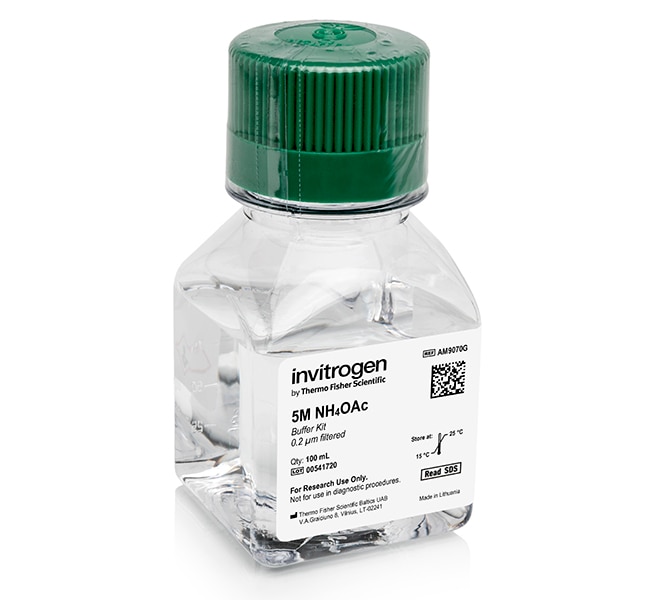
Ammonium Acetate (5 M), RNase-free
Invitrogen Molecular biology grade, 5 M Ammonium Acetate solution is supplied in one bottle containing 100 mL. The solution is certified RNase-free, economical, and ready-to-use.
Have Questions?
變更視圖

| 產品號碼 | Quantity |
|---|---|
| AM9070G | 100 mL |
| AM9071 | 500 mL |
產品號碼 AM9070G
價格 (HKD)
346.00
Online exclusive
Ends: 31-Dec-2026
413.00您節省 67.00 (16%)
Each
Quantity:
100 mL
價格 (HKD)
346.00
Online exclusive
Ends: 31-Dec-2026
413.00您節省 67.00 (16%)
Each
Invitrogen Molecular biology grade, 5 M Ammonium Acetate solution is supplied in one bottle, available in multiple sizes. The solution is certified RNase-free, economical, and ready-to-use. Due to the ubiquitous presence of RNases, manufacturing products for use with RNA is especially challenging. Invitrogen's nuclease-free reagents and buffers are manufactured in facilities specifically designed to prevent the introduction of nucleases. Highly sensitive RNase assays are performed at several different stages of the manufacturing process to ensure the highest quality. These reagents are rigorously tested for contaminating nonspecific endonuclease, exonuclease, and RNase activity.
For Research Use Only. Not for use in diagnostic procedures.
規格
Chemical Name or MaterialAmmonium Acetate
Packaging TypeBottle
Product LineAmbion
PurityMolecular Biology Grade
Quantity100 mL
Shipping ConditionRoom Temperature
Concentration5 M
FormLiquid
Unit SizeEach
內容物與存放
Store at room temperature.