Search


引用資料與參考文獻 (1)
Invitrogen™
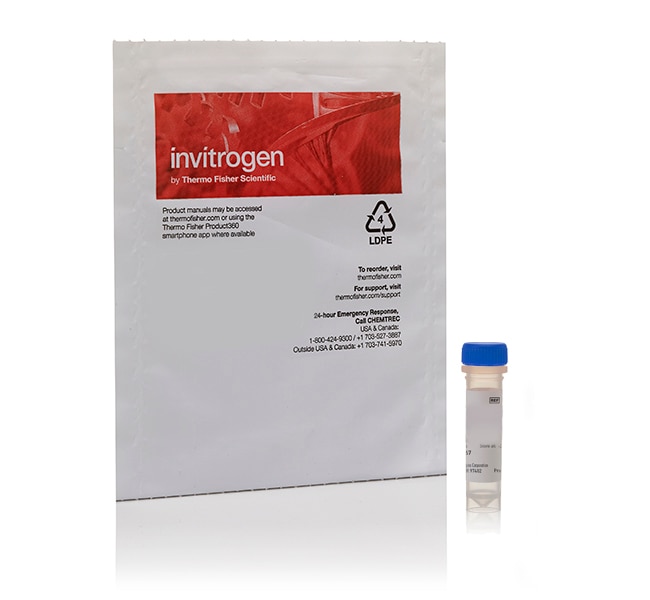
Escherichia coli BioParticles™ Opsonizing Reagent
The Escherichia coli BioParticles™ opsonizing agent is derived from highly purified rabbit polyclonal IgG antibodies.
| 產品號碼 | Quantity |
|---|---|
| E2870 | 1 unit |
產品號碼 E2870
價格 (HKD)
2,372.00
Each
Quantity:
1 unit
價格 (HKD)
2,372.00
Each
The Escherichia coli BioParticles™ opsonizing agent is derived from highly purified rabbit polyclonal IgG antibodies and specifically designed to enhance the uptake of the Escherichia coli BioParticals™ conjugates.
See User Manual for solubility instructions.
For Research Use Only. Not for use in diagnostic procedures.
規格
Detection MethodFluorescence
Dye TypeUnconjugated
FormSolid
Quantity1 unit
Shipping ConditionRoom Temperature
SpeciesE. coli
For Use With (Equipment)Fluorescence Microscope
Product LineBioParticles
Product TypeOpsonizing Reagent
Unit SizeEach
內容物與存放
Store in freezer (-5°C to -30°C).
常見問答集 (常見問題)
Are the Invitrogen BioParticles products sterile?
What is the type of bond that attaches the dyes to the BioParticles probes?
引用資料與參考文獻 (1)
引用資料與參考文獻
Abstract
Multipotent stem cells from trabecular meshwork become phagocytic TM cells.
Journal:Invest Ophthalmol Vis Sci
PubMed ID:22297497
'To isolate and characterize stem cells from human trabecular meshwork (TM) and to investigate the potential of these stem cells to differentiate into TM cells. Human trabecular meshwork stem cells (TMSCs) were isolated as side population cells by fluorescence-activated cell sorting or isolated by clonal cultures. Passaged TMSCs were compared