Search


Citations & References (33)
Invitrogen™
Alpha-Bungarotoxin Conjugates
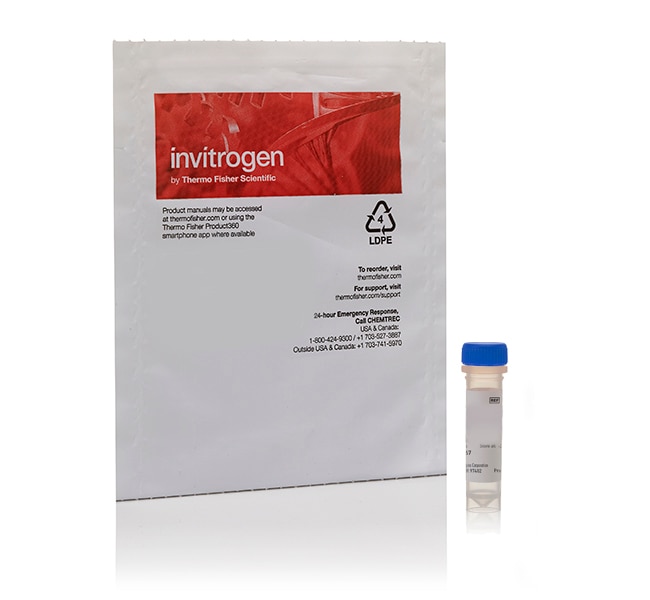
Thermo Fisher Scientific offers a broad selection of Invitrogen alpha-bungarotoxin conjugates, including Alexa Fluor and Alexa Fluor Plus conjugates.
Have Questions?
Change view

| Catalog Number | Label or Dye |
|---|---|
| B1196 | Biotin-XX |
| B56130 | Alexa Fluor™ Plus 405 |
| B13422 | Alexa Fluor™ 488 |
| B35451 | Alexa Fluor™ 555 |
| B13423 | Alexa Fluor™ 594 |
| B35450 | Alexa Fluor™ 647 |
| T1175 | Tetramethylrhodamine |
| B1601 | Unlabeled |
Catalog number B1196
Price (INR)
47,915.00
Each
Label or Dye:
Biotin-XX
Price (INR)
47,915.00
Each
Thermo Fisher Scientific offers a broad selection of Invitrogen alpha-bungarotoxin conjugates, including Alexa Fluor and Alexa Fluor Plus conjugates. Alpha-bungarotoxin, a 74-amino acid peptide extracted from Bungarus multicinctus venom, binds with high affinity to the alpha subunit of the nicotinic acetylcholine receptor (AChR) of neuromuscular junctions.
Our bright and photostable Alexa Fluor 555 alpha-bungarotoxin is a superior choice of probe for visualizing this receptor. Fluorescent alpha-bungarotoxin conjugates can be used to facilitate identification of nicotinic AChRs and localization of neuromuscular junctions. Conjugated alpha-bungarotoxin has been used in variety of applications, including immunofluorescence (IF), immunohistochemistry (IHC), and flow cytometry (FC).
For Research Use Only. Not for use in diagnostic procedures.
Specifications
Label or DyeBiotin-XX
Product TypeConjugate
Protein SubtypeOther Proteins
Quantity500 μg
Shipping ConditionRoom Temperature
Product LineInvitrogen
Unit SizeEach
Contents & Storage
Store at ≤–20°C and protect from light. Avoid freeze-thaw cycles.
Citations & References (33)
Citations & References
Abstract
Identification of nicotinic acetylcholine receptor recycling and its role in maintaining receptor density at the neuromuscular junction in vivo.
Journal:J Neurosci
PubMed ID:16251443
'In the CNS, receptor recycling is critical for synaptic plasticity; however, the recycling of receptors has never been observed at peripheral synapses. Using a novel imaging technique, we show here that nicotinic acetylcholine receptors (AChRs) recycle into the postsynaptic membrane of the neuromuscular junction. By sequentially labeling AChRs with biotin-bungarotoxin
Precise localization of alpha7 nicotinic acetylcholine receptors on glutamatergic axon terminals in the rat ventral tegmental area.
Journal:J Neurosci
PubMed ID:15601930
'Alpha7 neuronal nicotinic acetylcholine receptors (nAChRs) constitute one of the predominant nAChR subtypes in the mammalian brain. Within the ventral tegmental area (VTA), nicotine application, paired with postsynaptic stimulation, contributes to a form of long-term potentiation, an effect attributed to presynaptic alpha7 nAChRs on glutamatergic afferents (Mansvelder and McGehee, 2000).
Imaging of receptor trafficking by using alpha-bungarotoxin-binding-site-tagged receptors.
Journal:Proc Natl Acad Sci U S A
PubMed ID:15563595
'alpha-Amino-3-hydroxy-5-methyl-4-isoxazole-propionate (AMPA) receptors mediate excitatory synaptic transmission and are dynamically regulated during synaptic plasticity in the CNS. The membrane trafficking of AMPA receptors to synapses is critical for the regulation of the efficacy of excitatory synaptic transmission. Direct imaging of AMPA receptors in various cell compartments is important to dissecting
Erratic deposition of agrin during the formation of Xenopus neuromuscular junctions in culture.
Journal:Dev Biol
PubMed ID:7601300
'In order to disclose the mechanism that regulate synapse development we compared the distributions of agrin, acetylcholine receptors (AChR) and a basal lamina heparan sulfate proteoglycan (HSPG) in sections and cultures prepared from Xenopus laevis and Ambystoma mexicanum embryos. While agrin, AChR and HSPG may accumulate almost synchronously at synapses
The agrin receptor. Localization in the postsynaptic membrane, interaction with agrin, and relationship to the acetylcholine receptor.
Journal:J Biol Chem
PubMed ID:8227074
'Agrin is a component of the synaptic basal lamina that induces the aggregation of acetylcholine receptors (AChRs) and other elements of the postsynaptic membrane. We have determined the localization, binding characteristics, and biochemical profile of the agrin receptor in Torpedo electric organ membranes and defined domains of agrin that bind