Search


Citations & References (6)
Invitrogen™
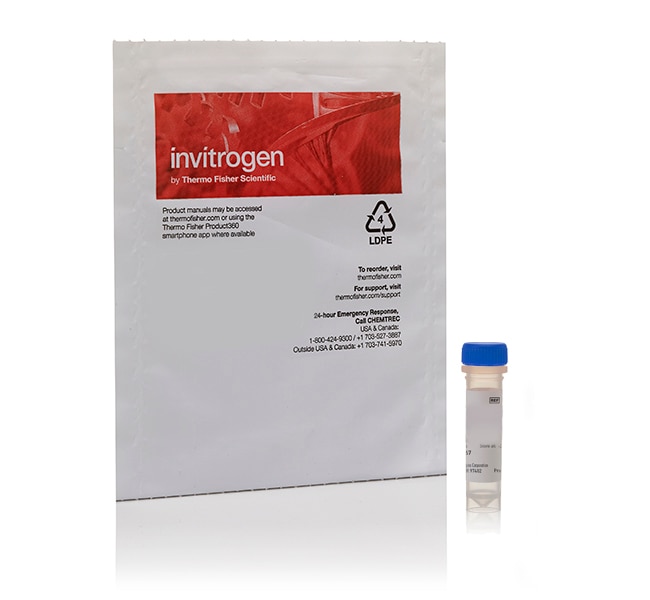
Avidin, NeutrAvidin™, Rhodamine Red™-X conjugate
Avidin, NeutrAvidin™, Rhodamine Red™-X conjugate
| Catalog Number | Quantity |
|---|---|
| A6378 also known as A-6378 | 1 mg |
Catalog number A6378
also known as A-6378
Price (KRW)
-
Quantity:
1 mg
Our Rhodamine Red™-X conjugate of NeutrAvidin™ biotin-binding protein - a form of avidin that has been processed to remove carbohydrate and to lower its isoelectric point - can substantially decrease background due to nonspecific binding. The method used to deglycosylate the avidin retains its specific binding. This bright, red-fluorescent reagent (absorption/emission maxima ∼570/590 nm) is ideal for detecting biotinylated targets in fluorescence microscopy applications.
For Research Use Only. Not for use in diagnostic procedures.
Specifications
Quantity1 mg
Shipping ConditionRoom Temperature
ConjugateRhodamine Red
Product LineNeutrAvidin, Rhodamine Red
Unit SizeEach
Contents & Storage
Store in freezer (-5 to -30°C) and protect from light.
Citations & References (6)
Citations & References
Abstract
Monocyte induction of IL-10 and down-regulation of IL-12 by iC3b deposited in ultraviolet-exposed human skin.
Journal:J Immunol
PubMed ID:9834066
'CD11b+ monocytic/macrophagic cells (Mo/Mph), which infiltrate into skin after UV irradiation, play an important role in UV-induced immunosuppression. Because in mice, blockade of CD11b (iC3b receptor) on monocytes and depletion of its ligand, iC3b, reverses UV-induced immunosuppression, we asked whether iC3b is deposited in human skin after UV, and whether
Isolation of bright aggregate fluctuations in a multipopulation image correlation spectroscopy system using intensity subtraction.
Journal:Biophys J
PubMed ID:12770905
'Image correlation spectroscopy allows sensitive measurement of the spatial distribution and aggregation state of fluorescent membrane macro molecules. When studying a single population system (i.e., aggregates of similar brightness), an accurate measure can be made of the aggregate number per observation area, but this measurement becomes much more complex in
Role of late maternal thyroid hormones in cerebral cortex development: an experimental model for human prematurity.
Journal:Cereb Cortex
PubMed ID:19812240
Hypothyroxinemia affects 35-50% of neonates born prematurely (12% of births) and increases their risk of suffering neurodevelopmental alterations. We have developed an animal model to study the role of maternal thyroid hormones (THs) at the end of gestation on offspring's cerebral maturation. Pregnant rats were surgically thyroidectomized at embryonic day
Presynaptic type III neuregulin1-ErbB signaling targets {alpha}7 nicotinic acetylcholine receptors to axons.
Journal:J Cell Biol
PubMed ID:18458158
Type III Neuregulin1 (Nrg1) isoforms are membrane-tethered proteins capable of participating in bidirectional juxtacrine signaling. Neuronal nicotinic acetylcholine receptors (nAChRs), which can modulate the release of a rich array of neurotransmitters, are differentially targeted to presynaptic sites. We demonstrate that Type III Nrg1 back signaling regulates the surface expression of
A moderate and transient deficiency of maternal thyroid function at the beginning of fetal neocorticogenesis alters neuronal migration.
Journal:Endocrinology
PubMed ID:15087434
Epidemiological studies and case reports show that even a relatively minor degree of maternal hypothyroxinemia during the first half of gestation is potentially dangerous for optimal fetal neurodevelopment. Our experimental approach was designed to result in a mild and transient period of maternal hypothyroxinemia at the beginning of corticogenesis. Normal