Search


Citations & References (28)
Invitrogen™
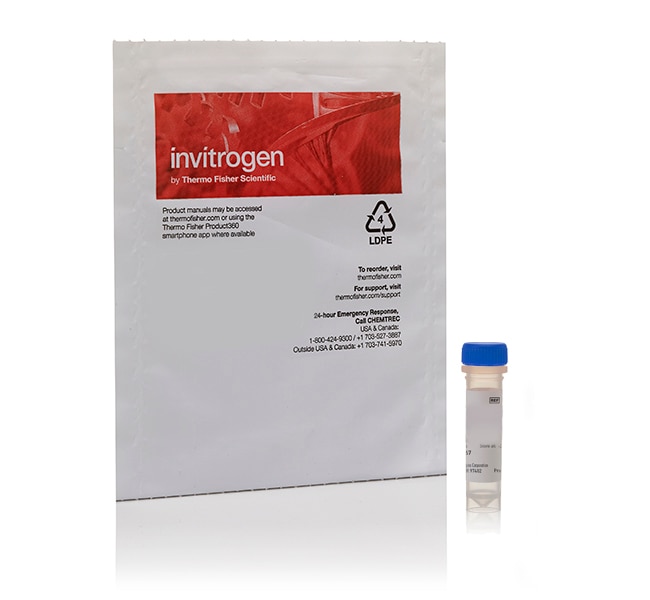
BODIPY™ FL C16 (4,4-Difluoro-5,7-Dimethyl-4-Bora-3a,4a-Diaza-s-Indacene-3-Hexadecanoic Acid)
The green fluorescent fatty acid, BODIPY™ FL C16 can be used as a synthetic precursor to a wide variety of fluorescent phospholipids.
| Catalog Number | Quantity |
|---|---|
| D3821 | 1 mg |
Catalog number D3821
Price (KRW)
247,000
線上優惠
Ends: 31-Dec-2026
274,000Save 27,000 (10%)
Each
Quantity:
1 mg
Price (KRW)
247,000
線上優惠
Ends: 31-Dec-2026
274,000Save 27,000 (10%)
Each
The green fluorescent fatty acid, BODIPY™ FL C16 can be used as a synthetic precursor to a wide variety of fluorescent phospholipids. Unlike fluorophores like pyrene, DPH and NBD, BODIPY™ dyes are relatively environment insensitive and is fluorescent in both aqueous and lipid environments.
We recommend dissolving in high-quality anhydrous DMSO to attain a stock concentration of 1 to 10 mM.
For Research Use Only. Not for use in diagnostic procedures.
Specifications
Chemical Name or MaterialFatty Acids
Excitation/Emission505/512 nm
Recommended StorageStore in freezer (-5°C to -30°C) and protect from light.
Physical FormSolid
Product LineBODIPY
Quantity1 mg
Unit SizeEach
Citations & References (28)
Citations & References
Abstract
Microspectroscopic imaging of nodulation factor-binding sites on living Vicia sativa roots using a novel bioactive fluorescent nodulation factor.
Journal:Biophys J
PubMed ID:9129802
A novel bioactive fluorescent nodulation (Nod) factor, NodRlv-IV(BODIPY FL-C16), has been synthesized by attaching a BODIPY FL-C16 acyl chain to the primary amino group of chitotetraose deacetylated at the nonreducing terminus by recombinant NodB. The binding of the fluorescent Nod factor to root systems of Vicia sativa was investigated with
Liver fatty acid-binding protein colocalizes with peroxisome proliferator activated receptor alpha and enhances ligand distribution to nuclei of living cells.
Journal:Biochemistry
PubMed ID:14992586
'Although it is hypothesized that long-chain fatty acyl CoAs (LCFA-CoAs) and long-chain fatty acids (LCFAs) regulate transcription in the nucleus, little is known regarding factors that determine the distribution of these ligands to nuclei of living cells. Immunofluorescence colocalization showed that liver fatty acid-binding protein (L-FABP; binds LCFA-CoA as well
Detection of lipid peroxidation on erythrocytes using the excimer-forming property of a lipophilic BODIPY fluorescent dye.
Journal:J Biochem Biophys Methods
PubMed ID:9310865
'Lipophilic analogues of dipyrrometheneboron (BODIPY-FL) dyes, used for membrane studies, normally fluoresce in the green wavelength region (approximately 516 nm), but at high local concentration, they shift their emission to the red region (approximately 540-600 nm) via excimer formation. A two-wavelength-based method is described that utilizes the excimer-forming property of
Liver fatty acid binding protein expression enhances branched-chain fatty acid metabolism.
Journal:Mol Cell Biochem
PubMed ID:15124915
'Although liver fatty acid binding protein (L-FABP) is known to enhance uptake and esterification of straight-chain fatty acids such as palmitic acid and oleic acid, its effects on oxidation and further metabolism of branched-chain fatty acids such as phytanic acid are not completely understood. The present data demonstrate for the
Lateral diffusion of small compounds in human stratum corneum and model lipid bilayer systems.
Journal:Biophys J
PubMed ID:8913603
'An image-based technique of fluorescence recovery after photobleaching (video-FRAP) was used to measure the lateral diffusion coefficients of a series of nine fluorescent probes in two model lipid bilayer systems, dimyristoylphosphatidylcholine (DMPC) and DMPC/cholesterol (40 mol%), as well as in human stratum corneum-extracted lipids. The probes were all lipophilic, varied