Search


Citations & References (23)
Invitrogen™
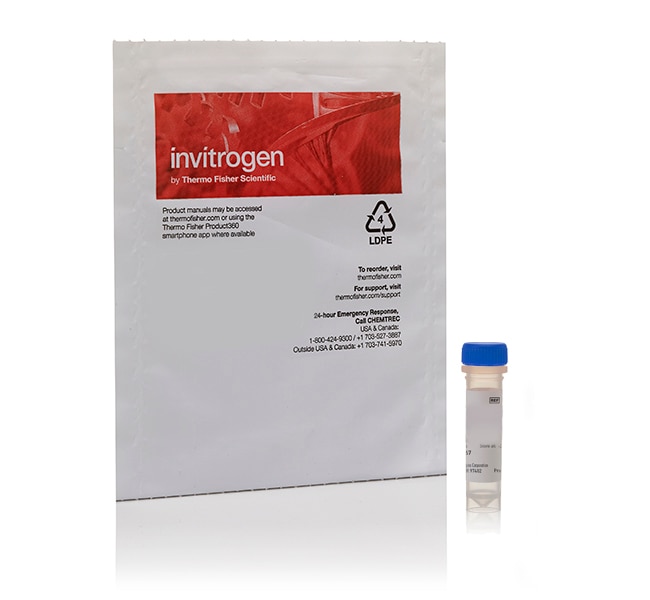
Streptavidin, Alexa Fluor™ 647 Conjugate
Alexa Fluor™ 647 streptavidin comprises a biotin-binding protein (streptavidin) covalently attached to a fluorescent label (Alexa Fluor™ dye). Streptavidin hasRead more
Have Questions?
Change view

| Catalog Number | Quantity | Form |
|---|---|---|
| S21374 | 1 mg | Solid |
| S32357 | 0.5 mL | Liquid |
Catalog number S21374
Price (KRW)
400,000
Online offer
Ends: 31-Dec-2026
470,000Save 70,000 (15%)
Each
Quantity:
1 mg
Form:
Solid
Price (KRW)
400,000
Online offer
Ends: 31-Dec-2026
470,000Save 70,000 (15%)
Each
Alexa Fluor™ 647 streptavidin comprises a biotin-binding protein (streptavidin) covalently attached to a fluorescent label (Alexa Fluor™ dye). Streptavidin has a very high binding affinity for biotin, and a conjugate of streptavidin is commonly used together with a conjugate of biotin for specific detection of a variety of proteins, protein motifs, nucleic acids, and other molecules (for example, a biotinylated primary antibody bound to a protein target can be detected with a fluorescently labeled streptavidin). Strategies similar to this are used in many detection protocols including western blots, flow cytometry, imaging and microscopy, and microplate assays. Alexa Fluor™ dye streptavidin conjugates are supplied as 1 mg lyophilized product or in 0.5 mL volumes of a 2 mg/mL solution.
Important Features of Alexa Fluor™ 647 Streptavidin Conjugates:
• Alexa Fluor™ 647 streptavidin conjugate has Ex/Em maxima of ∼ (650/668)
• Bright, photostable fluorescence
• High solubility in aqueous solutions
• Available in multiple colors
• Ideal for western blots, flow cytometry, imaging and microscopy, microplate assays and more
Properties of Alexa Fluor™ Dyes
Alexa Fluor™ dyes are organic fluorescent dyes developed for better performance in imaging and other labeling protocols and exhibit improved photostability and brightness and improved solubility in aqueous solutions. Available in a broad range of colors, these dyes are a good choice for most imaging applications.
Blocking Endogenous Biotin
Naturally occurring biotins can interfere with biotin-streptavidin detection schemes. For experiments involving fixed and permeabilized cells, try our Endogenous Biotin-Blocking Kit to minimize this interference.
Consult user Manual for solubility instructions.
Related Links:
Learn more about Avidin-Biotin Detection
Learn more about Alexa Fluor™ Dyes
Find out about other Labeled Streptavidin Conjugates
Read Avidin and Streptavidin Conjugates-Section 7.6 in the Molecular Probes Handbook
For Research Use Only. Not for use in diagnostic procedures.
Specifications
Label or DyeAlexa Fluor
Product TypeStreptavidin Conjugate (fluorescent)
Quantity1 mg
Shipping ConditionRoom Temperature
ConjugateAlexa Fluor 647
FormSolid
Product LineAlexa Fluor
Unit SizeEach
Contents & Storage
Store in freezer (-5°C to -30°C) and protect from light.
Frequently asked questions (FAQs)
I am planning to use a fluorescent streptavidin labeled conjugate. What are the storage conditions and shelf life for the lyophilized powder and reconstituted solution?
I am planning to use a fluorescent streptavidin labeled conjugate. How should I prepare the working solution of the conjugate?
Citations & References (23)
Citations & References
Abstract
Printing protein arrays from DNA arrays.
Journal:Nat Methods
PubMed ID:18204456
'We describe a method, DNA array to protein array (DAPA), which allows the ''printing'' of replicate protein arrays directly from a DNA array template using cell-free protein synthesis. At least 20 copies of a protein array can be obtained from a single DNA array. DAPA eliminates the need for separate
Comparison of hydroxylated print additives on antibody microarray performance.
Journal:J Proteome Res
PubMed ID:17081047
'Various hydroxylated additives were added to antibody print buffers at different concentrations to stabilize printed antibodies during normal array spot desiccation on commercial polymer-coated microarray slides. Polyvinyl alcohol addition to print buffers produced the most regular spot morphologies, homogeneous intra-spot antibody distribution, uniform fluorescence intensity, and improved analyte capture activity,
The tetraspanin CD9 mediates lateral association of MHC class II molecules on the dendritic cell surface.
Journal:Proc Natl Acad Sci U S A
PubMed ID:17190803
'We have found that MHC class II (MHC II) molecules exhibit a distinctive organization on the dendritic cell (DC) plasma membrane. Both in DC lysates and on the surface of living cells, I-A and I-E molecules engaged in lateral interactions not observed on other antigen-presenting cells such as B blasts.
Development of homogeneous binding assays based on fluorescence resonance energy transfer between quantum dots and Alexa Fluor fluorophores.
Journal:Anal Biochem
PubMed ID:16860286
'We studied the fluorescence resonance energy transfer (FRET) between quantum dots emitting at 565, 605, and 655 nm as energy donors and Alexa Fluor fluorophores with absorbance maxima at 594, 633, 647, and 680 nm as energy acceptors. As a first step, we prepared covalent conjugates between all three types
Restriction of receptor movement alters cellular response: physical force sensing by EphA2.
Journal:Science
PubMed ID:20223987
'Activation of the EphA2 receptor tyrosine kinase by ephrin-A1 ligands presented on apposed cell surfaces plays important roles in development and exhibits poorly understood functional alterations in cancer. We reconstituted this intermembrane signaling geometry between live EphA2-expressing human breast cancer cells and supported membranes displaying laterally mobile ephrin-A1. Receptor-ligand binding,