Search



Thermo Scientific™
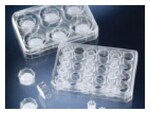
Nunc™ Polycarbonate Membrane Insert in Multidish
Thermo Scientific™ Nunc™ Polycarbonate Membrane Insert in Multidish를 사용하면 기질 코팅 없이 대부분의 세포형을 배양할 수 있습니다.
Have Questions?
보기 방식 변경

| 카탈로그 번호 | 기공 크기 | 접시 유형 | 배양 면적 |
|---|---|---|---|
| 140629 | 8 μm | 24-Well Plate | 0.47 cm2 |
| 140620 | 0.4 μm | 24-Well Plate | 0.47 cm2 |
| 140627 | 3 μm | 24-Well Plate | 0.47 cm2 |
| 140640 | 0.4 μm | 6-Well Plate | 3.14 cm2 |
| 140642 | 3 μm | 6-Well Plate | 3.14 cm2 |
| 140644 | 8 μm | 6-Well Plate | 3.14 cm2 |
| 140652 | 0.4 μm | 12-Well Plate | 1.13 cm2 |
| 140654 | 3 μm | 12-Well Plate | 1.13 cm2 |
| 140656 | 8 μm | 12-Well Plate | 1.13 cm2 |
| 140660 | 0.4 μm | 6-Well Plate | 4.1 cm2 |
| 140663 | 3 μm | 6-Well Plate | 4.1 cm2 |
| 140668 | 8 μm | 6-Well Plate | 4.1 cm2 |
카탈로그 번호 140629
제품 가격(KRW)
820,800
온라인 행사
Ends: 30-Sep-2026
912,000할인액 91,200 (10%)
Case of 48
기공 크기:
8 μm
접시 유형:
24-Well Plate
배양 면적:
0.47 cm2
제품 가격(KRW)
820,800
온라인 행사
Ends: 30-Sep-2026
912,000할인액 91,200 (10%)
Case of 48
Thermo Scientific™ Nunc™ Polycarbonate Membrane Insert in Multidish를 사용하면 기질 코팅 없이 대부분의 세포형을 배양할 수 있습니다.
특징:
주문 정보:
재밀봉 가능한 백에 포장
책임 보증 기간: 판매 약관에 제시된 모든 보증 요건 및 배제 조항에 따라 달라질 수 있으나 이 제품의 보증 기간은 제품을 선적한 날짜부터 이후 구십(90)일입니다.
내부 연구 목적 사용 제한에 대한 면책 사항: 내부 연구 목적만을 위해 제품을 이용하는 구매자에 대한 어떠한 제한 사항도 이 문구와 관련된 웹 페이지의 제품에 적용되지 않습니다.
Disclaimer to internal research use restriction: Any restrictions on the purchaser to utilize the product(s) for internal research purposes only does not apply to the product(s) on the web pages associated with this statement.
General References:
- Mardi A Crane-Godreau et.al (2005). CCL20/macrophage Inflammatory Protein 3alpha and Tumor Necrosis Factor Alpha Production by Primary Uterine Epithelial Cells in Response to Treatment With Lipopolysaccharide or Pam3Cys. PMID: 15618187
- Rettinger CL et. al (2018). Quantitative Assessment of Retina Explant Viability in a Porcine Ex Vivo Neuroretina Model. PMID: 29924674
- Mardi A Crane-Godreau et.al (2004). Effect of Escherichia coli and Lactobacillus rhamnosus on macrophage inflammatory protein 3 alpha, tumor necrosis factor alpha, and transforming growth factor beta release by polarized rat uterine epithelial cells in culture. PMID: 15039305
- Soboll G et. al (2006). Effect of oestradiol on PAMP-mediated CCL20/MIP-3 alpha production by mouse uterine epithelial cells in culture. PMID: 16771853
- Mardi A Crane-Godreau et. al (2009). Exposure to Cigarette Smoke Disrupts CCL20-Mediated Antimicrobial Activity in Respiratory Epithelial Cells. PMID: 19966927
- Wildemann B et. al (2005). Differences in the fusion and resorption activity of human osteoclasts after stimulation with different growth factors released from a polylactide carrier. PMID: 15477999
- Sugita Y et. al (1997). Pigment epithelium-derived factor (PEDF) has direct on the metabolism and proliferation of microglia and indirect effects on astrocytes. PMID: 9335258
- van Schilfgaarde M et. al (1999). Haemophilus influenzae localized in epithelial cell layers is shielded from antibiotics and antibody-mediated bactericidal activity. PMID: 10222210
- Chung HC et. al (2014). Inhibition of porcine endogenous retrovirus in PK15 cell line by efficient multitargeting RNA interference. PMID: 24138389
- Ode A et. al (2010). Toward biomimetic materials in bone regeneration: functional behavior of mesenchymal stem cells on a broad spectrum of extracellular matrix components. PMID: 20878902
사양
색상Clear
설명Polycarbonate Cell Culture Inserts with 8 micron pore size in 24-well plate
접시 유형24-Well Plate
용도(장비)Multidish 24
플레이트당 인서트12
케이스당 수48/Cs.
팩당 수12 Pk.
수량12 Pk.
표면 처리Cell culture-treated
배양 면적0.47 cm2
물질Polycarbonate
웰 수24
기공 밀도<0.85 x 10⁵ pores/cm2
기공 크기8 μm
멸균Sterile
유형Culture Insert
부피(미터법) 웰0.5 mL
부피(미터법) 작동0.5 mL
Unit SizeCase of 48