Search


인용 및 참조 문헌 (26)
Invitrogen™
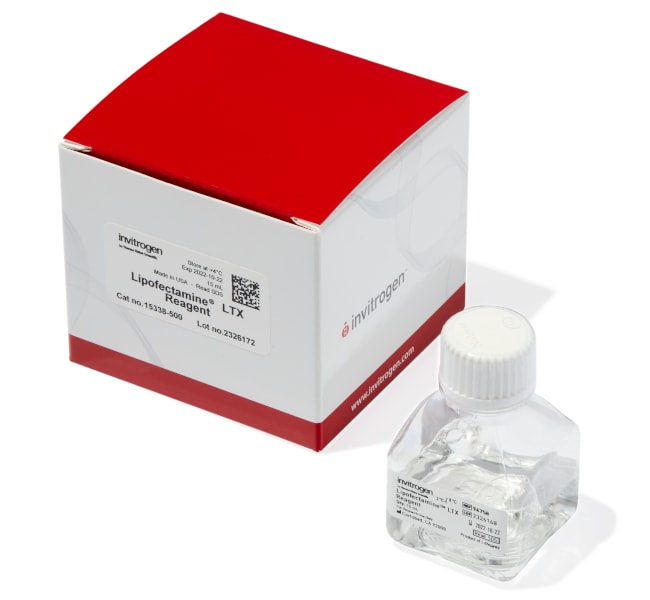
Lipofectamine™ LTX Reagent
Lipofectamine™ LTX Reagent은 해당 cell에 맞는 potency와 gentleness를 갖춘 plasmid transfection reagent로 최고의 transfection efficiency와 viability를 제공합니다. Lipofectamine™ LTX Reagent는자세히 알아보기
| 카탈로그 번호 | 수량 |
|---|---|
| 15338500 | 15 mL |
카탈로그 번호 15338500
제품 가격(KRW)
13,827,000
Online offer
Ends: 31-Dec-2026
16,266,000할인액 2,439,000 (15%)
Each
수량:
15 mL
제품 가격(KRW)
13,827,000
Online offer
Ends: 31-Dec-2026
16,266,000할인액 2,439,000 (15%)
Each
Lipofectamine™ LTX Reagent은 해당 cell에 맞는 potency와 gentleness를 갖춘 plasmid transfection reagent로 최고의 transfection efficiency와 viability를 제공합니다. Lipofectamine™ LTX Reagent는 일반 세포 유형과 어려운 세포 유형 모두에서 유전자 발현에 이용할 수 있는 새로운 첨단 솔루션입니다. 어렵고 민감한 primary cell line의 transfection에는 Lipofectamine™ LTX Reagent의 효율성과 편의성, 관용성을 따라올 만한 plasmid DNA-specific transfection reagent가 없습니다. Lipofectamine™ LTX Reagent는 100% animal origin-free 성분에서 합성된 제품으로 연구실험이나 cell line에서 BSE나 바이러스같은 동물원성 질병의 유무를 쉽게 검사할 수 있습니다. 원산지 증명서(C/O)는 기술지원부에 연락해 받을 수 있습니다.
Lipofectamine™ LTX Reagent 특징:
• 우수한 전달력 – 어렵고 민감한 일차 세포를 포함해 다양한 세포 유형 transfection에 high efficiency 보장
• 우수한 성능– 높은 transfection efficiency과 함께 최대 (>90%) cell viability 제공
• 최적화된 프로토콜 – 거의 대부분의 cell line에 제공되는 빠르고 간편한 프로토콜
• stable cell line 생성에 매우 효과적인 시약
일차 세포 Transfection Efficiency
일차 세포는 transfection이 어려운 경우가 많습니다. Lipofectamine™ LTX Reagent은PLUS™ Reagent와 병용하여 어떤 lipid-, polymer-based reagent에서든 일차 세포 transfection 효율을 최대로 높입니다. primary neural progenitor cell을 비롯해 많은 일차 세포 유형에서 Lipofectamine™ LTX로 transfection을 성공시켰습니다.
어려운 세포에 우수한 전달력
RAW267.3 macrophage에서 높은 단백질 발현율을 달성해야 하는 경우, Lipofectamine™ LTX Reagent가 여타 transfection reagent보다 우수한 성능을 보입니다(그림 4 참조). 이전에 transfection이 어려웠던 세포에서 high-level transgene expression을 달성하여 이전에 구하지 못했던 결과를 얻을 수 있습니다.
폭넓은 Cell Line 호환성
어려운 일차 세포 transfection 성능 외에도 Lipofectamine™ LTX Reagent는 다른 transfection reagent에 민감한 cell line을 포함해 수립된 cell line transfection에 다용도로 사용할 수 있습니다. 본사의 Transfection Selection Tool를 이용해 사용하려는 cell에 가장 적합한 transfection 조건을 알아볼 수 있습니다.
Stable Transfection
Lipofectamine™ LTX은 potency과 gentleness의 균형을 제대로 맞추어 cell transfection 성공 가능성을 최대한으로 끌어올립니다. 이런 이유로 Lipofectamine™ LTX는 그동안 어려웠던 세포 유형에 stable transfectant를 수립할 수 있는 가장 빠르고 쉬운 reagent입니다.
간편하고 신속한 Serum-compatible 프로토콜
Lipofectamine™ LTX Reagent은 명확한 프로토콜을 제공하여 transfection complex를 제거하거나 transfection 후 배지를 교환/추가할 필요가 없습니다. 간편한 최적 프로토콜로 최상의 결과를 신속히 얻을 수 있어 작업 시간이 단축되고 결과 획득이 빨라집니다.
이 제품은 연구용으로만 사용가능합니다. 치료 또는 진단 목적으로 동물이나 인간에 사용할 수 없습니다.
Lipofectamine™ LTX Reagent 특징:
• 우수한 전달력 – 어렵고 민감한 일차 세포를 포함해 다양한 세포 유형 transfection에 high efficiency 보장
• 우수한 성능– 높은 transfection efficiency과 함께 최대 (>90%) cell viability 제공
• 최적화된 프로토콜 – 거의 대부분의 cell line에 제공되는 빠르고 간편한 프로토콜
• stable cell line 생성에 매우 효과적인 시약
일차 세포 Transfection Efficiency
일차 세포는 transfection이 어려운 경우가 많습니다. Lipofectamine™ LTX Reagent은PLUS™ Reagent와 병용하여 어떤 lipid-, polymer-based reagent에서든 일차 세포 transfection 효율을 최대로 높입니다. primary neural progenitor cell을 비롯해 많은 일차 세포 유형에서 Lipofectamine™ LTX로 transfection을 성공시켰습니다.
어려운 세포에 우수한 전달력
RAW267.3 macrophage에서 높은 단백질 발현율을 달성해야 하는 경우, Lipofectamine™ LTX Reagent가 여타 transfection reagent보다 우수한 성능을 보입니다(그림 4 참조). 이전에 transfection이 어려웠던 세포에서 high-level transgene expression을 달성하여 이전에 구하지 못했던 결과를 얻을 수 있습니다.
폭넓은 Cell Line 호환성
어려운 일차 세포 transfection 성능 외에도 Lipofectamine™ LTX Reagent는 다른 transfection reagent에 민감한 cell line을 포함해 수립된 cell line transfection에 다용도로 사용할 수 있습니다. 본사의 Transfection Selection Tool를 이용해 사용하려는 cell에 가장 적합한 transfection 조건을 알아볼 수 있습니다.
Stable Transfection
Lipofectamine™ LTX은 potency과 gentleness의 균형을 제대로 맞추어 cell transfection 성공 가능성을 최대한으로 끌어올립니다. 이런 이유로 Lipofectamine™ LTX는 그동안 어려웠던 세포 유형에 stable transfectant를 수립할 수 있는 가장 빠르고 쉬운 reagent입니다.
간편하고 신속한 Serum-compatible 프로토콜
Lipofectamine™ LTX Reagent은 명확한 프로토콜을 제공하여 transfection complex를 제거하거나 transfection 후 배지를 교환/추가할 필요가 없습니다. 간편한 최적 프로토콜로 최상의 결과를 신속히 얻을 수 있어 작업 시간이 단축되고 결과 획득이 빨라집니다.
이 제품은 연구용으로만 사용가능합니다. 치료 또는 진단 목적으로 동물이나 인간에 사용할 수 없습니다.
For Research Use Only. Not for use in diagnostic procedures.
사양
분류Animal Origin-Free
용도(애플리케이션)Transfection
고처리량 호환성High-throughput Compatible
제품라인Lipofectamine
제품 유형LTX Reagent
수량15 mL
혈청 호환 가능Yes
배송 조건Wet Ice
셀 유형Established Cell Lines, Stem Cells, Primary Cells, Hard-to-Transfect Cells
형식6-well Plate, 12-well Plate, 24-well Plate, 48-well Plate, 96-well Plate, Flasks
샘플 종류Plasmid DNA, RNAi Plasmids (shRNA, miR)
Transfection TechniqueLipid-based Transfection
Unit SizeEach
구성 및 보관
Each unit contains one vial of Lipofectamine™ LTX Reagent (15 mL). Store at 2–8°C.
자주 묻는 질문(FAQ)
I accidentally left my lipid reagent at room temperature. Can I still use it?
Can I use Lipofectamine LTX in RNAi experiments?
Can I use Lipofectamine LTX for transfection of suspension cells, other hard-to-transfect cells, and primary cells?
Can I use Lipofectamine LTX for transfecting plasmid DNA into primary cells?
Can I use Lipofectamine LTX for delivery of plasmid DNA and siRNA?
인용 및 참조 문헌 (26)
인용 및 참조 문헌
Abstract
Interaction between sterol regulatory element-binding proteins and liver receptor homolog-1 reciprocally suppresses their transcriptional activities.
Journal:The Journal of biological chemistry
PubMed ID:17283069
Cytohesins are cytoplasmic ErbB receptor activators.
Journal:Cell
PubMed ID:20946980
'Signaling by ErbB receptors requires the activation of their cytoplasmic kinase domains, which is initiated by ligand binding to the receptor ectodomains. Cytoplasmic factors contributing to the activation are unknown. Here we identify members of the cytohesin protein family as such factors. Cytohesin inhibition decreased ErbB receptor autophosphorylation and signaling,
Cytoskeletal anchoring of GLAST determines susceptibility to brain damage: an identified role for GFAP.
Journal:J Biol Chem
PubMed ID:17684014
'Glial fibrillary acidic protein (GFAP) is an enigmatic protein; it currently has no unambiguously defined role. It is expressed in the cytoskeleton of astrocytes in the mammalian brain. We have used co-immunoprecipitation to identify in vivo binding partners for GFAP in the rat and pig brain. We demonstrate interactions between
Oxidative stress modulates complement factor H expression in retinal pigmented epithelial cells by acetylation of FOXO3.
Journal:J Biol Chem
PubMed ID:17558024
'Age-related macular degeneration (AMD), the leading cause of severe vision loss in the elderly, is a complex disease that results from genetic modifications that increase susceptibility to environmental exposures. Smoking, a major source of oxidative stress, increases the incidence and severity of AMD, and antioxidants slow progression, suggesting that oxidative
Identification of residues important for agonist recognition and activation in GPR40.
Journal:J Biol Chem
PubMed ID:17699519
'GPR40 was formerly an orphan G protein-coupled receptor whose endogenous ligands have recently been identified as free fatty acids (FFAs). The receptor, now named FFA receptor 1, has been implicated in the pathophysiology of type 2 diabetes and is a drug target because of its role in FFA-mediated enhancement of