Search



Thermo Scientific™
Process 16 Parallel Twin-Screw Extruders
Thermo Scientific™ Process 16 트윈 스크류 압출기(Twin-Screw Extruder: TSE)는 폴리머, 식품 및 개인/헬스케어 산업에서 빠르고 안정적인 재료 개발이 가능하도록 다양한 옵션과 액세서리를 제공하는 모듈식 시스템입니다.
Have Questions?
보기 방식 변경

| 카탈로그 번호 | 설명 |
|---|---|
| 567-7700 | Parallel Twin-Screw Extruder |
| 567-7710 | Hygienic Parallel Twin-Screw Extruder |
카탈로그 번호 567-7700
제품 가격(KRW)
-
설명:
Parallel Twin-Screw Extruder
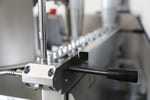
Thermo Scientific™ Process 16 트윈 스크류 압출기 (Twin-Screw Extruder :TSE) 는 R&D, 프로세스 개발 및 소규모 배치 생산에 최적화 되어있으며, 편리한 작동과 워크플로우 효율성을 보장하도록 설계되었습니다. 탈부착 가능한 상단 덮개가 있는 하우징 및 Split Barrel 설계로 세척 및 관리가 용이하여 고객별 애플리케이션 유연성을 보장합니다. Filament spooler, sheet take-off systems, pelletizers 와 같은 액세서리 사용으로 다양한 컴파운딩 워크플로우에 적합합니다. 식품 및 헬스케어 애플리케이션을 위한 제품(hygienic version)도 제공됩니다.
Process 16 병렬형 트윈 스크류 압출기(TSE)는 피더 제어 기능이 통합된 터치 스크린 작동방식을 적용하였으며, 제품 접촉 파트의 부품을 쉽게 분리할 수 있도록 제작되었습니다. 컴팩트한 디자인으로 실험실 공간을 효과적으로 사용할 수 있으며, 청소가 용이합니다.
Process 16 병렬형 트윈 스크류 압출기 (TSE) 특장점:
- 0.4 kg/h ∼ 20 kg/h의 처리량 범위(재료에 따라 다름)
- 세그먼트 나사 설계 및 탈착식 상단 하프 배럴
- 나사 길이 조정 키트를 통해 소량 컴파운딩 가능
- 포트타입 배럴을 통해 공급 및 배출에 대한 유연성 극대화
- 접촉 파트의 재질을 3종류의 steel 가운데 선택 가능
- 피더 제어 기능이 통합된 작동이 편리한 터치 스크린 방식
- 다이, 피더, 수조, 컨베이어 벨트, 스트랜드 또는 다이 페이스 펠릿타이저, 하울오프 및 스풀러와 같은 다양한 액세서리 포트폴리오
- 제립 키트를 통해 용융 압출과 습식/용융식 제립 방식 전환 가능
- 포트폴리오 전반에 걸쳐 기하학적으로 확장 가능한 나사 및 배럴 설계
다음과 같은 재료에 권장됩니다:
- 폴리머, 바이오폴리머
- 첨가제
- 접착제
- 식품, 예: high moisture meat analogues (HMMA), texturized vegetable proteins (TVP)
- 화장품
어플리케이션:
- 컴파운딩
- 마스터배치
- 나노합성체
- 필터 테스트
- Blown Film
- 시트
사양
암페어25 A
배럴 내경16 mm
배럴 영역8 zones. 7 x 5 L/D electrical heated (optional water cooled)
설명Parallel Twin-Screw Extruder
높이(미터법)1120 mm
길이(미터법)1230 mm
최대 온도350°C (450°C as option)
스크류 유형Fully segmented, co-rotating
일반적인 출력0.4 to 20 kg/hr. (material dependent)
폭(미터법)690 mm
Barrel Length L/D40 L/D
속도 범위10 to 1000 rpm
전압3 x 400 V
Unit SizeEach