Search


인용 및 참조 문헌 (1)
Invitrogen™
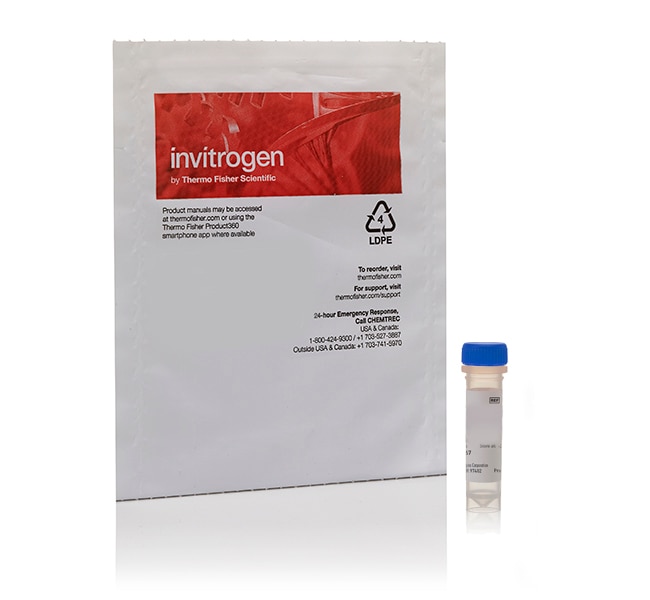
Click-iT™ sDIBO Alkynes for copper-free click chemistry
Experience copper-free 'click chemistry' with Click-IT™ Alexa Fluor™, and sDIBO Alkyne reagents, which are ideal for surface labeling of live cells and minimize damage to enzymes and fluorescent proteins.
Have Questions?
보기 방식 변경

| 카탈로그 번호 | 라벨 또는 염료 | 반응성 부분 | 분자량 |
|---|---|---|---|
| C10407 C-10407으로도 사용됨 | Alexa Fluor™ 594 | DIBO Alkyne | ∼1200 |
| C20020 | Alexa Fluor™ 488 | sDIBO Alkyne | ∼1400 |
| C20021 | Alexa Fluor™ 555 | sDIBO Alkyne | ∼1800 |
| C20022 | Alexa Fluor™ 647 | sDIBO Alkyne | ∼1900 |
| C20023 | Biotin | sDIBO Alkyne | ∼1000 |
| C20025 | SDP ester | SDP ester, sDIBO Alkyne | ∼1050 |
카탈로그 번호 C10407
C-10407으로도 사용됨
제품 가격(KRW)
828,000
Online offer
Ends: 30-Sep-2026
973,000할인액 145,000 (15%)
Each
라벨 또는 염료:
Alexa Fluor™ 594
반응성 부분:
DIBO Alkyne
분자량:
∼1200
제품 가격(KRW)
828,000
Online offer
Ends: 30-Sep-2026
973,000할인액 145,000 (15%)
Each
Achieve efficient labeling of azides with Click-It sDIBO Alkynes. Our Click-IT sDIBO alkynes enable the labeling of azido labeled targets without the need for copper catalysis and are available with a variety of Alexa Fluor or biotin labels, as well as amine or thiol reactive groups for creating your own conjugates. Macromolecules that have been azido-modified enzymatically, chemically, or metabolically can now be labeled easily, yielding soluble bioconjugates.
Click-iT sDIBO Alkyne labels react with azides via a copper-free Click chemistry reaction to form a stable triazole linkage with an Alexa Fluor, Biotin, or label of your choice. Copper-free click reactions using our sDIBO alkynes are ideal for surface labeling of live cells; they also minimize damage to fluorescent proteins like GFP or R-PE. For intracellular labeling, the nonspecific binding of DIBO alkynes creates a background signal, and a labeling strategy using picolyl azides is the preferred solution in these instances.
Click chemistry-labeled molecules can be applied to complex biological samples and be detected with unprecedented sensitivity due to extremely low background. Macromolecules that have been azide-modified enzymatically, chemically, or metabolically can be labeled more easily, yielding more soluble bioconjugates with improved biological labeling utility.
To make a concentrated stock solution from 2–5 mM, dissolve the dye-alkyne in high quality anhydrous DMSO. Store frozen, desiccated, and protected from light. Click-iT SDP Ester sDIBO alkyne is susceptible to hydrolysis, so prepare the stock solution fresh on the day of the experiment.
For Research Use Only. Not for use in diagnostic procedures.
사양
방출590 nm
여기617 nm
필터 유형Texas Red
유세포분석기 레이저 라인Yellow
키트 구성품Contains 500 μg of Alexa Fluor 594 DIBO Alkyne
라벨링 방법Click Chemistry
라벨링 타겟Azide
라벨 또는 염료Alexa Fluor™ 594
분자량∼1200
수량500 μg
반응성 부분DIBO Alkyne
배송 조건Dry Ice
색상Red-Orange
제품라인Click-iT
Unit SizeEach
구성 및 보관
Store at ≤-20°C. Desiccation recommended. Protect material from long-term exposure to light; may be exposed to light for short periods of time
자주 묻는 질문(FAQ)
What concentration and solvent do you recommend for making a stock solution of Click-iT sDIBO Alkynes for copper-free click chemistry?
인용 및 참조 문헌 (1)
인용 및 참조 문헌
Abstract
Oligonucleotide conjugated multi-functional adeno-associated viruses.
Journal:Sci Rep
PubMed ID:29483550
'Recombinant adeno-associated viruses (AAVs) are among the most commonly used vehicles for in vivo gene delivery. However, their tropism is limited, and additionally their efficacy can be negatively affected by prevalence of neutralizing antibodies in sera. Methodologies to systematically engineer AAV capsid properties would thus be of great relevance. In