Search


Thermo Scientific™
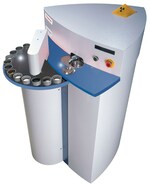
ARL™ OPTIM'X WDXRF 분광기
Meet a wide range of elemental analysis challenges in the petroleum, cement and slags industries using wavelength dispersive x-ray fluorescence spectrometry.
| 카탈로그 번호 | 유형 |
|---|---|
| IQLAAHGABMFAASMACH | WDXRF Spectrometer |
카탈로그 번호 IQLAAHGABMFAASMACH
제품 가격(KRW)
-
유형:
WDXRF Spectrometer
모든 종류의 전도성 및 비전도성 미지 샘플에 대한 정성적 및 정량적 특성 분석을 통해 재료 분석 요구 사항을 충족하세요. Thermo Scientific™ ARL™ OPTIM'X WDXRF 분광기는 고형 및 액체의 원소 분석에 가장 다재다능한 방법 중 하나 인 파장 분산 X-선 형광 (WDXRF)의 모든 이점을 제공합니다. 이 시스템은 석유, 시멘트 및 슬래그 산업에서 또는 분석 실험실에서 다목적 요구 사항에 맞게 사전 구성된 네 가지 패키지로 제공됩니다.
ARL OPTIM'X WDXRF 분광기는 다양한 종류의 샘플에서 탄소에서 우라늄까지 원소를 정확하고 정밀하게 분석합니다. WDXRF는 단순성, 유연성, 경제성 및 신뢰성으로 분석 실험실에서의 표준 시험 방법입니다 (예: ASTM 및 ISO 표준). 많은 전통적인 습식 화학 및 기타 분광법에 비해 분석당 비용이 분명히 유리합니다.
고급 기술
- 기존 기하학적 구조보다 최대 210% 더 높은 강도를 향상시키는 혁신적인 UCCO 기술 (Ultra Closely Coupled Optics)
- 순차 분석을 위한 고유한 소형 SmartGonio 장치
- 선택한 요소에서 더 빠른 분석 또는 더 나은 성능을 위한 멀티크로미터(옵션)
- 옵션 OptiQuant 패키지는 특정 표준이 없거나 소량 또는 불규칙한 모양으로만 샘플을 얻을 수 있는 경우 최대 73개의 요소에 대해 “standard-less” 분석을 제공합니다
주요 특징
- 순차 및/또는 동시 기능을 갖춘 독특한 WDXRF 플랫폼
- 200W X-선 전력에서 500W와 동등한 분석 성능
- 50W X-선 전력에서 200W와 동등한 분석 성능
- 구성에 따라 탄소에서 우라늄까지의 원소 분석
- 분광기 및 결정체의 온도 조절로 인한 높은 정밀도 (단기 및 장기 반복성)
- 낮은 Z 원소부터 무거운 원소까지의 우수한 스펙트럼 해상도 (CaKα에서 약 ∼15 eV)
- 수냉각 없이 독립적이고 자율적인 작동
- 가스 공급 필요 없음 (구성에 따라 다름)
- 간단하고 직접적인 샘플 소개
- 샘플 체인저를 사용한 일괄 자동 분석
- 작은 차지 면적
전도성 또는 비전도성 고체, 액체, 느슨한 분말, 눌러진 펠릿, 융합 비드, 페이스트, 알갱이 및 코팅을 포함한 다양한 유형의 샘플을 분석할 수 있습니다.
추천 용도
- 시멘트 산업의 대체 연료 및 폐기물 소각 제품 분석
- 석유 제품 및 윤활유의 황 (S) 및 기타 원소 분석, ASTM, ISO 및 기타 산업용 WDXRF 기준과 완전히 준수합니다.
- 석회암, 모래, 복사이트, 세라믹, 내화물, 슬래그 및 신터 등의 원자재의 주요 산화물 및 경미한 산화물
- 식품 및 화학 제품의 주요 및 추적 원소 및 오염 물질 분석
사양
유형WDXRF Spectrometer
Unit SizeEach