Search



인용 및 참조 문헌 (4)
Invitrogen™
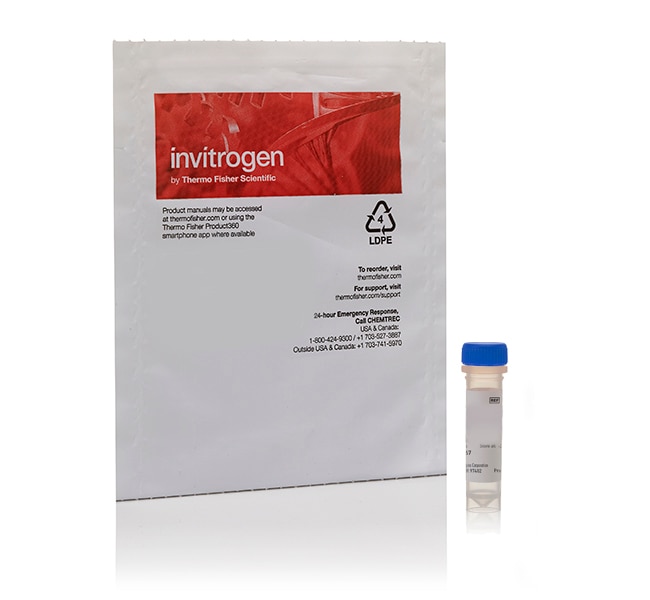
pHrodo™ Red and Green Epidermal Growth Factor (EGF) and pHrodo™ Red Transferrin Conjugates
Detect internalized EGF and transferrin in cells with the pHrodo Red and pHrodo Green Epidermal Growth Factor (EGF) and pHrodo Red Transferrin conjugates, for use in applications such as HCS, flow cytometry, microplate-based fluorometry, and HTS.
Have Questions?
보기 방식 변경

| 카탈로그 번호 | 제품 유형 |
|---|---|
| P35374 | Red EGF Conjugate |
| P35376 | Red Transferrin Conjugate |
| P35375 | Green EGF Conjugate |
카탈로그 번호 P35374
제품 가격(KRW)
684,000
Online offer
Ends: 31-Dec-2026
804,000할인액 120,000
Each
제품 유형:
Red EGF Conjugate
제품 가격(KRW)
684,000
Online offer
Ends: 31-Dec-2026
804,000할인액 120,000
Each
Detect internalized EGF or transferrin with highly active, pH-sensitive pHrodo Red and pHrodo Green Epidermal Growth Factor (EGF) conjugates, and the pHrodo Red Transferrin Conjugate. These conjugates consist of pHrodo dyes directly linked to highly active EGF or transferrin molecules, which can be used in applications including HCS, flow cytometry, microplate fluorometry, and HTS to measure internalized EGF and transferrin molecules. The pHrodo Red and pHrodo Green dyes fluoresce brightly when exposed to acidic environments, such as those found in endosomes and lysosomes.
The pHrodo Red and pHrodo Green Epidermal Growth Factor (EGF) conjugates consist of pHrodo Red or pHrodo Green dye directly conjugated to a highly active human recombinant EGF molecule and are used for the detection of internalized EGF receptor in cells. Fluorescently labeled EGF has enabled scientists to investigate receptor-membrane interactions, study receptor distribution, calculate rate constants for the interaction of EGF with its receptor, and more. Fluorescent labels that respond to a pH change add another level of detection.
pHrodo Red Transferrin Conjugate consists of pHrodo Red dye directly conjugated to a highly active transferrin molecule and is used for the detection of internalized transferrin in cells. Transferrin is a monomeric serum glycoprotein (∼80,000 daltons) that binds to a specific receptor on the surface of vertebrate cells and delivers up to two Fe3+ atoms via receptor-mediated endocytosis. Once iron-carrying transferrin proteins are inside endosomes, the acidic environment favors dissociation of iron from the transferrin–receptor complex. Following the release of iron, the apotransferrin is recycled to the plasma membrane, where it is released from its receptor to scavenge more iron.
The highly photostable pHrodo Red and pHrodo Green dyes are weakly fluorescent outside of cells at neutral pH, but when internalized specifically through EGF or transferrin endocytosis, become brightly fluorescent in acidic endosomes. This allows the measurement of internalized EGF or transferrin, as well as the dynamic monitoring of EGF or transferrin internalization in live cells.
The pHrodo Red EGF Conjugate and the pHrodo Red Transferrin Conjugate have excitation/emission spectra of 560/585 nm and can be multiplexed with a wide variety of blue, red, and far-red dyes reporters such as Mitosox Red, CellEvent Caspase 3/7 Red, NucBlue, RFPs, and Mitotracker Deep Red, among many others. The pHrodo Green EGF Conjugate has excitation/emission spectra of 509/533 nm and can be multiplexed with a wide variety of blue, red, and far-red dyes reporters such as Mitosox Red, CellEvent Caspase 3/7 Red, NucBlue, RFPs, and Mitotracker Deep Red, among many others.
The pHrodo Red and pHrodo Green EGF conjugates and the pHrodo Red Transferrin Conjugate are compatible in applications including traditional fluorescence microscopy, high content screening (HCS), flow cytometry, and microplate-based fluorimetry or high throughput screening (HTS). The conjugates are also compatible with various widefield or confocal fluorescence microscopes, flow cytometers, fluorescence plate readers, and high content instruments.
For Research Use Only. Not for use in diagnostic procedures.
사양
설명pHrodo™ Red Epidermal Growth Factor (EGF) Conjugate
검출 방법Fluorescence
여기/방출560/585 nm
형태Lyophilized Powder
단백질군Growth Factors and Receptors
수량20 μg
세포하위구조 국지화Endosomes, Lysosomes
색상Orange
용도(애플리케이션)Cell Analysis
용도 (장비)Fluorescence Microscope, Flow Cytometer, Fluorometer, High Content Analysis Instrument
제품라인pHrodo
제품 유형Red EGF Conjugate
Unit SizeEach
구성 및 보관
Store at -5° to -30°C, desiccate, and protect from light.
인용 및 참조 문헌 (4)
인용 및 참조 문헌
Abstract
The human papillomavirus type 16 E5 oncoprotein inhibits epidermal growth factor trafficking independently of endosome acidification.
Journal:J Virol
PubMed ID:20686024
The human papillomavirus type 16 E5 oncoprotein (16E5) enhances acute, ligand-dependent activation of the epidermal growth factor receptor (EGFR) and concomitantly alkalinizes endosomes, presumably by binding to the 16-kDa
DYNC1H1 mutation alters transport kinetics and ERK1/2-cFos signalling in a mouse model of distal spinal muscular atrophy.
Journal:
PubMed ID:24755273
Mutations in the gene encoding the heavy chain subunit (DYNC1H1) of cytoplasmic dynein cause spinal muscular atrophy with lower extremity predominance, Charcot-Marie-Tooth disease and intellectual disability. We used the legs at odd angles (Loa) (DYNC1H1(F580Y)) mouse model for spinal muscular atrophy with lower extremity predominance and a combination of live-cell
A novel TIP30 protein complex regulates EGF receptor signaling and endocytic degradation.
Journal:J Biol Chem
PubMed ID:21252234
Activated epidermal growth factor receptor (EGFR) continues to signal in the early endosome, but how this signaling process is regulated is less well understood. Here we describe a protein complex consisting of TIP30, endophilin B1, and acyl-CoA synthetase long chain family member 4 (ACSL4) that interacts with Rab5a and regulates
Anticancer Activity of Ω-6 Fatty Acids through Increased 4-HNE in Breast Cancer Cells.
Journal:Cancers (Basel)
PubMed ID:34944997