Search


인용 및 참조 문헌 (24)
Invitrogen™
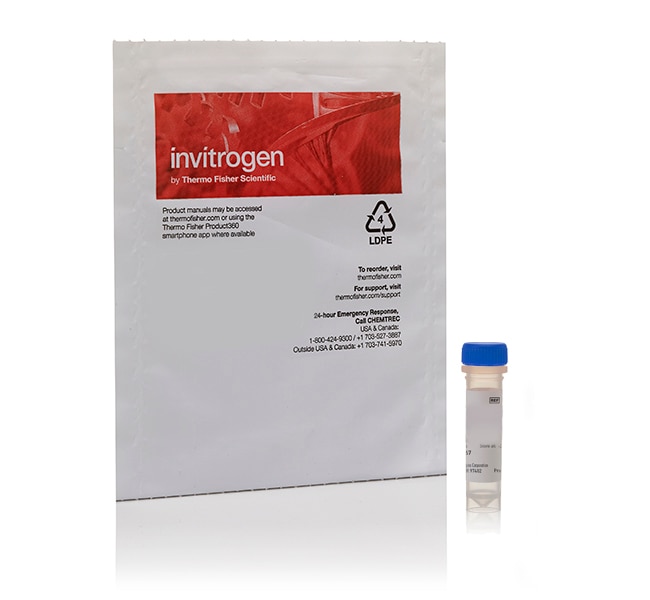
Qdot™ 525 Streptavidin Conjugate
Qdot™ 525 streptavidin conjugate는 형광라벨(Qdot™ nanocrystal)에 공유결합한 biotin-binding protein (streptavidin)으로 이루어집니다. Streptavidin는 biotin 결합 친화성이 매우 높고 streptavidin conjugate는 biotin자세히 알아보기
Have Questions?
보기 방식 변경

| 카탈로그 번호 | 수량 |
|---|---|
| Q10141MP | 200 μL |
| Q10143MP | 50 μL |
카탈로그 번호 Q10141MP
제품 가격(KRW)
1,114,000
Online offer
Ends: 30-Sep-2026
1,310,000할인액 196,000 (15%)
Each
수량:
200 μL
제품 가격(KRW)
1,114,000
Online offer
Ends: 30-Sep-2026
1,310,000할인액 196,000 (15%)
Each
Qdot™ 525 streptavidin conjugate는 형광라벨(Qdot™ nanocrystal)에 공유결합한 biotin-binding protein (streptavidin)으로 이루어집니다. Streptavidin는 biotin 결합 친화성이 매우 높고 streptavidin conjugate는 biotin conjugate와 함께 사용해 다양한 단백질, 단백질 모티프, 핵산, 기타 분자를 특정적으로 검출합니다(예: 단백질 표적에 결합한 biotinylated 일차 항체를 형광 표지된 streptavidin로 검출할 수 있습니다.). 이와 유사한 전략이 western blots, 유세포분석, 영상 및 현미경 분석, microplate assay 등 많은 검출 프로토콜에 사용되며 목표한 fractionation을 달성하기 위한 정제 작업에도 사용됩니다. Qdot™ nanocrystal conjugate는 1 μM 용액으로 제공됩니다.
Qdot™ Streptavidin Conjugate의 주요 특징:
• Streptavidin Qdot™ 525 conjugate 최대 방출: ∼525 nm
• Qdot™ nanocrystal 당 streptavidins 약 5∼10개
• 탁월한 광안정성 및 밝은 형광
• single-line 여기원으로 효율적으로 여기됨
• 좁은 방출 영역, 넓은 stroke shift
• 여러 색으로 이용 가능
• western blots, 유세포분석, 영상 및 현미경분석, microplate assay 등에 이상적
Qdot™ Nanocrystal의 특징
Qdot™ streptavidin conjugate는 큰 macromolecule 또는 단백질(∼15–20 nm) 크기이며 streptavidin 검출 시약 중 가장 밝은 등급입니다. Qdot™ streptavidin conjugate는 semiconductor material의 나노미터 크기 결정(CdSe)으로 만들어져 추가 semiconductor shell (ZnS)로 코팅되어 물질의 광학 속성을 높입니다. Qdot™ 705 과 Qdot™ 800 streptavidin conjugate은 CdSeTe를 함유하여 비슷하게 만들어집니다. 이 core-shell 물질은 polymer shell로 더 코팅되어 있어 물질이 생분자에 접합하고 광학 속성을 유지하게 해줍니다.
다른 streptavidin 형광 conjugate도 구매할 수 있습니다.
본사는 여러 다른 Qdot™ 색상을 제공합니다. 혹은 6가지 색상의 Qdot™ streptavidin conjugate 525, 565, 585, 605, 655, 705를 담고 있는 Qdot™ Streptavidin Sampler Kit를 이용할 수 있습니다. nanocrystal conjugate 외에 본사는 Alexa Fluor™ dyes, Oregon Green™ dye, enzyme conjugates, 및 traditional fluorophores like Texas Red™ dye, fluorescein (FITC) 등의 기존 flurophore에 접합한 다양한 streptavidin을 제공합니다.
Biotinylated Conjugate 찾기
본사는 biotin-streptavidin 검출 전략에 사용되는 다양한 biotinylated conjugate를 제공합니다.
• 일차 항체 검색 도구를 사용해 biotinylated 일차 항체를 찾아보세요.
• 이차 항체 검색 도구를 사용해 biotinylated 이차 항체와 biotinylated anti-dye, anti-hapten 항체를 찾아볼 수 있습니다.
내인성 Biotin 차단
자연적으로 발생하는 biotin이 biotin-streptavidin 검출을 방해할 수 있습니다. 고정 및 침습 세포를 이용하는 실험에서는 본사의 Endogenous Biotin-Blocking Kit를 사용해 이런 방해를 최소화할 수 있습니다.
이 제품은 연구용으로만 사용가능합니다. 동물이나 인간의 치료 또는 진단 목적으로 사용할 수 없습니다.
관련 링크:
Avidin-Biotin 검출에 대해 알아보기
Qdot™ Nanocrystal에 대해 알아보기
Qdot™ Streptavidin Conjugate의 주요 특징:
• Streptavidin Qdot™ 525 conjugate 최대 방출: ∼525 nm
• Qdot™ nanocrystal 당 streptavidins 약 5∼10개
• 탁월한 광안정성 및 밝은 형광
• single-line 여기원으로 효율적으로 여기됨
• 좁은 방출 영역, 넓은 stroke shift
• 여러 색으로 이용 가능
• western blots, 유세포분석, 영상 및 현미경분석, microplate assay 등에 이상적
Qdot™ Nanocrystal의 특징
Qdot™ streptavidin conjugate는 큰 macromolecule 또는 단백질(∼15–20 nm) 크기이며 streptavidin 검출 시약 중 가장 밝은 등급입니다. Qdot™ streptavidin conjugate는 semiconductor material의 나노미터 크기 결정(CdSe)으로 만들어져 추가 semiconductor shell (ZnS)로 코팅되어 물질의 광학 속성을 높입니다. Qdot™ 705 과 Qdot™ 800 streptavidin conjugate은 CdSeTe를 함유하여 비슷하게 만들어집니다. 이 core-shell 물질은 polymer shell로 더 코팅되어 있어 물질이 생분자에 접합하고 광학 속성을 유지하게 해줍니다.
다른 streptavidin 형광 conjugate도 구매할 수 있습니다.
본사는 여러 다른 Qdot™ 색상을 제공합니다. 혹은 6가지 색상의 Qdot™ streptavidin conjugate 525, 565, 585, 605, 655, 705를 담고 있는 Qdot™ Streptavidin Sampler Kit를 이용할 수 있습니다. nanocrystal conjugate 외에 본사는 Alexa Fluor™ dyes, Oregon Green™ dye, enzyme conjugates, 및 traditional fluorophores like Texas Red™ dye, fluorescein (FITC) 등의 기존 flurophore에 접합한 다양한 streptavidin을 제공합니다.
Biotinylated Conjugate 찾기
본사는 biotin-streptavidin 검출 전략에 사용되는 다양한 biotinylated conjugate를 제공합니다.
• 일차 항체 검색 도구를 사용해 biotinylated 일차 항체를 찾아보세요.
• 이차 항체 검색 도구를 사용해 biotinylated 이차 항체와 biotinylated anti-dye, anti-hapten 항체를 찾아볼 수 있습니다.
내인성 Biotin 차단
자연적으로 발생하는 biotin이 biotin-streptavidin 검출을 방해할 수 있습니다. 고정 및 침습 세포를 이용하는 실험에서는 본사의 Endogenous Biotin-Blocking Kit를 사용해 이런 방해를 최소화할 수 있습니다.
이 제품은 연구용으로만 사용가능합니다. 동물이나 인간의 치료 또는 진단 목적으로 사용할 수 없습니다.
관련 링크:
Avidin-Biotin 검출에 대해 알아보기
Qdot™ Nanocrystal에 대해 알아보기
For Research Use Only. Not for use in diagnostic procedures.
사양
농도1 μM
제품 유형Streptavidin Conjugate (fluorescent)
수량200 μL
배송 조건Room Temperature
콘주게이트Qdot 525
형태Liquid
제품라인Qdot
Unit SizeEach
구성 및 보관
Store in refrigerator (2–8°C).
자주 묻는 질문(FAQ)
I am getting very high background with my Qdot streptavidin conjugate. Do you have any suggestions?
I am getting no signal with my Qdot streptavidin conjugate. What should I do?
What is the best way to remove white precipitate from my ITK Qdot nanocrystals?
I see a white precipitate in my ITK Qdot nanocrystals; should I be concerned?
Why do my Qdot nanocrystals appear to be blinking?
인용 및 참조 문헌 (24)
인용 및 참조 문헌
Abstract
Quantum dot-mediated biosensing assays for specific nucleic acid detection.
Journal:Nanomedicine
PubMed ID:17292066
'Two new classes of quantum dot (QD)-mediated biosensing methods have been developed to detect specific DNA sequences in a separation-free format. Both methods use 2 target-specific oligonucleotide probes to recognize a specific target. The first method is based on cross-linking of 2 QDs with distinct emission wavelengths caused by probe-target
Homogenous rapid detection of nucleic acids using two-color quantum dots.
Journal:Analyst
PubMed ID:16568163
'We report a homogenous method for rapid and sensitive detection of nucleic acids using two-color quantum dots (QDs) based on single-molecule coincidence detection. The streptavidin-coated quantum dots functioned as both a nano-scaffold and as a fluorescence pair for coincidence detection. Two biotinylated oligonucleotide probes were used to recognize and detect
Induction of apoptosis by antisense CK2 in human prostate cancer xenograft model.
Journal:Mol Cancer Res
PubMed ID:15634760
'Protein serine/threonine kinase CK2 (formerly casein kinase 2) is a ubiquitous protein kinase that plays key roles in cell growth, proliferation, and survival. We have shown previously that its molecular down-regulation induces apoptosis in cancer cells in culture. Here, we have employed a xenograft model of prostate cancer to extend
Nanoparticles as fluorescence labels: is size all that matters?
Journal:Biophys J
PubMed ID:18390610
'Fluorescent labels are often used in bioassays as a means to detect and characterize ligand-receptor binding. This is due in part to the inherently high sensitivity of fluorescence-based technology and the relative accessibility of the technique. There is often little concern raised as to whether or not the fluorescent label
Targeted cellular delivery of quantum dots loaded on and in biotinylated liposomes.
Journal:Bioconjug Chem
PubMed ID:20715851
'We describe the preparation, biophysical characterization, and receptor-mediated cellular internalization of biotinylated lipid particles (BLPs) loaded on the surface and internally with two distinct (colors) of quantum dot (QD) probes. BLPs were formulated with 1.4 and 2.7 mol % PEG-lipids containing either a fusogenic or pH-sensitive lipid to promote bilayer